


Remembering with gains and losses: effects of monetary reward and punishment on successful encoding activation of source memories
- PMID: 23314939
- PMCID: PMC3977621
- DOI: 10.1093/cercor/bhs415
Remembering with gains and losses: effects of monetary reward and punishment on successful encoding activation of source memories
Abstract
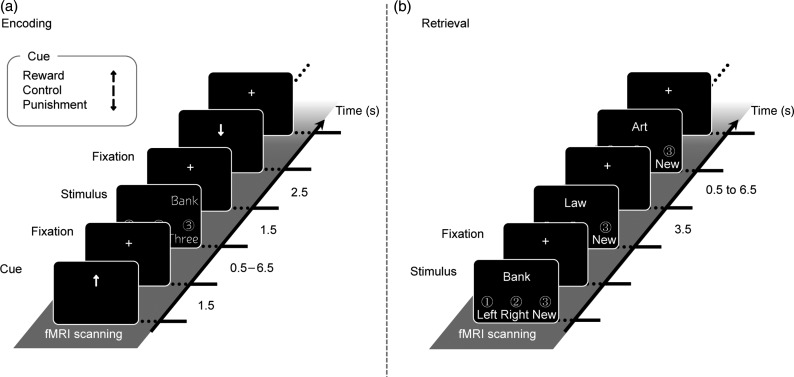
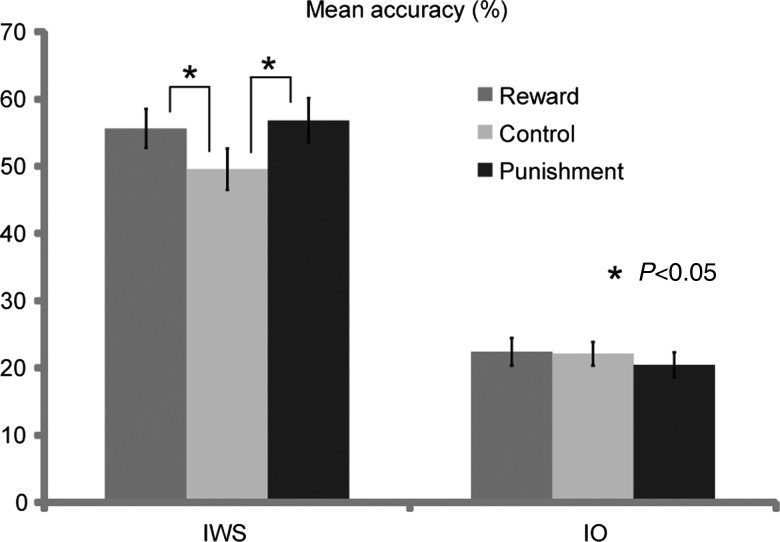
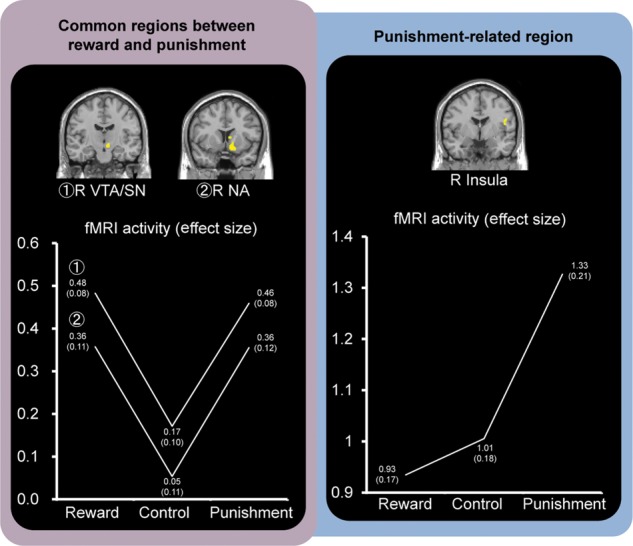
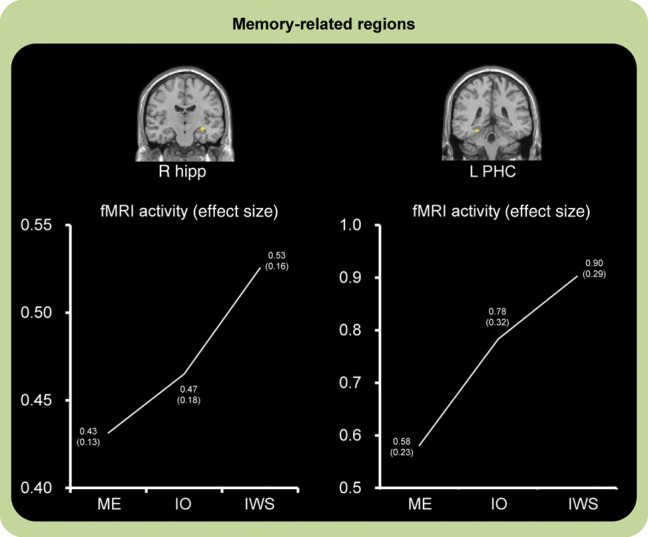
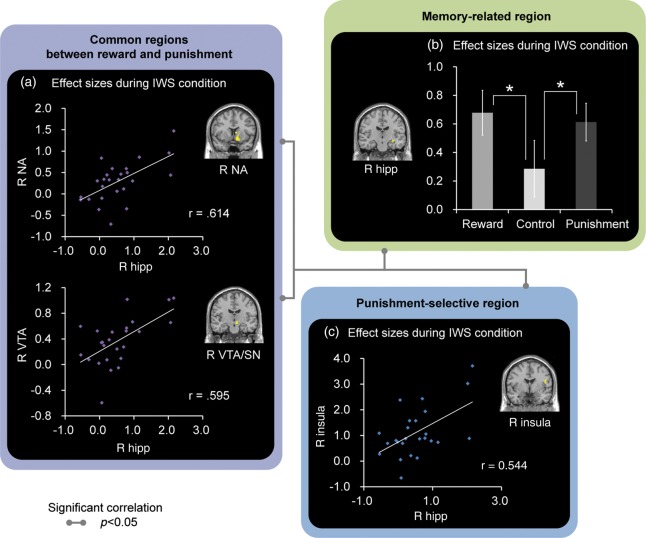
The motivation of getting rewards or avoiding punishments reinforces learning behaviors. Although the neural mechanisms underlying the effect of rewards on episodic memory have been demonstrated, there is little evidence of the effect of punishments on this memory. Our functional magnetic resonance imaging (fMRI) study investigated the effects of monetary rewards and punishments on activation during the encoding of source memories. During encoding, participants memorized words (item) and locations of presented words (source) under 3 conditions (Reward, Punishment, and Control). During retrieval, participants retrieved item and source memories of the words and were rewarded or penalized according to their performance. Source memories encoded with rewards or punishments were remembered better than those without such encoding. fMRI data demonstrated that the ventral tegmental area and substantia nigra and nucleus accumbens activations reflected both the processes of reward and punishment, whereas insular activation increased as a linear function of punishment. Activation in the hippocampus and parahippocampal cortex predicted subsequent retrieval success of source memories. Additionally, correlations between these reward/punishment-related regions and the hippocampus were significant. The successful encoding of source memories could be enhanced by punishments and rewards, and interactions between reward/punishment-related regions and memory-related regions could contribute to memory enhancement by reward and/or punishment.
Keywords: functional magnetic resonance imaging; punishment; reward; source memory.
Figures
References
-
- Adcock RA, Thangavel A, Whitfield-Gabrieli S, Knutson B, Gabrieli JD. Reward-motivated learning: mesolimbic activation precedes memory formation. Neuron. 2006;50:507–517. - PubMed
-
- Amaral DG, Cowan WM. Subcortical afferents to the hippocampal formation in the monkey. J Comp Neurol. 1980;189:573–591. - PubMed
-
- Anderson AK, Christoff K, Stappen I, Panitz D, Ghahremani DG, Glover G, Gabrieli JD, Sobel N. Dissociated neural representations of intensity and valence in human olfaction. Nat Neurosci. 2003;6:196–202. - PubMed
Publication types
MeSH terms
Substances
LinkOut - more resources
Full Text Sources
Other Literature Sources
Medical
