


Antibiotic resistance acquired through a DNA damage-inducible response in Acinetobacter baumannii
- PMID: 23316046
- PMCID: PMC3591989
- DOI: 10.1128/JB.02176-12
Antibiotic resistance acquired through a DNA damage-inducible response in Acinetobacter baumannii
Abstract
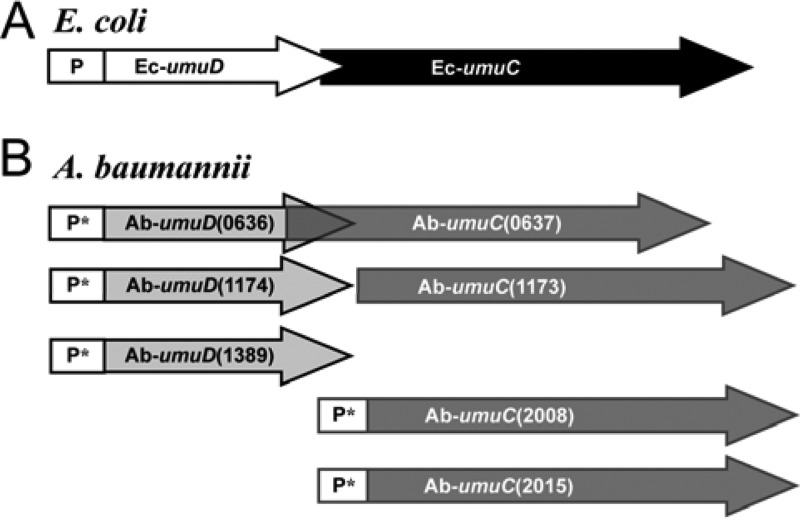
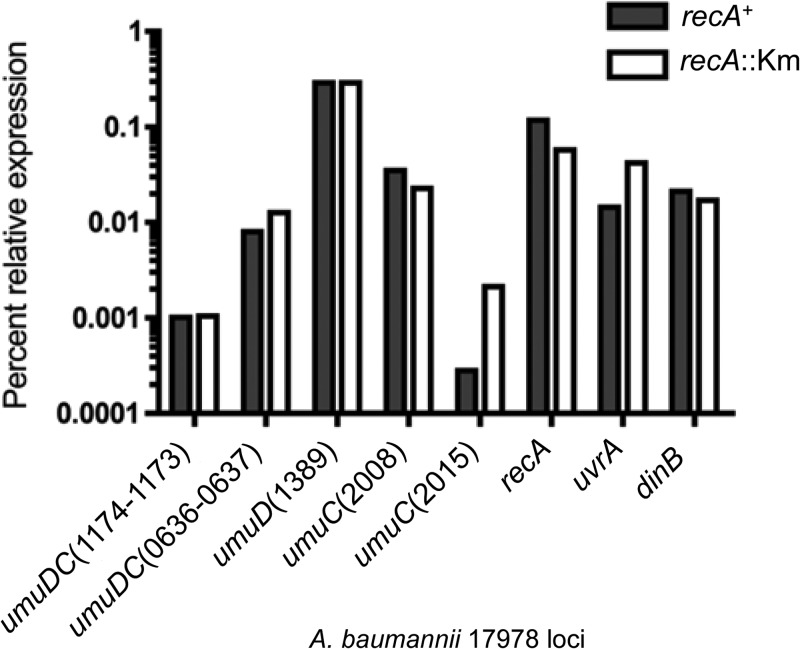
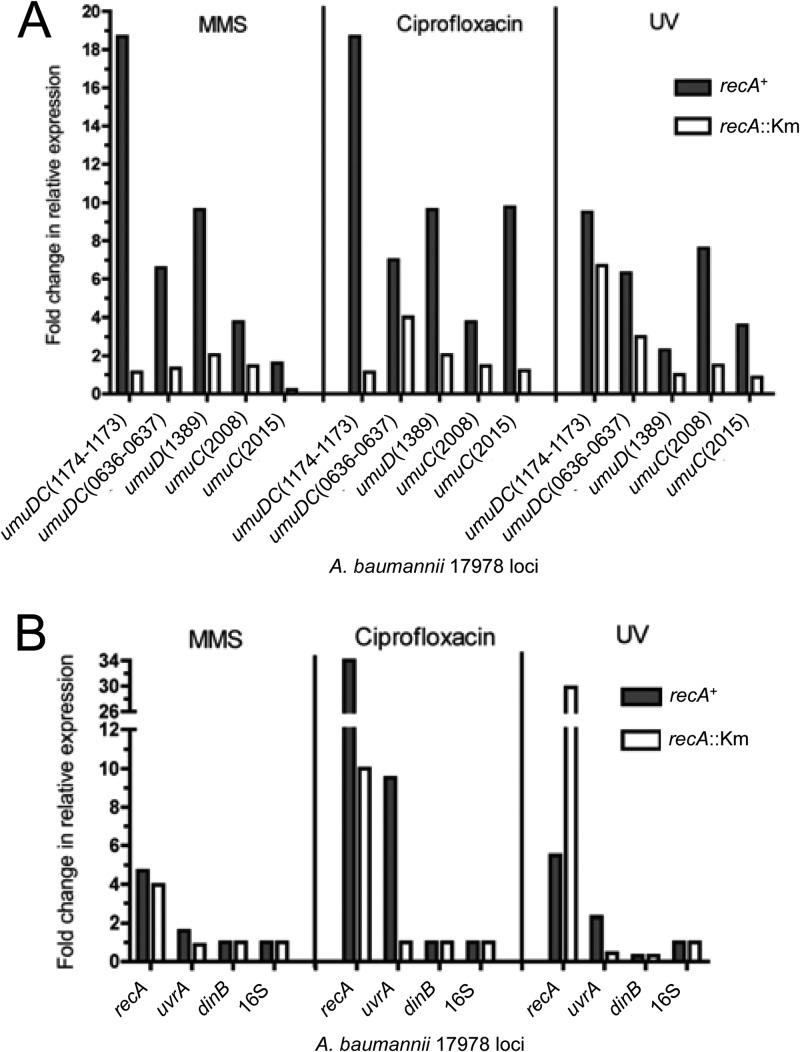
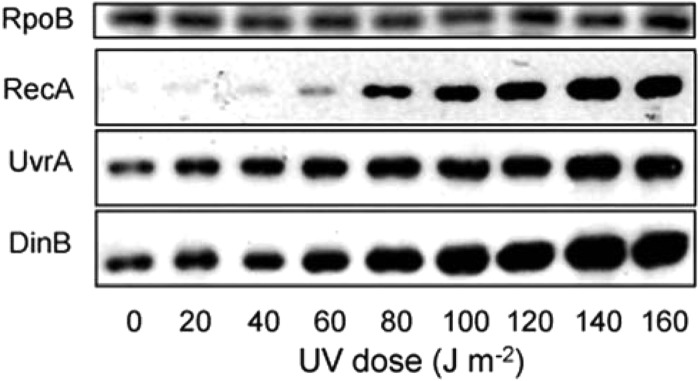
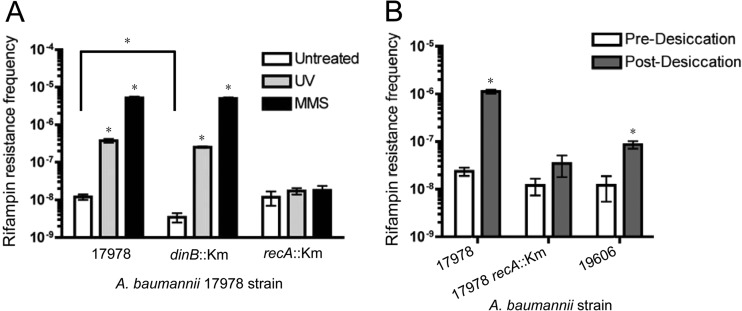
Acinetobacter baumannii is an emerging nosocomial, opportunistic pathogen that survives desiccation and quickly acquires resistance to multiple antibiotics. Escherichia coli gains antibiotic resistances by expressing genes involved in a global response to DNA damage. Therefore, we asked whether A. baumannii does the same through a yet undetermined DNA damage response akin to the E. coli paradigm. We found that recA and all of the multiple error-prone DNA polymerase V (Pol V) genes, those organized as umuDC operons and unlinked, are induced upon DNA damage in a RecA-mediated fashion. Consequently, we found that the frequency of rifampin-resistant (Rif(r)) mutants is dramatically increased upon UV treatment, alkylation damage, and desiccation, also in a RecA-mediated manner. However, in the recA insertion knockout strain, in which we could measure the recA transcript, we found that recA was induced by DNA damage, while uvrA and one of the unlinked umuC genes were somewhat derepressed in the absence of DNA damage. Thus, the mechanism regulating the A. baumannii DNA damage response is likely different from that in E. coli. Notably, it appears that the number of DNA Pol V genes may directly contribute to desiccation-induced mutagenesis. Sequences of the rpoB gene from desiccation-induced Rif(r) mutants showed a signature that was consistent with E. coli DNA polymerase V-generated base-pair substitutions and that matched that of sequenced A. baumannii clinical Rif(r) isolates. These data strongly support an A. baumannii DNA damage-inducible response that directly contributes to antibiotic resistance acquisition, particularly in hospitals where A. baumannii desiccates and tenaciously survives on equipment and surfaces.
Figures
References
-
- Bergogne-Berezin E, Friedman H, Bendinelli M. 2008. Acinetobacter biology and pathogenesis, vol xvi Springer-Verlag, New York, NY
-
- Gerischer U. 2008. Acinetobacter molecular biology. Caister Academic Press, Norfolk, United Kingdom
-
- Kramer A, Schwebke I, Kampf G. 2006. How long do nosocomial pathogens persist on inanimate surfaces? A systematic review. BMC Infect. Dis. 6:130 doi:10.1186/1471-2334-6-130 - DOI - PMC - PubMed
-
- Neely AN. 2000. A survey of gram-negative bacteria survival on hospital fabrics and plastics. J. Burn Care Rehab. 21:523–527 - PubMed
Publication types
MeSH terms
Substances
Grants and funding
LinkOut - more resources
Full Text Sources
Other Literature Sources
Medical
Molecular Biology Databases
