


Fasting serum C-peptide levels predict cardiovascular and overall death in nondiabetic adults
- PMID: 23316320
- PMCID: PMC3540682
- DOI: 10.1161/JAHA.112.003152
Fasting serum C-peptide levels predict cardiovascular and overall death in nondiabetic adults
Abstract
Background: Insulin resistance, characterized by hyperinsulinemia and normal or elevated serum glucose, is an established precursor to diabetes and cardiovascular disease. Despite fasting serum C-peptide levels being an accurate and stable marker of endogenous insulin production used in patients with diabetes, it is unknown whether C-peptide could serve as a marker of insulin resistance and predict outcomes in patients without diabetes.
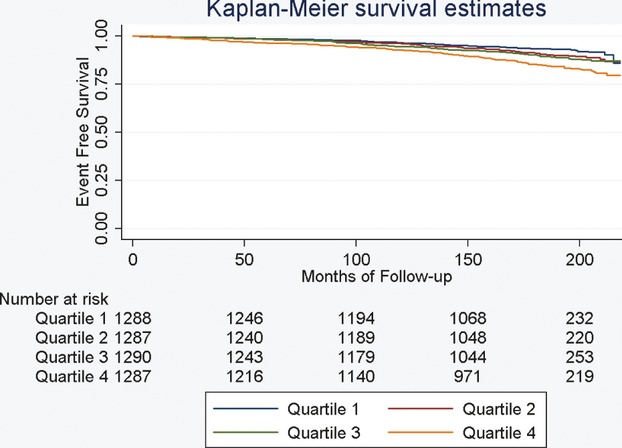
Method and results: This is a retrospective cohort study using data from the NHANES-3 (1988-1994) survey with mortality follow-up through December 31, 2006. Participants included 5153 subjects, 40 to 74 years of age with fasting glucose ≥ 70 mg/dL, without diabetes by history or laboratory testing. Receiver-operating-curve analysis compared fasting C-peptide against known insulin resistance measures such as fasting plasma glucose, serum insulin, HOMA-IR, quantitative-insulin-sensitivity-check-index, and metabolic syndrome for the prediction of cardiovascular and overall death. Subjects were then stratified by quartiles of C-peptide levels. Cox proportional-hazards modeling compared hazards of cardiovascular and overall death amongst C-peptide quartiles and adjusted for potential confounders of cardiovascular and diabetes risk. Fasting serum C-peptide levels predicted cardiovascular and overall death better than other studied measures (AUC=0.62 and 0.60 respectively vs the rest, with AUC ≤ 0.58 and ≤ 0.57 respectively, P<0.001). When compared with the lowest C-peptide quartile, subjects in the highest quartile had significantly higher adjusted hazard ratios (HR) of cardiovascular death (HR=1.60, 95%CI 1.07 to 2.39) and overall mortality (HR=1.72, 95%CI 1.34 to 2.21) after controlling for confounders.
Conclusions: C-peptide levels significantly related to hazards of cardiovascular and overall death in nondiabetic adults and was a better predictor of these outcomes than serum insulin and/or glucose derived measures.
Keywords: cardiovascular risk; glucose intolerance; insulin resistance.
Figures
References
-
- DeFronzo R, Ferrannini E. Insulin resistance: a multifaceted syndrome responsible for NIDDM, obesity, hypertension, dyslipidemia, and atherosclerotic cardiovascular disease. Diabetes Care. 1991; 14:173-194 - PubMed
-
- Ades PA, Savage PD, Toth MJ, Schneider DJ, Audelin MC, Bunn JY, Ludlow M. The influence of obesity and consequent insulin resistance on coronary risk factors in medically treated patients with coronary disease. Int J Obes (Lond). 2008; 32:967-974 - PubMed
-
- Pihlajamaki J, Gylling H, Miettinen TA, Laakso M. Insulin resistance is associated with increased cholesterol synthesis and decreased cholesterol absorption in normoglycemic men. J Lipid Res. 2004; 45:507-512 - PubMed
-
- Eckel RH, Grundy SM, Zimmet PZ. The metabolic syndrome. Lancet. 2005; 365:1415-1428 - PubMed
-
- Third Report of the National Cholesterol Education Program (NCEP) Expert panel on detection, evaluation, and treatment of high blood cholesterol in adults (Adult Treatment Panel III) final report. Circulation. 2002; 106:3143. - PubMed
Publication types
MeSH terms
Substances
Grants and funding
LinkOut - more resources
Full Text Sources
Other Literature Sources
