


Prevalence of Metabolic Abnormalities and Association with Obesity among Saudi College Students
- PMID: 23316346
- PMCID: PMC3536048
- DOI: 10.1155/2012/819726
Prevalence of Metabolic Abnormalities and Association with Obesity among Saudi College Students
Abstract
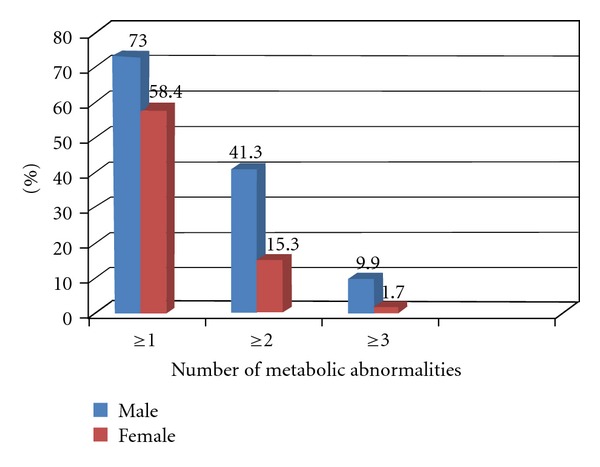
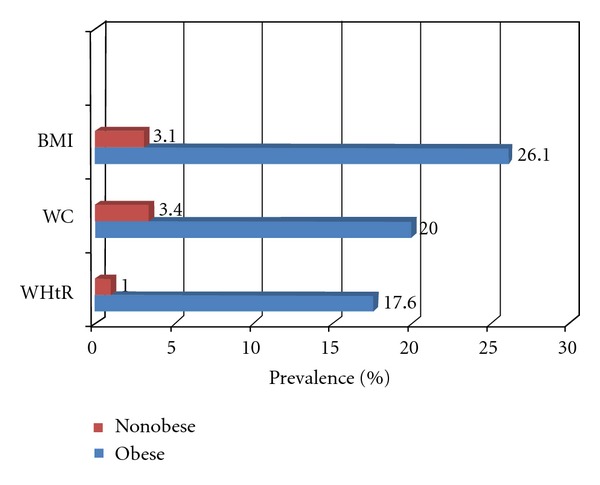
Aim. (i) To estimate the prevalence of the metabolic abnormalities among Saudi college students in Riyadh, Saudi Arabia, and (ii) to investigate the association between different indicators of body composition and these abnormalities. Methods. A total of 501 college students participated in a cross-sectional study. Anthropometric assessments, BP measurements, and biochemical assessment were done. Metabolic abnormalities were identified. Results. Applying BMI, 21.9 % and 20.6% of students were classified as overweight and obese, respectively. Central obesity was prevalent in 26.9% and 42.2% of students based on WC and WHtR, respectively. Other metabolic abnormalities were hypertension (23.6%) and abnormal FPG level (22.6%). Three or more abnormalities were prevalent in 7.8% of students and increased significantly to 26.4%, 20%, and 17.6 in obese subjects based on BMI, WC, and WHtR, respectively. With the exception of abnormal FPG, prevalence of individual metabolic abnormalities as well as the number of these abnormalities significantly increased with increasing BMI, WC, and WHtR (P < 0.001 each). Conclusion. Our findings provide evidence for the presence of MS in Saudi college students. Central adiposity contributes to the high incidence of individual MS components. College health programs that promote healthful lifestyle and avoidance of adult weight gain are recommended.
Figures


References
-
- Duncan GE, Li SM, Zhou XH. Prevalence and trends of a metabolic syndrome phenotype among U.S. adolescents, 1999-2000. Diabetes Care. 2004;27(10):2438–2443. - PubMed
-
- Ford ES, Giles WH, Dietz WH. Prevalence of the metabolic syndrome among US adults: findings from the Third National Health and Nutrition Examination Survey. Journal of the American Medical Association. 2002;287(3):356–359. - PubMed
-
- Cook S, Weitzman M, Auinger P, Nguyen M, Dietz WH. Prevalence of a metabolic syndrome phenotype in adolescents: findings from the Third National Health and Nutrition Examination Survey, 1988–1994. Archives of Pediatrics and Adolescent Medicine. 2003;157(8):821–827. - PubMed
-
- Dalleck LC, Kjelland EM. The prevalence of metabolic syndrome and metabolic syndrome risk factors in college-aged students. American Journal of Health Promotion. 2012;27(1):37–42. - PubMed
LinkOut - more resources
Full Text Sources
