


Electromyographic assessment of muscle activity between genders during unilateral weight-bearing tasks using adjusted distances
- PMID: 23316423
- PMCID: PMC3537460
Electromyographic assessment of muscle activity between genders during unilateral weight-bearing tasks using adjusted distances
Abstract
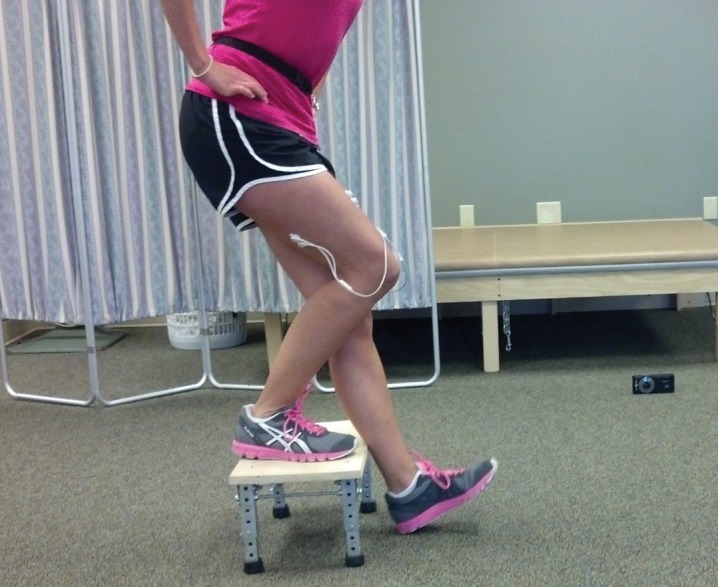
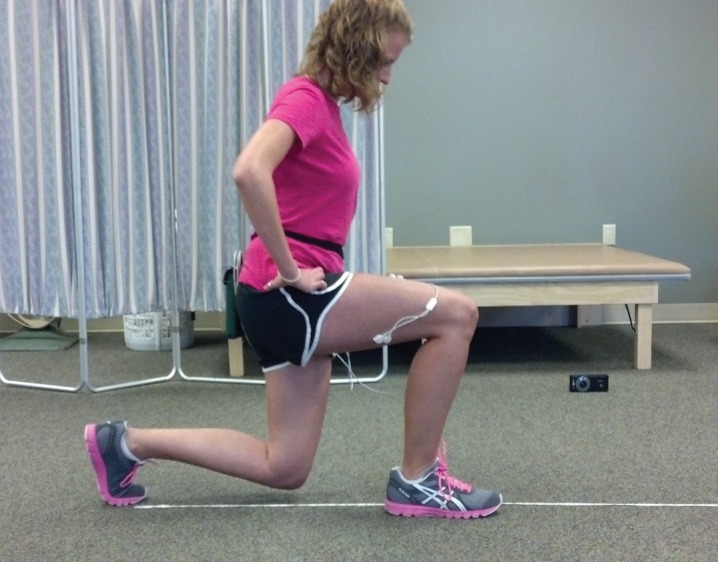
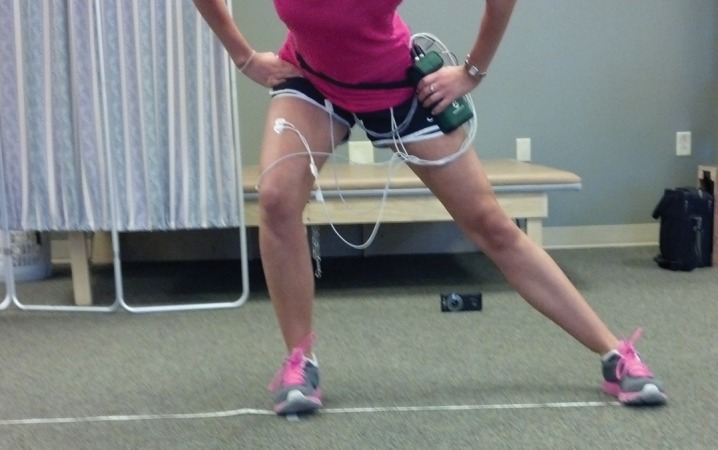
Purpose/background: Researchers have observed differences in muscle activity patterns between males and females during functional exercises. The research methods employed have used various step heights and lunge distances to assess functional exercise making gender comparisons difficult. The purpose of this study was to examine core and lower extremity muscle activity between genders during single-limb exercises using adjusted distances and step heights based on a percentage of the participant's height.
Methods: Twenty men and 20 women who were recreationally active and healthy participated in the study. Two-dimensional video and surface electromyography (SEMG) were used to assess performance during three exercise maneuvers (step down, forward lunge, and side-step lunge). Eight muscles were assessed using SEMG (rectus abdominus, external oblique, erector spinae, rectus femoris, tensor fascia latae, gluteus medius, gluteus maximus, biceps femoris). Maximal voluntary isometric contractions (MVIC) were used for each muscle and expressed as %MVIC to normalize SEMG to account for body mass differences. Exercises were randomized and distances were normalized to the participant's lower limb length. Descriptive statistics, mixed-model ANOVA, and ICCs with 95% confidence intervals were calculated.
Results: Males were taller, heavier, and had longer leg length when compared to the females. No differences in %MVIC activity were found between genders by task across the eight muscles. For both males and females, the step down task resulted in higher %MVIC for gluteus maximus compared to lunge, (p=0.002). Step down exercise produced higher %MVIC for gluteus medius than lunge (p=0.002) and side step (p=0.006). ICC(3,3) ranged from moderate to high (0.74 to 0.97) for the three tasks.
Conclusions: Muscle activation among the eight muscles was similar between females and males during the lunge, side-step, and step down tasks, with distances adjusted to leg length. Both males and females elicited higher muscle activity for gluteus maximus and gluteus medius as compared to the trunk, hip flexors, or hamstring muscles. However these values were well below the recruitment levels necessary for strengthening in both genders.
Level of evidence: 4.
Keywords: electromyography; functional exercises; gender; gluteus maximus; gluteus medius.
Figures
References
-
- Ireland ML, Davis IS, Ballantne BT, Wilson JD. Hip strength in females with and without patellofemoral pain. J Orthop Sports Phys Ther. 2003;33:671‐676 - PubMed
-
- Leetun DT, Ireland ML, Wilson JD, Ballantyne TB, Davis IM. Core stability measures as risk factors for lower extremity injury in athletes. Med Sci Sport Exerc. 2004;36:926‐934 - PubMed
-
- Powers CM. The influence of altered lower‐extremity kinematics on patellofemoral joint dysfunction: a theoretical perspective. J Orthop Sports Phys Ther. 2003;33:639‐646 - PubMed
-
- Robinson RL, Nee RJ. Analysis of hip strength in females seeking physical therapy treatment for unilateral patellofemoral pain syndrome. J Orthop Sports Phys Ther. 2007;37:232‐237 - PubMed
LinkOut - more resources
Full Text Sources
Research Materials