


Role of FDG-PET scans in staging, response assessment, and follow-up care for non-small cell lung cancer
- PMID: 23316478
- PMCID: PMC3539654
- DOI: 10.3389/fonc.2012.00208
Role of FDG-PET scans in staging, response assessment, and follow-up care for non-small cell lung cancer
Abstract
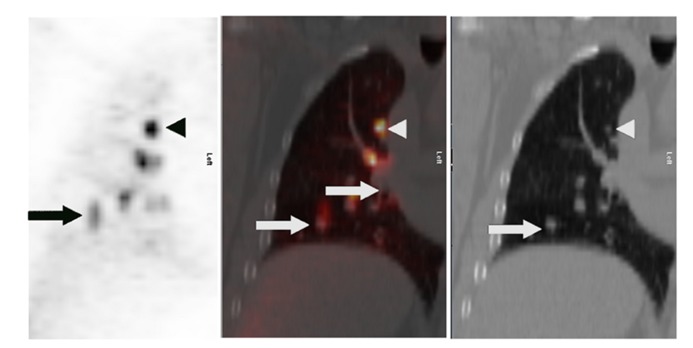
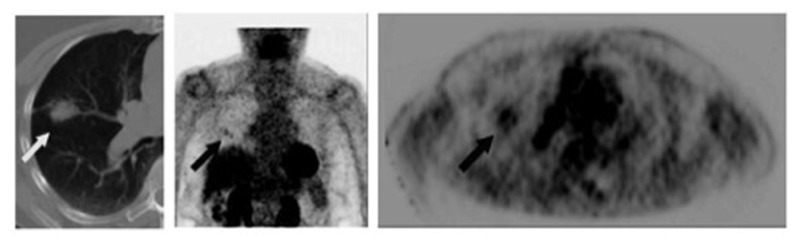
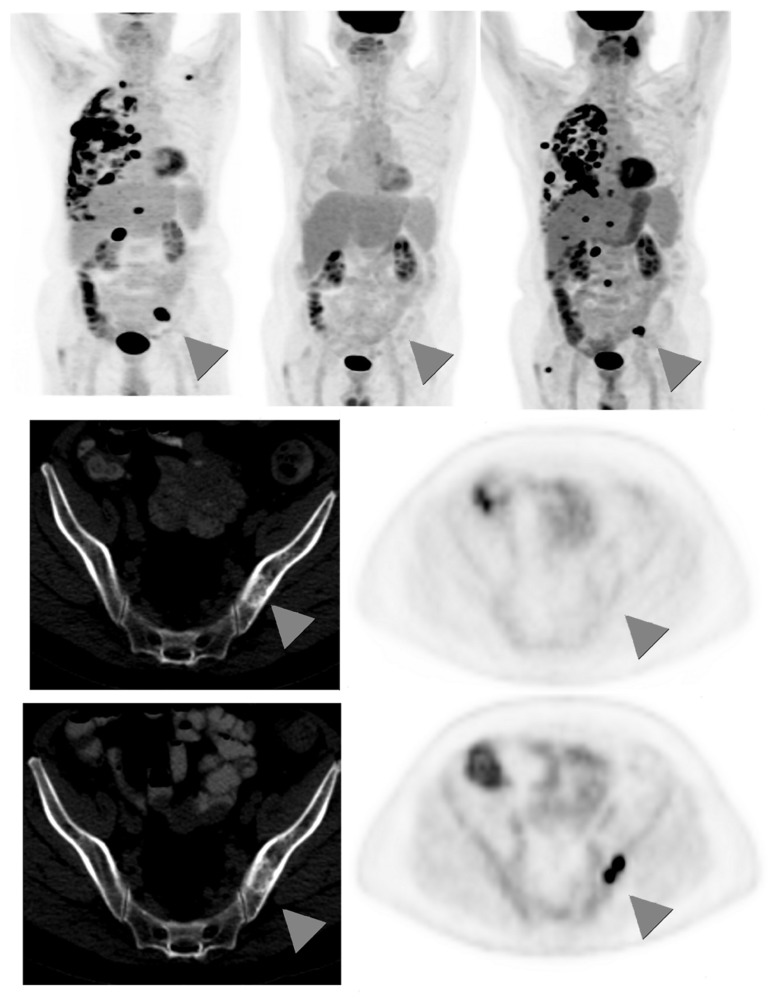
The integral role of positron-emission tomography (PET) using the glucose analog tracer fluorine-18 fluorodeoxyglucose (FDG) in the staging of non-small cell lung cancer (NSCLC) is well established. Evidence is emerging for the role of PET in response assessment to neoadjuvant therapy, combined-modality therapy, and early detection of recurrence. Here, we review the current literature on these aspects of PET in the management of NSCLC. FDG-PET, particularly integrated (18)F-FDG-PET/CT, scans have become a standard test in the staging of local tumor extent, mediastinal lymph node involvement, and distant metastatic disease in NSCLC. (18)F-FDG-PET sensitivity is generally superior to computed tomography (CT) scans alone. Local tumor extent and T stage can be more accurately determined with FDG-PET in certain cases, especially in areas of post-obstructive atelectasis or low CT density variation. FDG-PET sensitivity is decreased in tumors <1 cm, at least in part due to respiratory motion. False-negative results can occur in areas of low tumor burden, e.g., small lymph nodes or ground-glass opacities. (18)F-FDG-PET-CT nodal staging is more accurate than CT alone, as hilar and mediastinal involvement is often detected first on (18)F-FDG-PET scan when CT criteria for malignant involvement are not met. (18)F-FDG-PET scans have widely replaced bone scintography for assessing distant metastases, except for the brain, which still warrants dedicated brain imaging. (18)F-FDG uptake has also been shown to vary between histologies, with adenocarcinomas generally being less FDG avid than squamous cell carcinomas. (18)F-FDG-PET scans are useful to detect recurrences, but are currently not recommended for routine follow-up. Typically, patients are followed with chest CT scans every 3-6 months, using (18)F-FDG-PET to evaluate equivocal CT findings. As high (18)F-FDG uptake can occur in infectious, inflammatory, and other non-neoplastic conditions, (18)F-FDG-PET-positive findings require pathological confirmation in most cases. There is increased interest in the prognostic and predictive role of FDG-PET scans. Studies show that absence of metabolic response to neoadjuvant therapy correlates with poor pathologic response, and a favorable (18)F-FDG-PET response appears to be associated with improved survival. Further work is underway to identify subsets of patients that might benefit individualized management based on FDG-PET.
Keywords: PET; follow-up; non-small cell lung cancer; response assessment; staging.
Figures
References
-
- Al-Sarraf N., Gately K., Lucey J., Wilson L., Mcgovern E., Young V. (2008). Lymph node staging by means of positron emission tomography is less accurate in non-small cell lung cancer patients with enlarged lymph nodes: analysis of 1,145 lymph nodes. Lung Cancer 60 62–68 - PubMed
-
- Aquino S. L., Halpern E. F., Kuester L. B., Fischman A. J. (2007). FDG-PET and CT features of non-small cell lung cancer based on tumor type. Int. J. Mol. Med. 19 495–499 - PubMed
-
- Berghmans T., Dusart M., Paesmans M., Hossein-Foucher C., Buvat I., Castaigne C., et al. (2008). Primary tumor standardized uptake value (SUVmax) measured on fluorodeoxyglucose positron emission tomography (FDG-PET) is of prognostic value for survival in non-small cell lung cancer (NSCLC): a systematic review and meta-analysis (MA) by the European Lung Cancer Working Party for the IASLC Lung Cancer Staging Project. J. Thorac. Oncol. 3 6–12 - PubMed
-
- Burdick M. J., Stephans K. L., Reddy C. A., Djemil T., Srinivas S. M., Videtic G. M. (2010). Maximum standardized uptake value from staging FDG-PET/CT does not predict treatment outcome for early-stage non-small-cell lung cancer treated with stereotactic body radiotherapy. Int. J. Radiat. Oncol. Biol. Phys. 78 1033–1039 - PubMed
-
- Bury T., Barreto A., Daenen F., Barthelemy N., Ghaye B., Rigo P. (1998). Fluorine-18 deoxyglucose positron emission tomography for the detection of bone metastases in patients with non-small cell lung cancer. Eur. J. Nucl. Med. 25 1244–1247 - PubMed
Grants and funding
LinkOut - more resources
Full Text Sources
Other Literature Sources
Research Materials
Miscellaneous
