


G protein-coupled estrogen receptor in energy homeostasis and obesity pathogenesis
- PMID: 23317786
- PMCID: PMC3632385
- DOI: 10.1016/B978-0-12-386933-3.00006-6
G protein-coupled estrogen receptor in energy homeostasis and obesity pathogenesis
Abstract
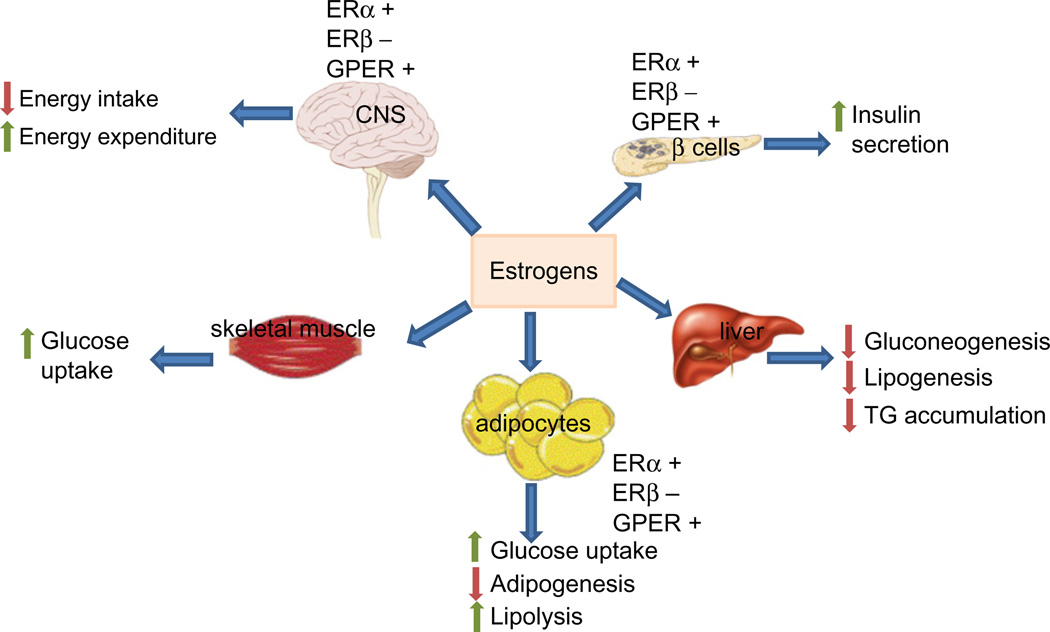
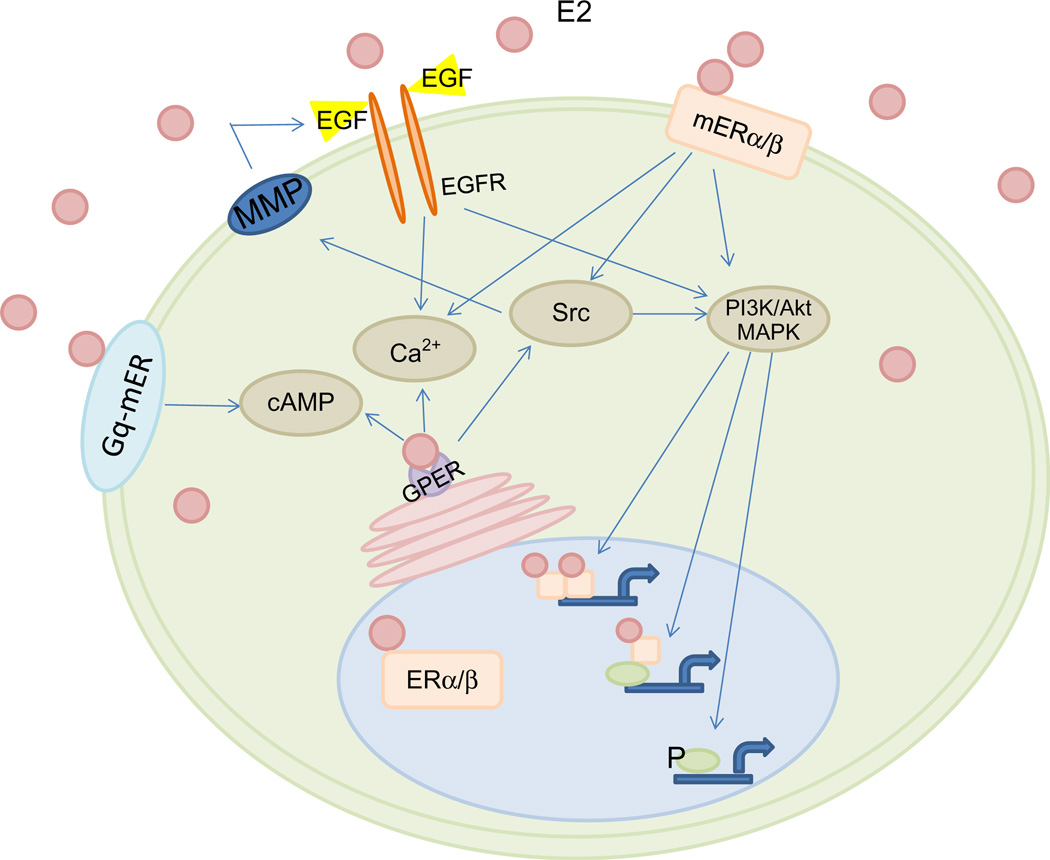
Obesity and its related metabolic diseases have reached a pandemic level worldwide. There are sex differences in the prevalence of obesity and its related metabolic diseases, with men being more vulnerable than women; however, the prevalence of these disorders increases dramatically in women after menopause, suggesting that sex steroid hormone estrogens play key protective roles against development of obesity and metabolic diseases. Estrogens are important regulators of several aspects of metabolism, including body weight and body fat, caloric intake and energy expenditure, and glucose and lipid metabolism in both males and females. Estrogens act in complex ways on their nuclear estrogen receptors (ERs) ERα and ERβ and transmembrane ERs such as G protein-coupled estrogen receptor. Genetic tools, such as different lines of knockout mouse models, and pharmacological agents, such as selective agonists and antagonists, are available to study function and signaling mechanisms of ERs. We provide an overview of the evidence for the physiological and cellular actions of ERs in estrogen-dependent processes in the context of energy homeostasis and body fat regulation and discuss its pathology that leads to obesity and related metabolic states.
Copyright © 2013 Elsevier Inc. All rights reserved.
Figures
References
-
- James WPT. The epidemiology of obesity: the size of the problem. J Intern Med. 2008;263(4):336–352. - PubMed
-
- Cummings DE, Schwartz MW. Genetics and Pathophysiology of Human Obesity. Annu Rev Med. 2003;54(1):453–471. - PubMed
-
- Alberti K, Zimmet P, Shaw J. IDF epidemiology task force consensus group: the metabolic syndrome—a worldwide definition. Lancet. 2005;366:1059–1062. - PubMed
-
- McGarry JD. Banting lecture 2001: dysregulation of fatty acid metabolism in the etiology of type 2 diabetes. Diabetes. 2002;51(1):7–18. - PubMed
Publication types
MeSH terms
Substances
Grants and funding
LinkOut - more resources
Full Text Sources
Other Literature Sources
Medical
