


Regulation of blood-testis barrier (BTB) dynamics during spermatogenesis via the "Yin" and "Yang" effects of mammalian target of rapamycin complex 1 (mTORC1) and mTORC2
- PMID: 23317821
- PMCID: PMC4086807
- DOI: 10.1016/B978-0-12-407704-1.00006-3
Regulation of blood-testis barrier (BTB) dynamics during spermatogenesis via the "Yin" and "Yang" effects of mammalian target of rapamycin complex 1 (mTORC1) and mTORC2
Abstract
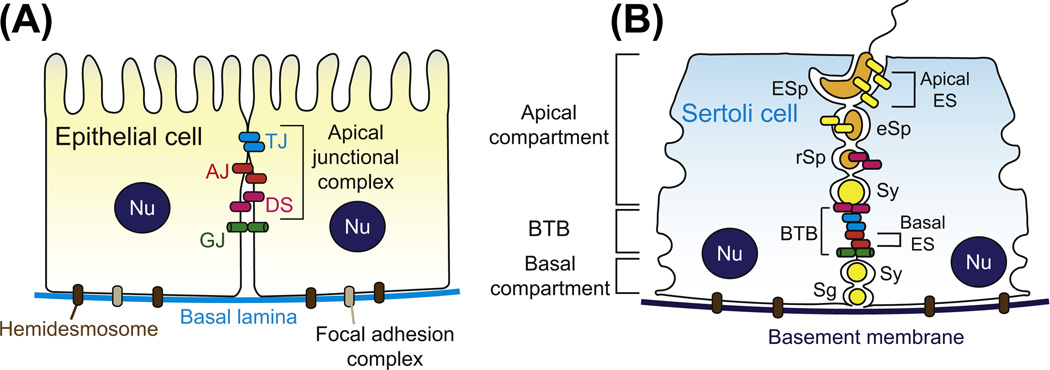
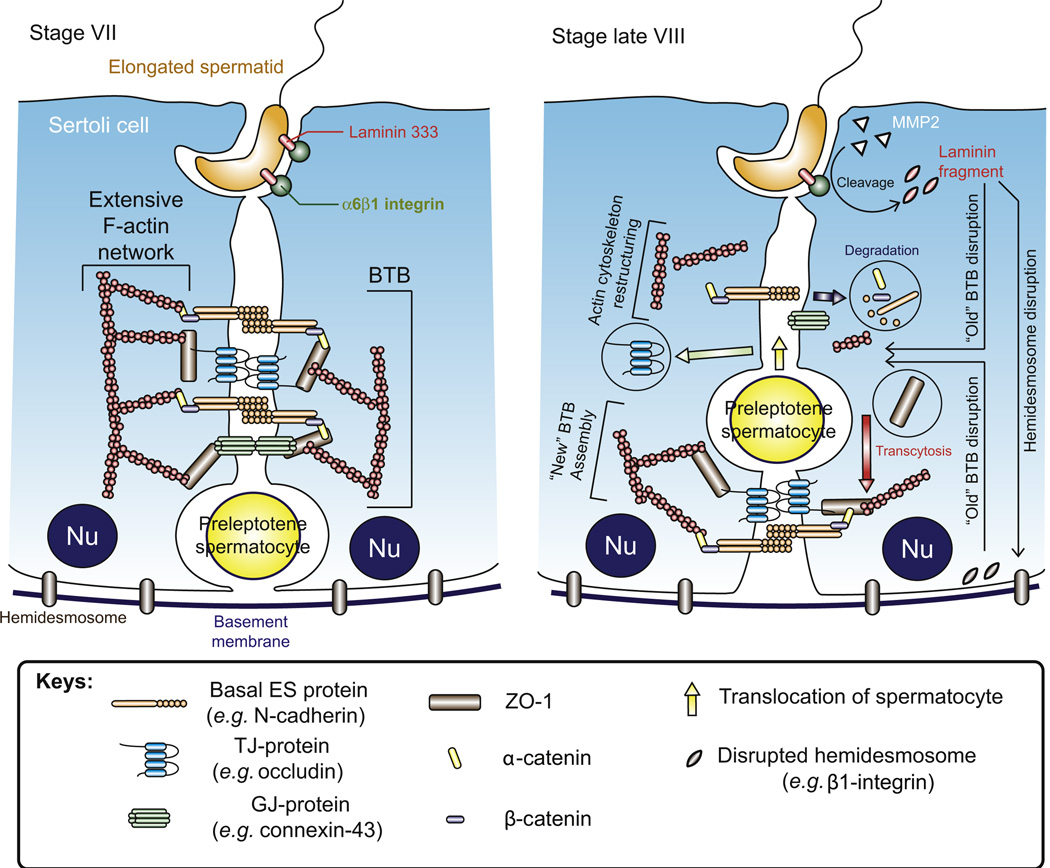
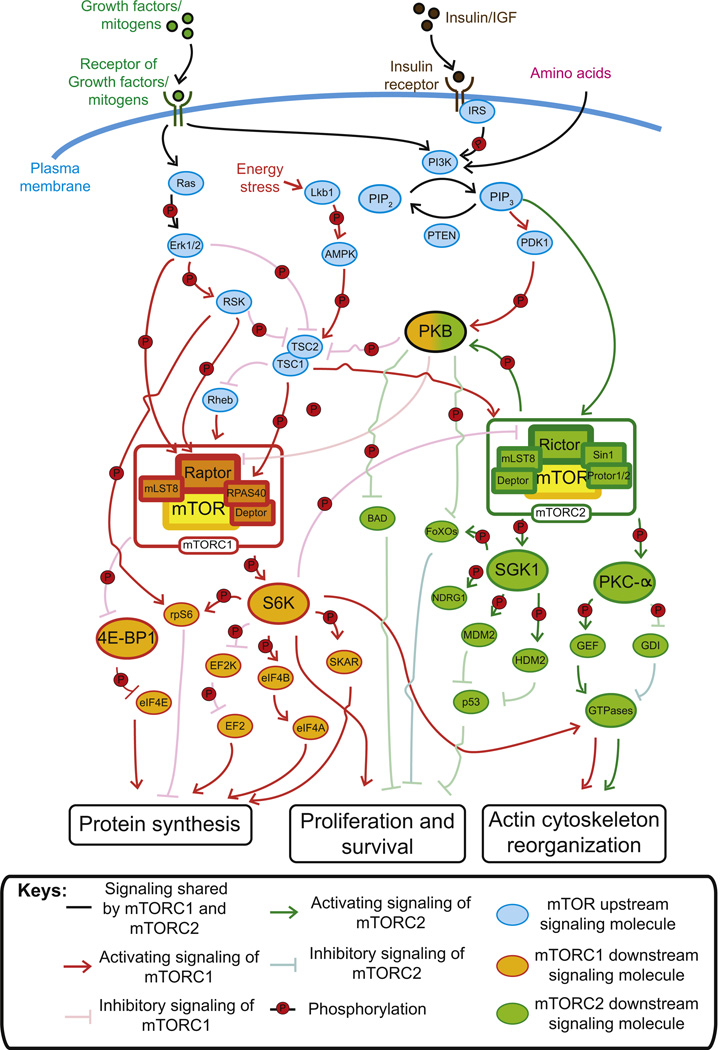
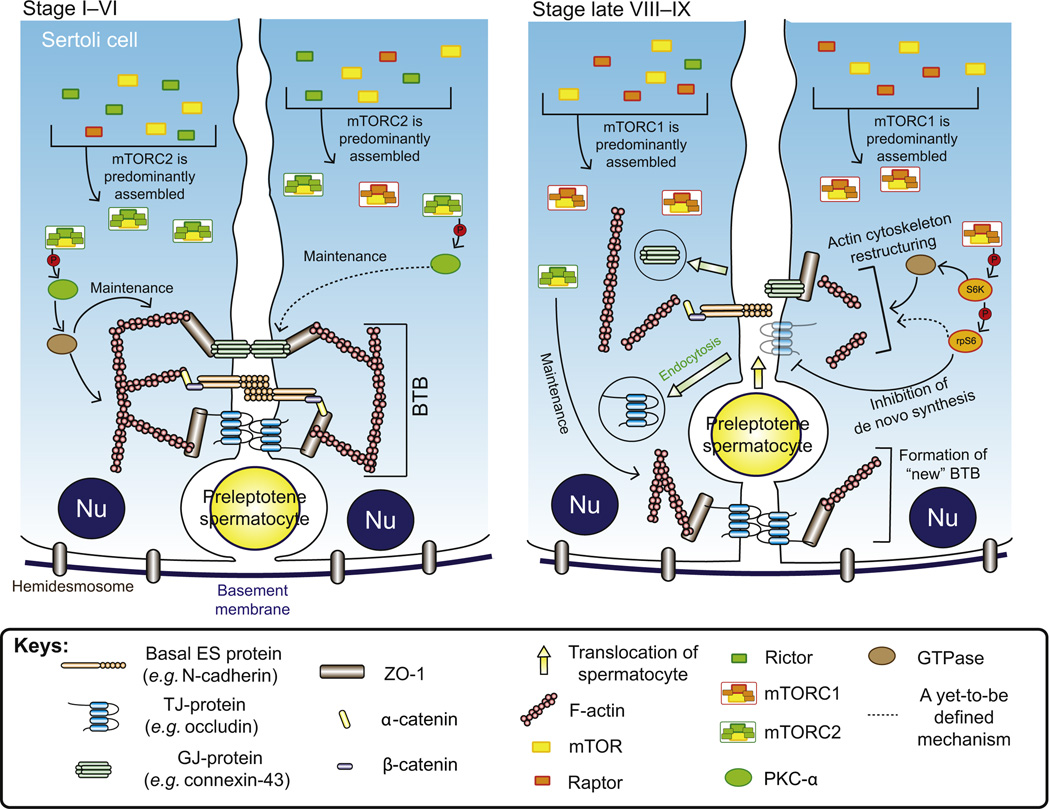
In mammalian testes, haploid spermatozoa are formed from diploid spermatogonia during spermatogenesis, which is a complicated cellular process. While these cellular events were reported in the 1960s and 1970s, the underlying molecular mechanism(s) that regulates these events remained unexplored until the past ∼10 years. For instance, adhesion proteins were shown to be integrated components at the Sertoli cell-cell interface and/or the Sertoli-spermatid interface in the late 1980s. But only until recently, studies have demonstrated that some of the adhesion proteins serve as the platform for signal transduction that regulates cell adhesion. In this chapter, a brief summary and critical discussion are provided on the latest findings regarding these cell-adhesion proteins in the testis and their relationship to spermatogenesis. Moreover, antagonistic effects of two mammalian target of rapamycin (mTOR) complexes, known as mTORC1 and mTORC2, on cell-adhesion function in the testis are discussed. Finally, a hypothetic model is presented to depict how these two mTOR-signaling complexes having the "yin" and "yang" antagonistic effects on the Sertoli cell tight junction (TJ)-permeability barrier can maintain the blood-testis barrier (BTB) integrity during the epithelial cycle while preleptotene spermatocytes are crossing the BTB.
Copyright © 2013 Elsevier Inc. All rights reserved.
Figures
References
-
- Abraham RT, Wiederrecht GJ. Immunopharmacology of rapamycin. Annu. Rev. Immunol. 1996;14:483–510. - PubMed
-
- Alessi DR, James SR, Downes CP, Holmes AB, Gaffney PR, Reese CB, Cohen P. Characterization of a 3-phosphoinositide-dependent protein kinase which phosphorylates and activates protein kinase Balpha. Curr. Biol. 1997;7:261–269. - PubMed
-
- Aliabadi AZ, Pohanka E, Seebacher G, Dunkler D, Kammerstatter D, Wolner E, Grimm M, Zuckermann AO. Development of proteinuria after switch to sirolimus- based immunosuppression in long-term cardiac transplant patients. Am J. Transplant. 2008;8:854–861. - PubMed
-
- Amato R, D’Antona L, Porciatti G, Agosti V, Menniti M, Rinaldo C, Costa N, Bellacchio E, Mattarocci S, Fuiano G, et al. Sgk1 activates MDM2-dependent p53 degradation and affects cell proliferation, survival, and differentiation. J. Mol. Med. (Berl) 2009;87:1221–1239. - PubMed
-
- Andjelkovic M, Alessi DR, Meier R, Fernandez A, Lamb NJ, Frech M, Cron P, Cohen P, Lucoq JM, Hemmings BA. Role of translocation in the activation and function of protein kinase. B.J. Biol. Chem. 1997;272:31515–31524. - PubMed
Publication types
MeSH terms
Substances
Grants and funding
LinkOut - more resources
Full Text Sources
Other Literature Sources
Miscellaneous
