


Reduced FANCD2 influences spontaneous SCE and RAD51 foci formation in uveal melanoma and Fanconi anaemia
- PMID: 23318456
- PMCID: PMC3898318
- DOI: 10.1038/onc.2012.627
Reduced FANCD2 influences spontaneous SCE and RAD51 foci formation in uveal melanoma and Fanconi anaemia
Abstract
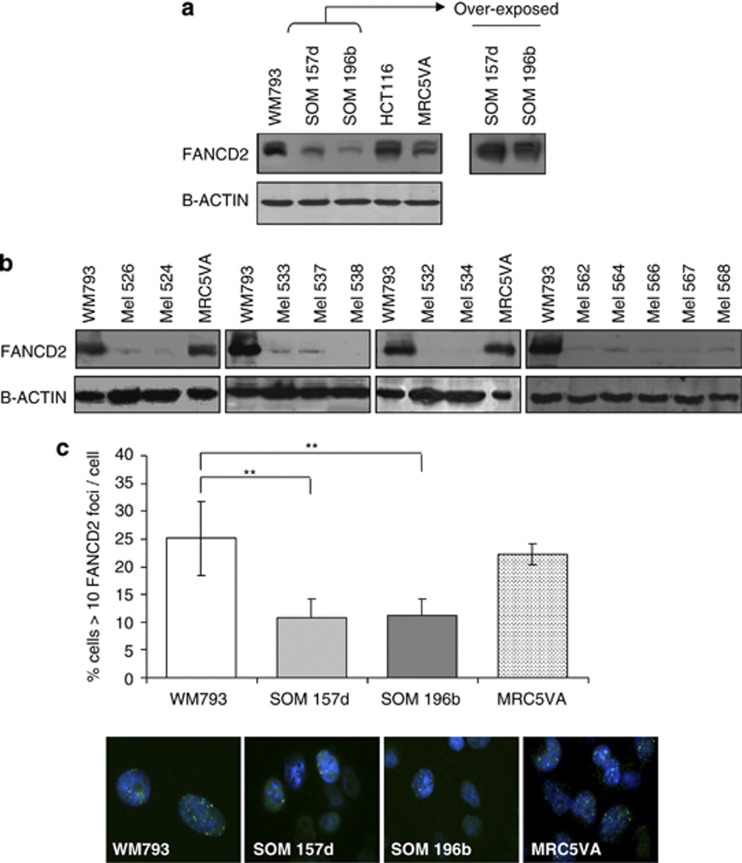
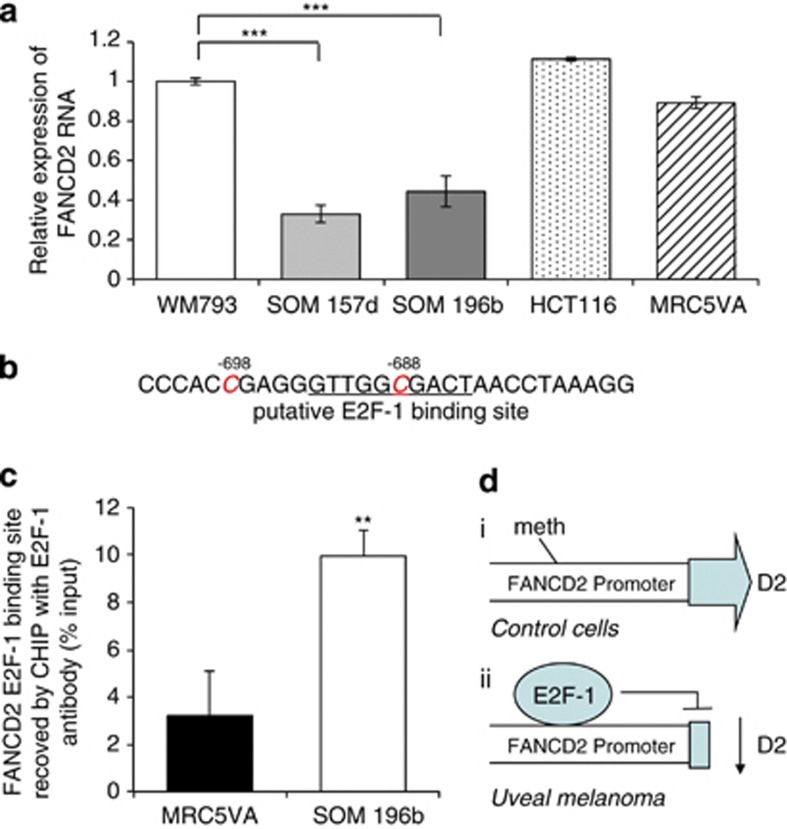
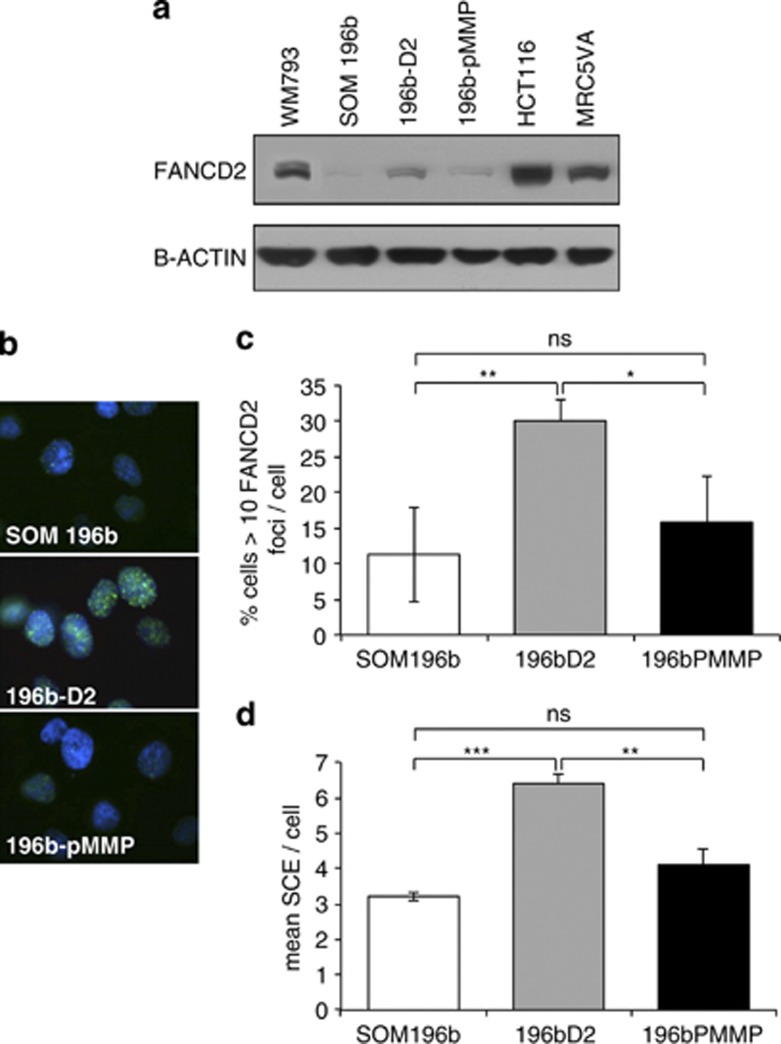
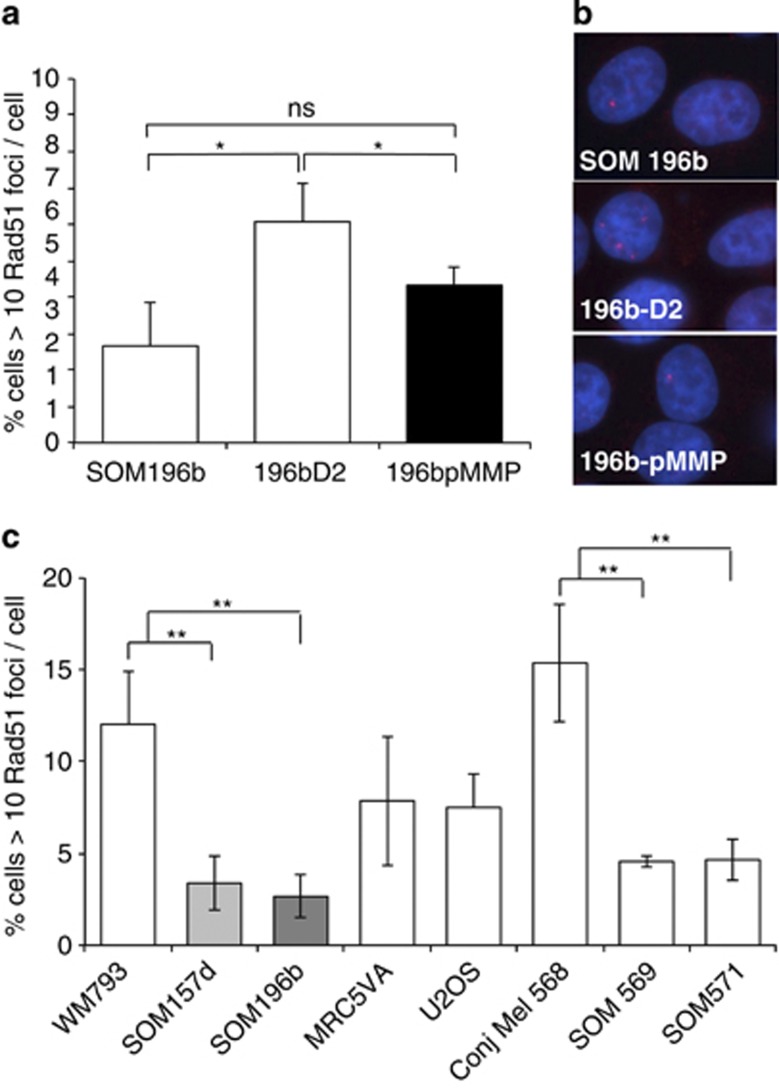
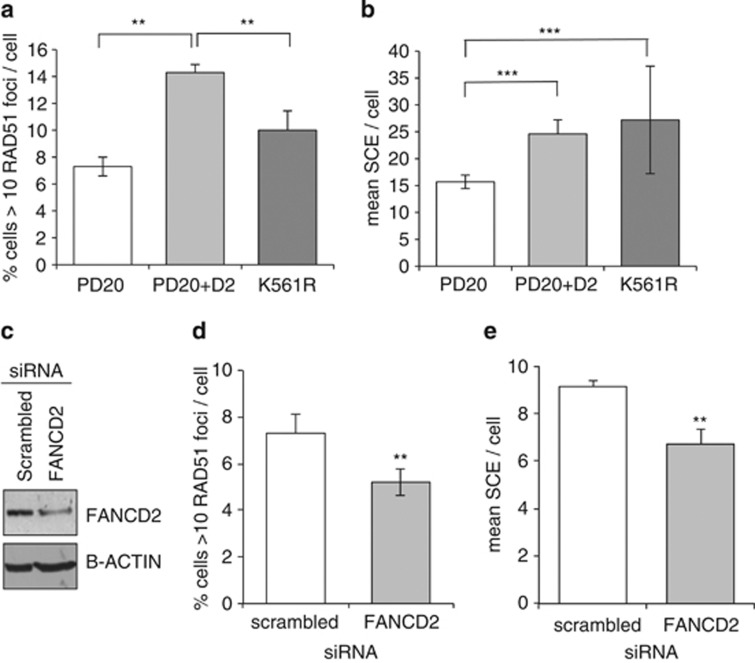
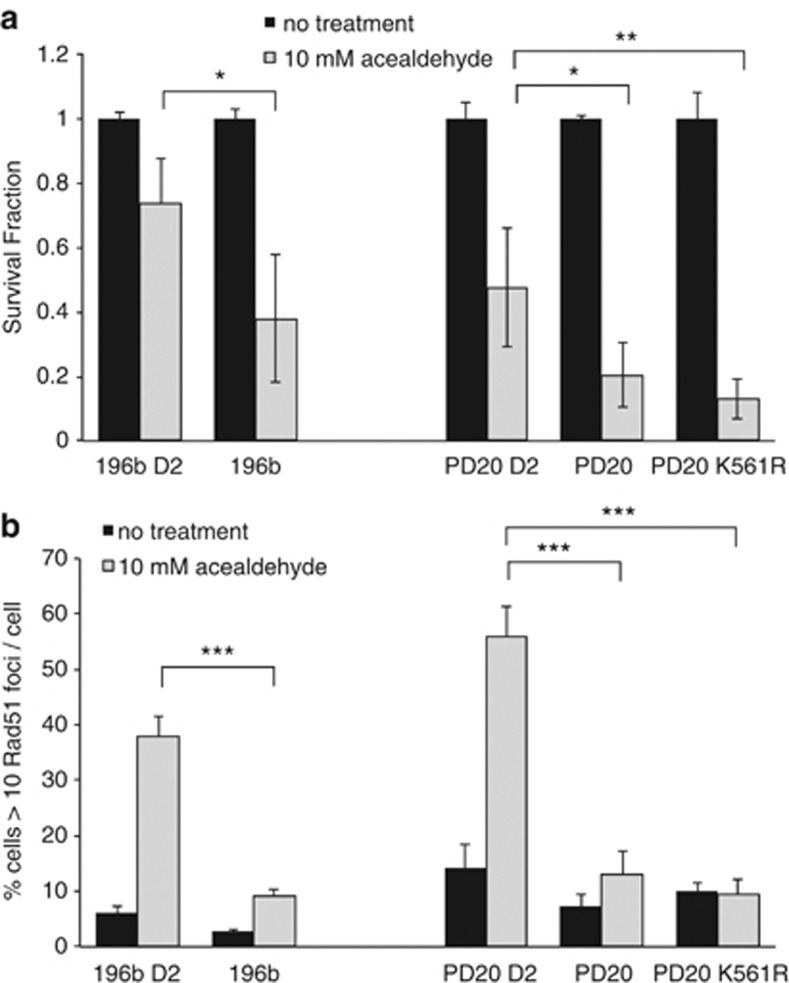
Uveal melanoma (UM) is unique among cancers in displaying reduced endogenous levels of sister chromatid exchange (SCE). Here we demonstrate that FANCD2 expression is reduced in UM and that ectopic expression of FANCD2 increased SCE. Similarly, FANCD2-deficient fibroblasts (PD20) derived from Fanconi anaemia patients displayed reduced spontaneous SCE formation relative to their FANCD2-complemented counterparts, suggesting that this observation is not specific to UM. In addition, spontaneous RAD51 foci were reduced in UM and PD20 cells compared with FANCD2-proficient cells. This is consistent with a model where spontaneous SCEs are the end product of endogenous recombination events and implicates FANCD2 in the promotion of recombination-mediated repair of endogenous DNA damage and in SCE formation during normal DNA replication. In both UM and PD20 cells, low SCE was reversed by inhibiting DNA-PKcs (DNA-dependent protein kinase, catalytic subunit). Finally, we demonstrate that both PD20 and UM are sensitive to acetaldehyde, supporting a role for FANCD2 in repair of lesions induced by such endogenous metabolites. Together, these data suggest FANCD2 may promote spontaneous SCE by influencing which double-strand break repair pathway predominates during normal S-phase progression.
Figures
References
-
- Miranda M, Ligas C, Amicarelli F, D'Alessandro E, Brisdelli F, Zarivi O, et al. Sister chromatid exchange (SCE) rates in human melanoma cells as an index of mutagenesis. Mutagenesis. 1997;12:233–236. - PubMed
-
- Goyanes V, Fernandez JL, Pereira S, Campos A, Rodriguez E, Gonzalez M, et al. Frequency of sister chromatid exchanges in humans at 14–16 week foetal stage and at birth. Cytobios. 1994;77:67–72. - PubMed
-
- Kato H, Stich HF. Sister chromatid exchanges in ageing and repair-deficient human fibroblasts. Nature. 1976;260:447–448. - PubMed
-
- Nagasawa H, Fornace D, Little JB. Induction of sister-chromatid exchanges by DNA-damaging agents and 12-O-tetradecanoyl-phorbol-13-acetate (TPA) in synchronous Chinese hamster ovary (CHO) cells. Mutat Res. 1983;107:315–327. - PubMed
-
- Wojcik A, Bruckmann E, Obe G. Insights into the mechanisms of sister chromatid exchange formation. Cytogenet Genome Res. 2004;104:304–309. - PubMed
Publication types
MeSH terms
Substances
LinkOut - more resources
Full Text Sources
Other Literature Sources
Medical
Research Materials
Miscellaneous
