Perinatal choline effects on neonatal pathophysiology related to later schizophrenia risk
- PMID: 23318559
- PMCID: PMC3640283
- DOI: 10.1176/appi.ajp.2012.12070940
Perinatal choline effects on neonatal pathophysiology related to later schizophrenia risk
Erratum in
- Am J Psychiatry. 2013 May 1;170(5):566
Abstract
Objective: Deficient cerebral inhibition is a pathophysiological brain deficit related to poor sensory gating and attention in schizophrenia and other disorders. Cerebral inhibition develops perinatally, influenced by genetic and in utero factors. Amniotic choline activates fetal α7-nicotinic acetylcholine receptors and facilitates development of cerebral inhibition. Increasing this activation may protect infants from future illness by promoting normal brain development. The authors investigated the effects of perinatal choline supplementation on the development of cerebral inhibition in human infants.
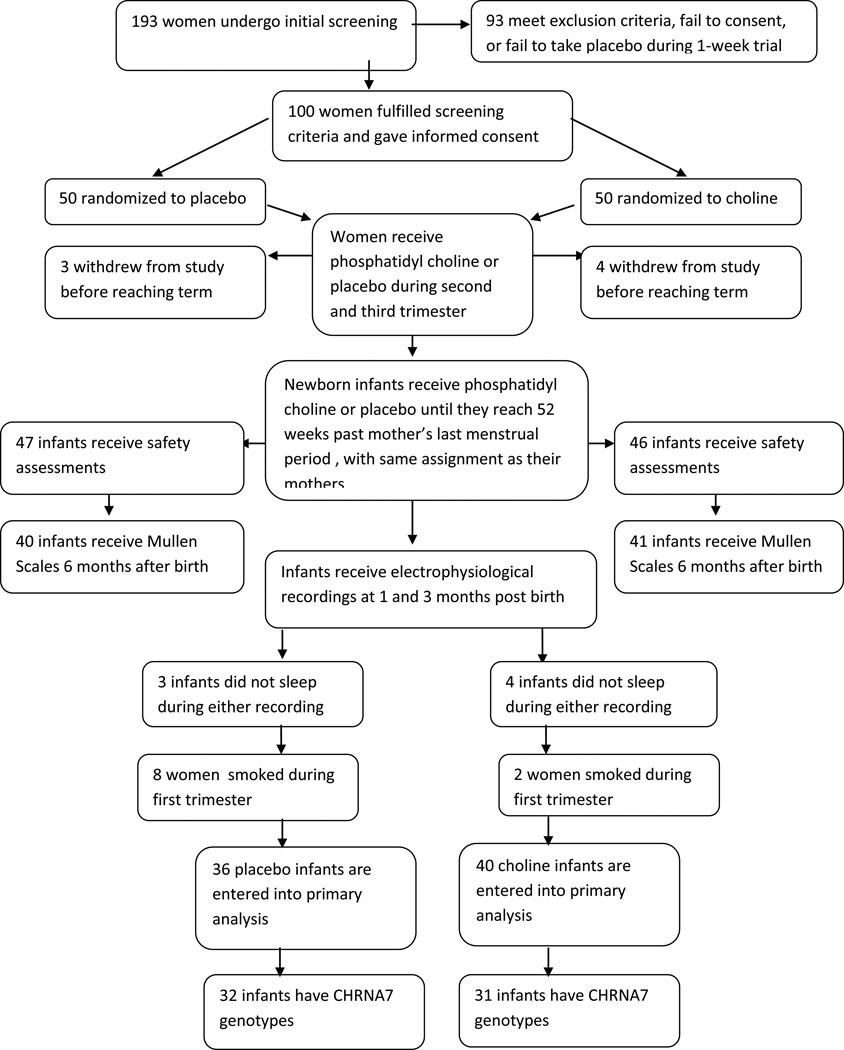
Method: A randomized placebo-controlled clinical trial of dietary phosphatidylcholine supplementation was conducted with 100 healthy pregnant women, starting in the second trimester. Supplementation to twice normal dietary levels for mother or newborn continued through the third postnatal month. All women received dietary advice regardless of treatment. Infants' electrophysiological recordings of inhibition of the P50 component of the cerebral evoked response to paired sounds were analyzed. The criterion for inhibition was suppression of the amplitude of the second P50 response by at least half, compared with the first response.
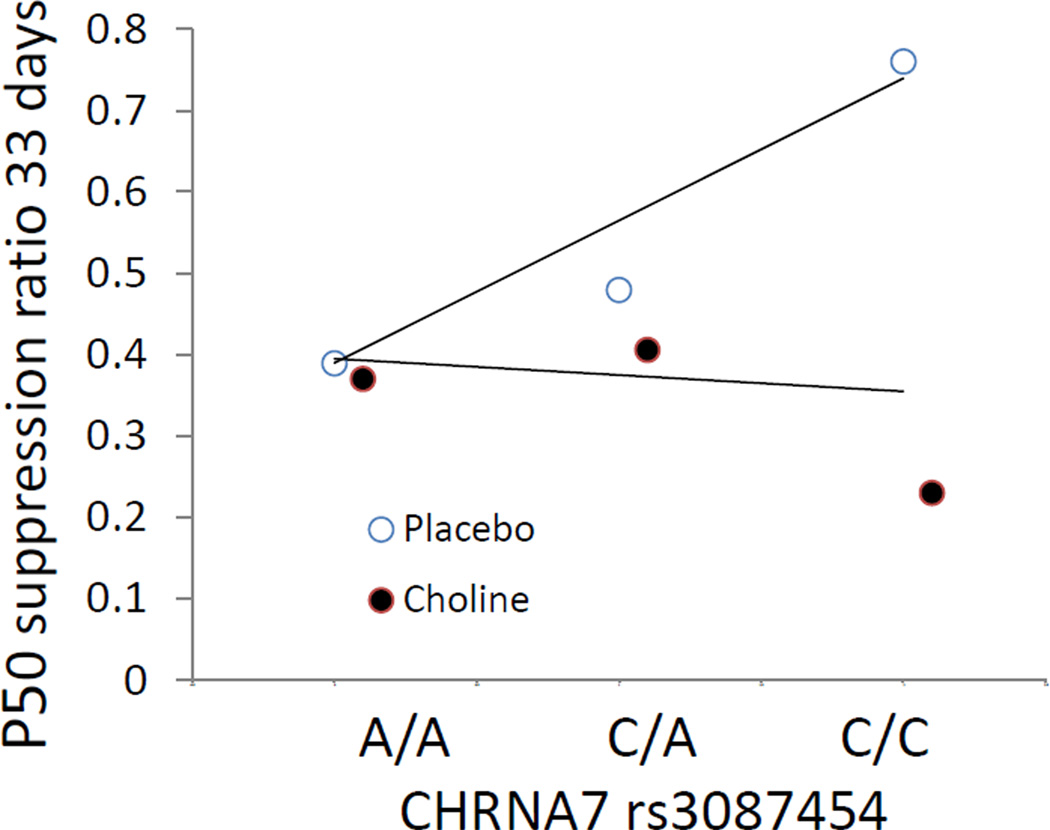
Results: No adverse effects of choline were observed in maternal health and delivery, birth, or infant development. At the fifth postnatal week, the P50 response was suppressed in more choline-treated infants (76%) compared with placebo-treated infants (43%) (effect size=0.7). There was no difference at the 13th week. A CHRNA7 genotype associated with schizophrenia was correlated with diminished P50 inhibition in the placebo-treated infants, but not in the choline-treated infants.
Conclusions: Neonatal developmental delay in inhibition is associated with attentional problems as the child matures. Perinatal choline activates timely development of cerebral inhibition, even in the presence of gene mutations that otherwise delay it.
Trial registration: ClinicalTrials.gov NCT00332124.
Figures

Comment in
-
Prevention of schizophrenia: an impossible dream?Am J Psychiatry. 2013 Mar;170(3):245-7. doi: 10.1176/appi.ajp.2012.12101287. Am J Psychiatry. 2013. PMID: 23450283 Free PMC article. No abstract available.
References
-
- Fish B. The detection of schizophrenia in infancy: a preliminary report. J Nervous Mental Dis. 1957;124:1–24. - PubMed
-
- Walker EF, Savoie T, David D. Neuromotor precursors of schizophrenia. Schizophr Bull. 1994;20:441–451. - PubMed
-
- Cornblatt B, Obuchowski M, Roberts S, Pollack S, Erlenmeyer-Kimling L. Cognitive and behavioral precursors of schizophrenia. Dev Psychopath. 1999;11:487–508. - PubMed
-
- Cannon M, Caspi A, Moffitt TE, Harrington H, Taylor A, Murray RM, Poulton R. Evidence for early-childhood, pan-developmental impairment specific to schizophreniform disorder. Results from a longitudinal birth cohort. Arch Gen Psychiatry. 2002;59:449–456. - PubMed
Publication types
MeSH terms
Substances
Associated data
Grants and funding
LinkOut - more resources
Full Text Sources
Other Literature Sources
Medical
Research Materials