


The interplay between fiber and the intestinal microbiome in the inflammatory response
- PMID: 23319119
- PMCID: PMC3648735
- DOI: 10.3945/an.112.003046
The interplay between fiber and the intestinal microbiome in the inflammatory response
Abstract
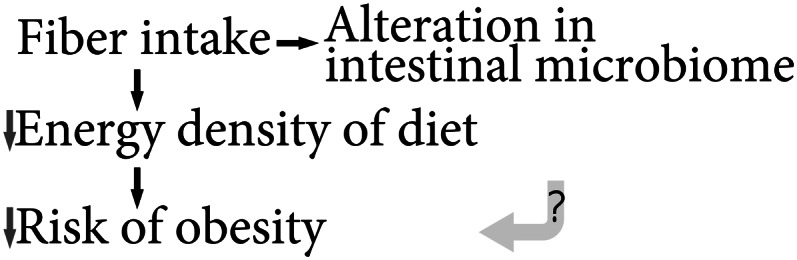
Fiber intake is critical for optimal health. This review covers the anti-inflammatory roles of fibers using results from human epidemiological observations, clinical trials, and animal studies. Fiber has body weight-related anti-inflammatory activity. With its lower energy density, a diet high in fiber has been linked to lower body weight, alleviating obesity-induced chronic inflammation evidenced by reduced amounts of inflammatory markers in human and animal studies. Body weight-unrelated anti-inflammatory activity of fiber has also been extensively studied in animal models in which the type and amount of fiber intake can be closely monitored. Fermentable fructose-, glucose-, and galactose-based fibers as well as mixed fibers have shown systemic and local intestinal anti-inflammatory activities when plasma inflammatory markers and tissue inflammation were examined. Similar anti-inflammatory activities have also been demonstrated in some human studies that controlled total fiber intake. The anti-inflammatory activities of synbiotics (probiotics plus fiber) were reviewed as well, but there was no convincing evidence indicating higher efficacy of synbiotics compared with that of fiber alone. Adverse effects have not been observed with the amount of fiber intake or supplementation used in studies, although patients with Crohn's disease may be more sensitive to inulin intake. Several possible mechanisms that may mediate the body weight-unrelated anti-inflammatory activity of fibers are discussed based on the in vitro and in vivo evidence. Fermentable fibers are known to affect the intestinal microbiome. The immunomodulatory role of the intestinal microbiome and/or microbial metabolites could contribute to the systemic and local anti-inflammatory activities of fibers.
Conflict of interest statement
Author disclosure: S.-M. Kuo, no conflicts of interest.
Figures

References
-
- Otten JJ, Hellwig JP, Meyers LD. DRI, dietary reference intakes [electronic resource]: the essential guide to nutrient requirements. Washington, DC: National Academies Press; 2006
-
- Bieri JG, Stoewsand GS, Briggs GM, Phillips RW, Woodard JC, Knapka JJ. Report of the American Institute of Nutrition Ad Hoc Committee on Standards for Nutritional Studies. J Nutr. 1977;107:1340–8 - PubMed
-
- Reeves PG, Nielsen FH, Fahey GCJ. AIN-93 purified diets for laboratory rodents: final report of the American Institute of Nutrition Ad Hoc Writing Committee on the reformulation of the AIN-76A rodent diet. J Nutr. 1993;123:1939–51 - PubMed
-
- Spiller GA, Amen R. Letter: Plant fibers in nutrition: need for better nomenclature. Am J Clin Nutr. 1975;28:675–6 - PubMed
-
- Spiller GA, Fassett-Cornelius G, Briggs G. Letter: a new term for plant fibers in nutrition. Am J Clin Nutr. 1976;29:934–5 - PubMed
Publication types
MeSH terms
Substances
LinkOut - more resources
Full Text Sources
Other Literature Sources
Medical
