


Epidemiologic evidence of a relationship between tea, coffee, or caffeine consumption and cognitive decline
- PMID: 23319129
- PMCID: PMC3648732
- DOI: 10.3945/an.112.002717
Epidemiologic evidence of a relationship between tea, coffee, or caffeine consumption and cognitive decline
Abstract
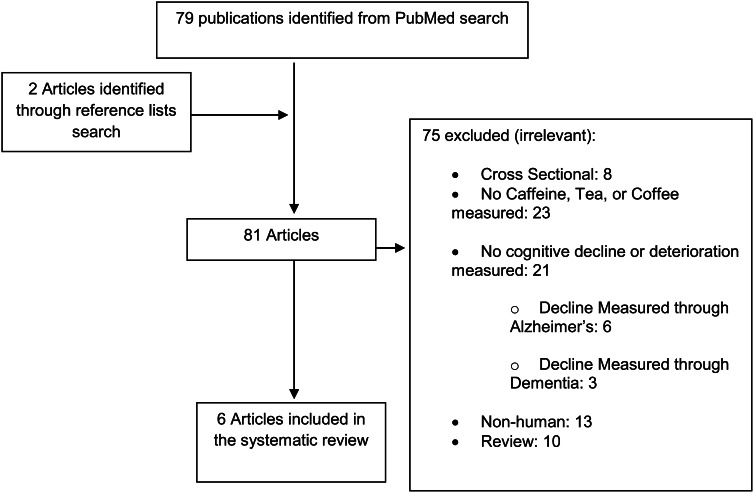
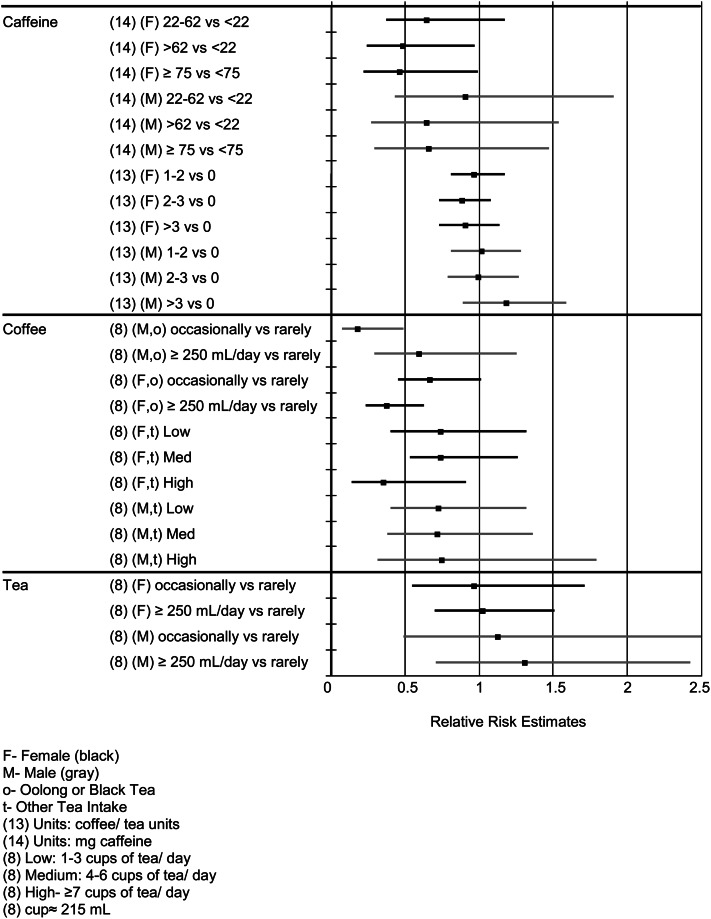
A systematic literature review of human studies relating caffeine or caffeine-rich beverages to cognitive decline reveals only 6 studies that have collected and analyzed cognition data in a prospective fashion that enables study of decline across the spectrum of cognition. These 6 studies, in general, evaluate cognitive function using the Mini Mental State Exam and base their beverage data on FFQs. Studies included in our review differed in their source populations, duration of study, and most dramatically in how their analyses were done, disallowing direct quantitative comparisons of their effect estimates. Only one of the studies reported on all 3 exposures, coffee, tea, and caffeine, making comparisons of findings across studies more difficult. However, in general, it can be stated that for all studies of tea and most studies of coffee and caffeine, the estimates of cognitive decline were lower among consumers, although there is a lack of a distinct dose response. Only a few measures showed a quantitative significance and, interestingly, studies indicate a stronger effect among women than men.
Conflict of interest statement
Author disclosures: L. Arab served as a scientific advisor to Unilever, a food company that has an interest in tea sales. F. Khan and H. Lam, no conflicts of interest.
Figures
References
-
- Riedel WJ, Jolles J. Cognition enhancers in age-related cognitive decline. Drugs Aging. 1996;8:245–74 - PubMed
-
- Vila-Luna S, Cabrera-Isidoro S, Vila-Luna L, Juarez-Diaz I, Bata-Garcia JL, Alvarez-Cervera FJ, Zapata-Vazquez RE, Arankowsky-Sandoval G, Heredia-Lopez F, Flores G, et al. Chronic caffeine consumption prevents cognitive decline from young to middle age in rats, and is associated with increased length, branching, and spine density of basal dendrites in CA1 hippocampal neurons. Neuroscience. 2012;202:384–95 - PubMed
-
- Kumanyika SK, Tell GS, Shemanski L, Martel J, Chinchilli VM. Dietary assessment using a picture-sort approach. Am J Clin Nutr. 1997;65 Suppl 4:S1123–9 - PubMed
-
- Tsushida T, Takeo T. Zinc, copper, lead and cadmium contents in green tea. J Sci Food Agric. 1977;28:255–8 - PubMed
Publication types
MeSH terms
Substances
LinkOut - more resources
Full Text Sources
Other Literature Sources
Medical
