


Differential roles of GluN2A- and GluN2B-containing NMDA receptors in neuronal survival and death
- PMID: 23320134
- PMCID: PMC3544217
Differential roles of GluN2A- and GluN2B-containing NMDA receptors in neuronal survival and death
Abstract
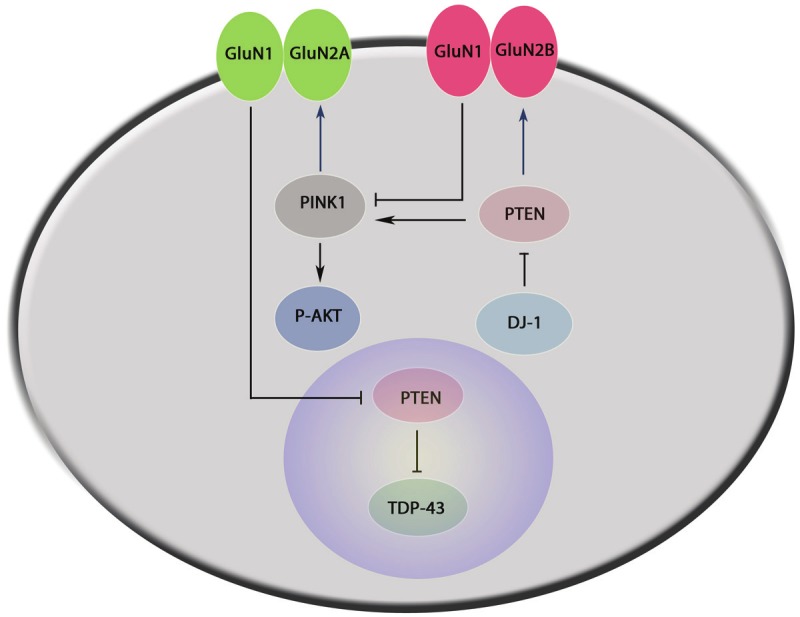
Glutamate-induced neurotoxicity is the primary molecular mechanism that induces neuronal death in a variety of pathologies in central nervous system (CNS). Toxicity signals are relayed from extracellular space to the cytoplasm by N-methyl-D-aspartate receptors (NMDARs) and regulate a variety of survival and death signaling. Differential subunit combinations of NMDARs confer neuroprotection or trigger neuronal death pathways depending on the subunit arrangements of NMDARs and its localization on the cell membrane. It is well-known that GluN2B-contaning NMDARs (GluN2BRs) preferentially link to signaling cascades involved in CNS injury promoting neuronal death and neurodegeneration. Conversely, less well-known mechanisms of neuronal survival signaling are associated with GluN2A-comtaining NMDARs (GluN2AR)-dependent signal pathways. This review will discuss the most recent signaling cascades associated with GluN2ARs and GluN2BRs.
Keywords: GluN2A; GluN2B; NMDA receptor; neuronal death; neuronal survival.
Figures
References
-
- Dingledine R, Borges K, Bowie D, Traynelis SF. The glutamate receptor ion channels. Pharmacol Rev. 1999;51:7–61. - PubMed
-
- Constantine-Paton M, Cline HT, Debski E. Patterned activity, synaptic convergence, and the nmda receptor in developing visual pathways. Annu Rev Neurosci. 1990;13:129–54. - PubMed
-
- Barria A, Malinow R. Subunit-specific NMDA receptor trafficking to synapses. Neuron. 2002;35:345–53. - PubMed
-
- Malenka RC, Nicoll RA. Long-term potentiation--A decade of progress? Science. 1999;285:1870–4. - PubMed
Grants and funding
LinkOut - more resources
Full Text Sources