


Novel method for studying postoperative ileus in mice
- PMID: 23320135
- PMCID: PMC3544220
Novel method for studying postoperative ileus in mice
Abstract
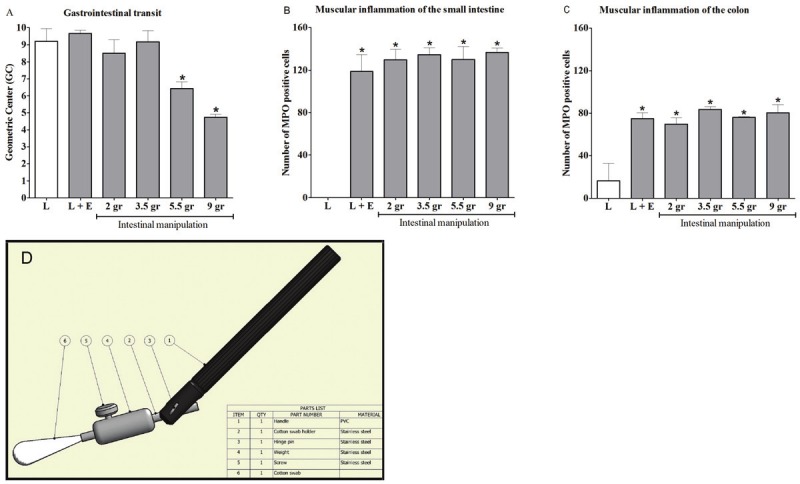
Introduction: Postoperative ileus (POI) is characterized by a transient inhibition of coordinated motility of the gastrointestinal (GI) tract after abdominal surgery and leads to increased morbidity and prolonged hospitalization. Currently, intestinal manipulation of the intestine is widely used as a preclinical model of POI. The technique used to manipulate the intestine is however highly variable and difficult to standardize, leading to large variations and inconsistent findings between different investigators. Therefore, we developed a device by which a fixed and adjustable pressure can be applied during intestinal manipulation.
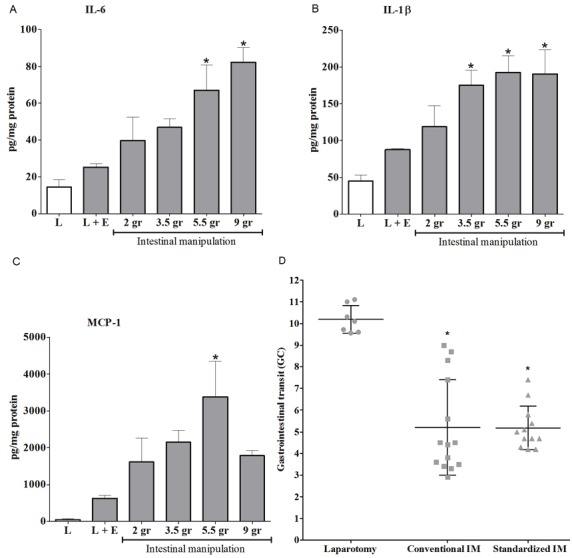
Methods: The standardized pressure manipulation method was developed using the purpose-designed device. First, the effect of graded manipulation was examined on postoperative GI transit. Next, this new technique was compared to the conventional manipulation technique used in previous studies. GI transit was measured by evaluating the intestinal distribution of orally gavaged fluorescein isothiocyanate (FITC)-labeled dextran. Infiltration of myeloperoxidase positive cells and cytokine production (ELISA) in the muscularis externa of the intestine were assessed.
Results: Increasing pressures resulted in a graded reduction of intestinal transit and was associated with intestinal inflammation as demonstrated by influx of leukocytes and increased levels of IL-6, IL-1β and MCP-1 compared to control mice. With an applied pressure of 9 grams a similar delay in intestinal transit could be obtained with a smaller standard deviation, leading to a reduced intra-individual variation.
Conclusions: This method provides a reproducible model with small variation to study the pathophysiology of POI and to evaluate new anti-inflammatory strategies.
Keywords: Gastrointestinal motility and physiology; inflammation; intestinal transit; mice; postoperative ileus.
Figures
References
-
- Manabe N, Camilleri M, Rao A, Wong BS, Burton D, Busciglio I, Zinsmeister AR, Haruma K. Effect of daikenchuto (TU-100) on gastrointestinal and colonic transit in humans. Am J Physiol Gastrointest Liver Physiol. 2010;298:G970–975. - PubMed
-
- Tokita Y, Yuzurihara M, Sakaguchi M, Satoh K, Kase Y. The Pharmacological Effects of Daikenchuto, a Traditional Herbal Medicine, on Delayed Gastrointestinal Transit in Rat Postoperative Ileus. J Pharmacol Sci. 2007;104:303–310. - PubMed
-
- Kalff JC, Carlos TM, Schraut WH, Billiar TR, Simmons RL, Bauer AJ. Surgically induced leukocytic infiltrates within the rat intestinal muscularis mediate postoperative ileus. Gastroenterol. 1999;117:378–387. - PubMed
-
- de Jonge WJ, van den Wijngaard RM, The FO, ter Beek ML, Bennink RJ, Tytgat GN, Buijs RM, Reitsma PH, van Deventer SJ, Boeckxstaens GE. Postoperative ileus is maintained by intestinal immune infiltrates that activate inhibitory neural pathways in mice. Gastroenterol. 2003;125:1137–1147. - PubMed
LinkOut - more resources
Full Text Sources
Research Materials
Miscellaneous