Falls among patients who had elective orthopaedic surgery: a decade of experience from a musculoskeletal specialty hospital
- PMID: 23321996
- PMCID: PMC10364138
- DOI: 10.2519/jospt.2013.4349
Falls among patients who had elective orthopaedic surgery: a decade of experience from a musculoskeletal specialty hospital
Abstract
Study design: Retrospective cohort study.
Objective: To evaluate falls among elective orthopaedic inpatients at a musculoskeletal hospital.
Background: Falls are the most commonly reported hospital incidents. Approximately 30% of in-hospital falls result in minor injury, and up to 8% of falls result in moderate to severe injury. Given the projected rise in elective orthopaedic procedures, it is important to better understand fall patterns in this population.
Methods: A retrospective review of electronic medical records and patient charts (2000-2009) was conducted to identify falls in patients admitted for elective orthopaedic procedures.
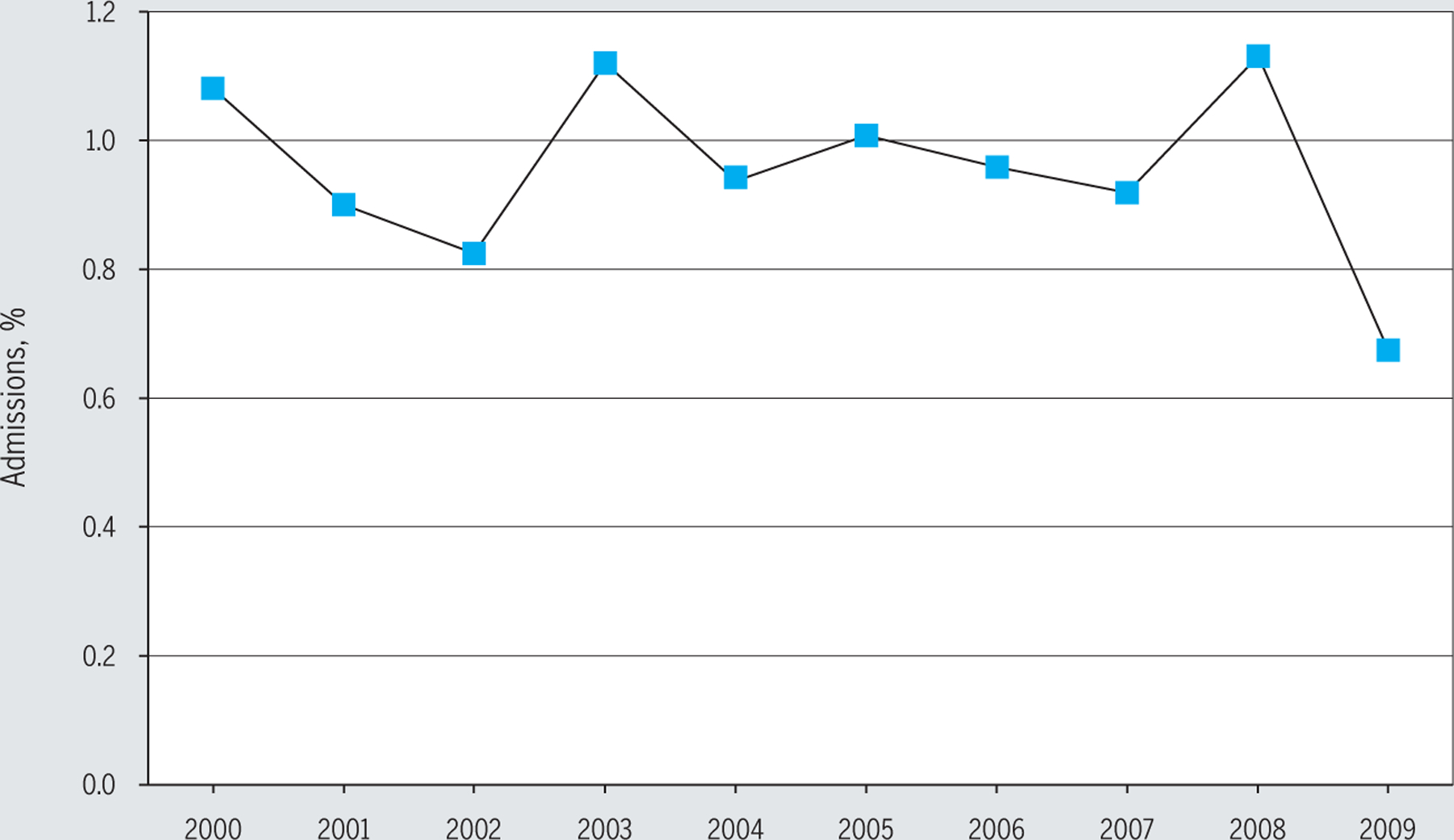
Results: There were 868 falls among orthopaedic patients older than 18 years. The fall rate was 0.9% of admissions, or 2.0 falls per 1000 inpatient days. The average age of the patients who had fallen was 68 years, and 57.6% were women. Knee replacements (38.2%), spine procedures (18.5%), and hip replacements (14.7%) were the procedures most commonly associated with falls. Three hundred eighty-six falls (45.8%) involved bathroom usage. One hundred ten first falls (13.1%) resulted in injuries. Twenty-eight falls (3.3%) resulted in serious events, including 5 returns to the operating room, 3 transfers to a higher level of care, 14 prosthesis dislocations, 6 fractures, 2 intracranial bleeds, and 1 hemorrhage. Patients with serious injuries were more likely to fall earlier (mean postoperative days, 2.7 versus 4.1; mean difference, 1.4 days; 95% confidence interval: 0.51, 2.3; P = .003) and to have had hip replacement (odds ratio = 3.7; 95% confidence interval: 1.7, 8.2). Serious injuries were not associated with body mass index, age, gender, hospital location, day, or fall history.
Conclusion: Falls are avoidable events that are poorly described among orthopaedic patients having elective procedures. This large series identifies hip replacement patients as being at almost 4-fold risk of having a serious adverse event after falling. Larger prospective trials are needed to confirm results and to inform prevention strategies.
Figures
References
MeSH terms
Grants and funding
LinkOut - more resources
Full Text Sources
Other Literature Sources
Medical