


Effects of ergot alkaloids on liver function of piglets as evaluated by the (13)C-methacetin and (13)C-α-ketoisocaproic acid breath test
- PMID: 23322130
- PMCID: PMC3564074
- DOI: 10.3390/toxins5010139
Effects of ergot alkaloids on liver function of piglets as evaluated by the (13)C-methacetin and (13)C-α-ketoisocaproic acid breath test
Abstract
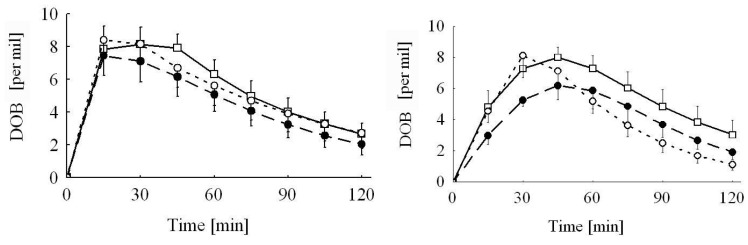
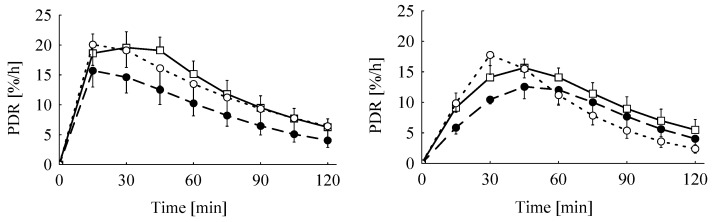
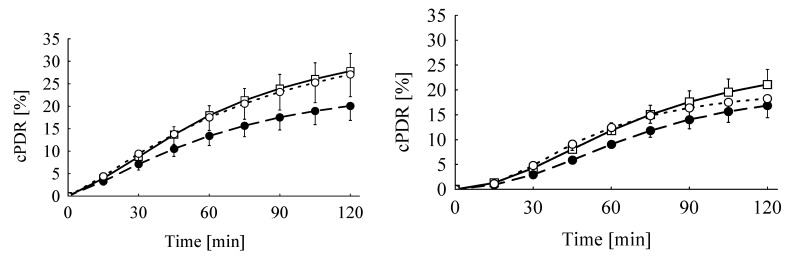
Ergot alkaloids (the sum of individual ergot alkaloids are termed as total alkaloids, TA) are produced by the fungus Claviceps purpurea, which infests cereal grains commonly used as feedstuffs. Ergot alkaloids potentially modulate microsomal and mitochondrial hepatic enzymes. Thus, the aim of the present experiment was to assess their effects on microsomal and mitochondrial liver function using the (13)C-Methacetin (MC) and (13)C-α-ketoisocaproic acid (KICA) breath test, respectively. Two ergot batches were mixed into piglet diets, resulting in 11 and 22 mg (Ergot 5-low and Ergot 5-high), 9 and 14 mg TA/kg (Ergot 15-low and Ergot 15-high) and compared to an ergot-free control group. Feed intake and live weight gain decreased significantly with the TA content (p < 0.001). Feeding the Ergot 5-high diet tended to decrease the 60-min-cumulative (13)CO(2) percentage of the dose recovery (cPDR(60)) by 26% and 28% in the MC and KICA breath test, respectively, compared to the control group (p = 0.065). Therefore, both microsomal and mitochondrial liver function was slightly affected by ergot alkaloids.
Figures
References
-
- EFSA Opinion of the Scientific Panel on Contaminants in Food Chain on a request from the Commission related to ergot as undesirable substance in animal feed. EFSA J. 2005;225:1–27.
-
- Moubarak A.S., Rosenkrans C.F., Jr., Johnson Z.B. Modulation of cytochrome P450 metabolism by ergonovine and dihydroergotamine. Vet. Hum. Toxicol. 2003;45:6–9. - PubMed
MeSH terms
Substances
LinkOut - more resources
Full Text Sources
Other Literature Sources
