


CXCL13 is a biomarker of inflammation in multiple sclerosis, neuromyelitis optica, and other neurological conditions
- PMID: 23322500
- PMCID: PMC3959125
- DOI: 10.1177/1352458512473362
CXCL13 is a biomarker of inflammation in multiple sclerosis, neuromyelitis optica, and other neurological conditions
Abstract
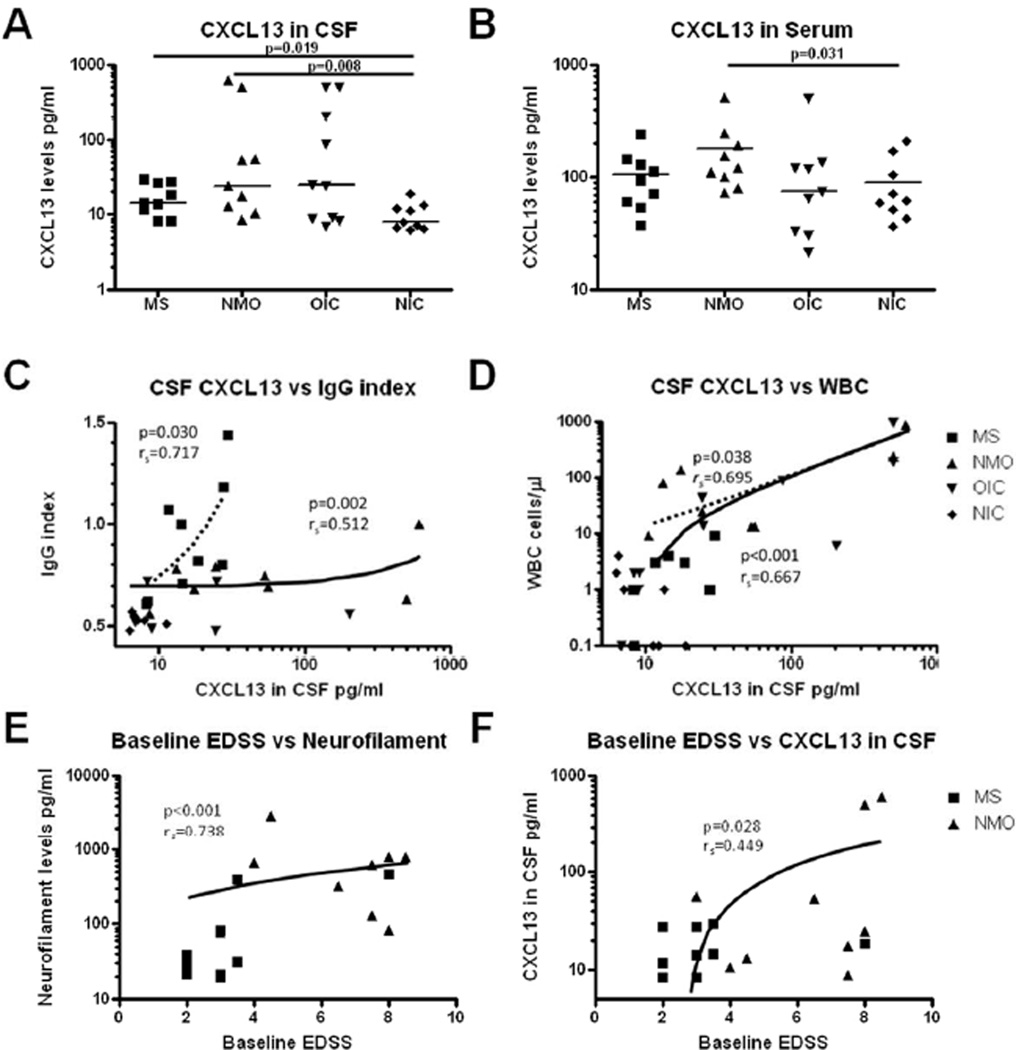
CXCL13, a B-cell chemokine, has been proposed as a biomarker in a variety of conditions, some of which can mimic multiple sclerosis and can have very high levels. In this case-control study, cerebrospinal fluid (CSF) CXCL13 was elevated in multiple sclerosis, neuromyelitis optica and other inflammatory neurological controls compared with noninflammatory controls. Levels did not differentiate disease groups. For all subjects taken together, CSF CXCL13 correlated with CSF WBC, oligoclonal band numbers, CSF protein, EDSS, and neurofilament levels. In subgroup analyses, CSF CXCL13 correlated with CSF WBC in neuromyelitis optica and IgG index in multiple sclerosis. Additionally, serum CXCL13 was elevated in neuromyelitis optica.
Keywords: CXCL13; Multiple sclerosis; biomarker; myelin basic protein; neurofilament; neuroinflammation; neuromyelitis optica.
Figures
References
-
- Krumbholz M, Theil D, Cepok S, et al. Chemokines in multiple sclerosis: CXCL12 and CXCL13 up-regulation is differentially linked to CNS immune cell recruitment. Brain. 2006;129:200–211. - PubMed
-
- Khademi M, Kockum I, Andersson ML, et al. Cerebrospinal fluid CXCL13 in multiple sclerosis: a suggestive prognostic marker for the disease course. Mult Scler. 2011;17:335–343. - PubMed
-
- Zhong X, Wang H, Dai Y, et al. Cerebrospinal fluid levels of CXCL13 are elevated in neuromyelitis optica. Journal of neuroimmunology. 2011;240–241:104–108. - PubMed
-
- Schmidt C, Plate A, Angele B, et al. A prospective study on the role of CXCL13 in Lyme neuroborreliosis. Neurology. 2011;76:1051–1058. - PubMed
-
- Takano R, Misu T, Takahashi T, Sato S, Fujihara K, Itoyama Y. Astrocytic damage is far more severe than demyelination in NMO: a clinical CSF biomarker study. Neurology. 2010;75:208–216. - PubMed
Publication types
MeSH terms
Substances
Grants and funding
LinkOut - more resources
Full Text Sources
Other Literature Sources
Medical
