


Does the combination of intravesical prostatic protrusion and bladder outlet obstruction number increase test accuracy according to benign prostatic obstruction at the individual level?
- PMID: 23322972
- PMCID: PMC3508850
- DOI: 10.5455/aim.2012.20.160-166
Does the combination of intravesical prostatic protrusion and bladder outlet obstruction number increase test accuracy according to benign prostatic obstruction at the individual level?
Abstract
Objective: Determine diagnostic power and intercorrelation between bladder outlet obstruction number (BOON) and intravesical prostatic protrusion (IPP ) as non-invasive predictors of infravesical obstruction in patients with lower urinary tract symptoms due to benign prostatic enlargement.
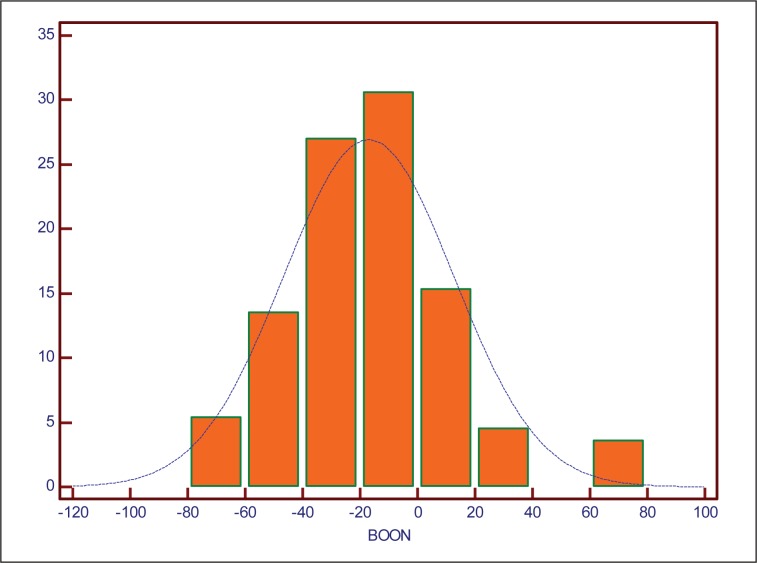
Material and methods: Prospective study during 2009-2010 analyzed data of 110 patients with proven benign prostatic enlargement. Prostate volume and IPP were determined by transabdominal ultrasound, and patients underwent complete urodynamic studies (UDS). BOON was calculated using the formula: prostate volume (cc)-3 x Qmax (ml/s)-0.2 x mean voided volume (ml).
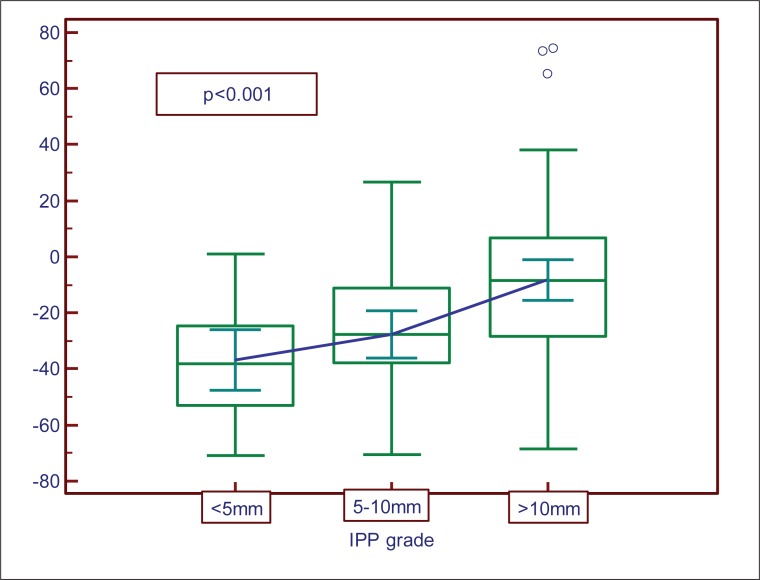
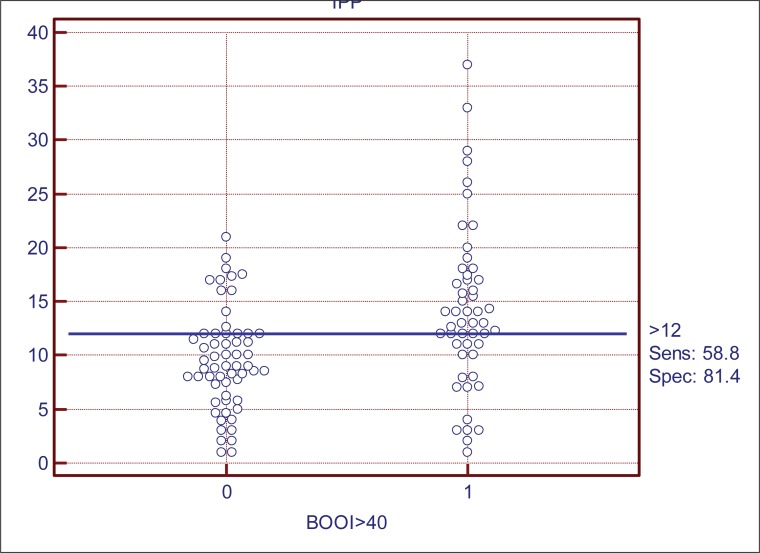
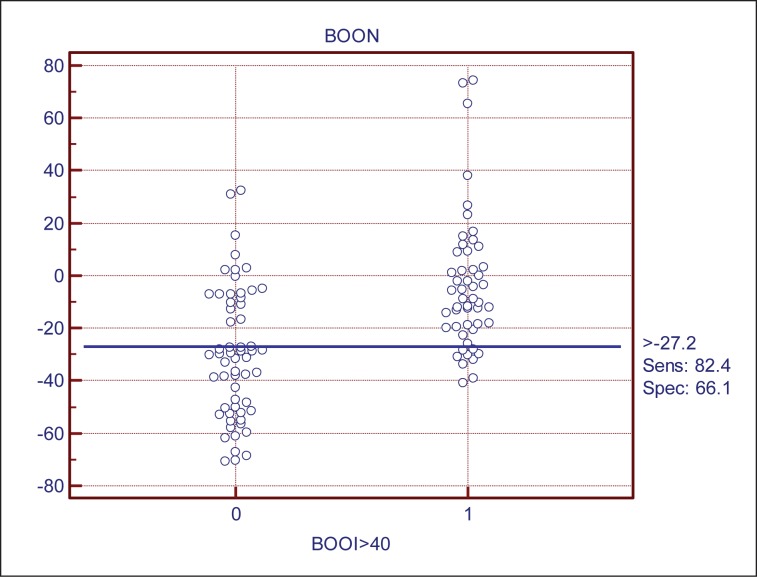
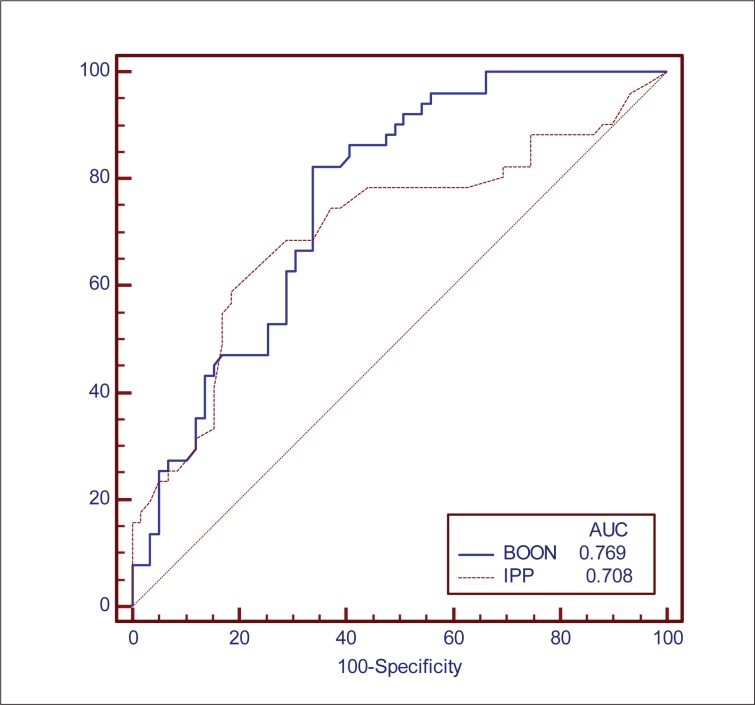
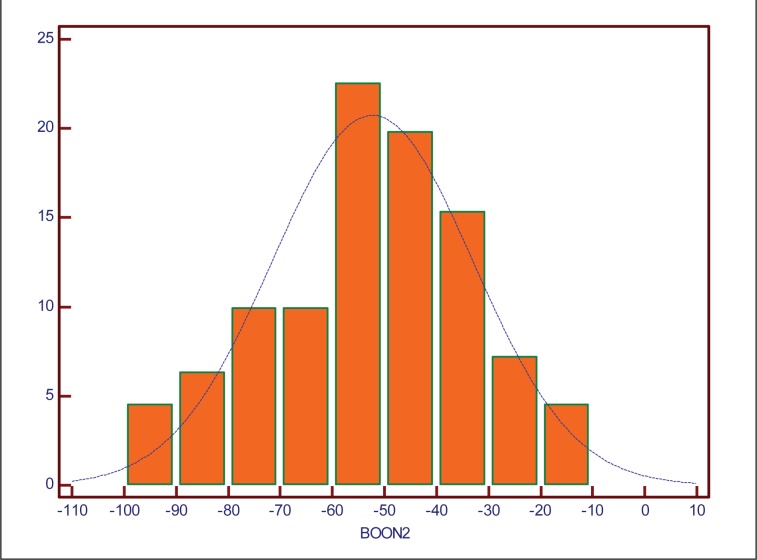
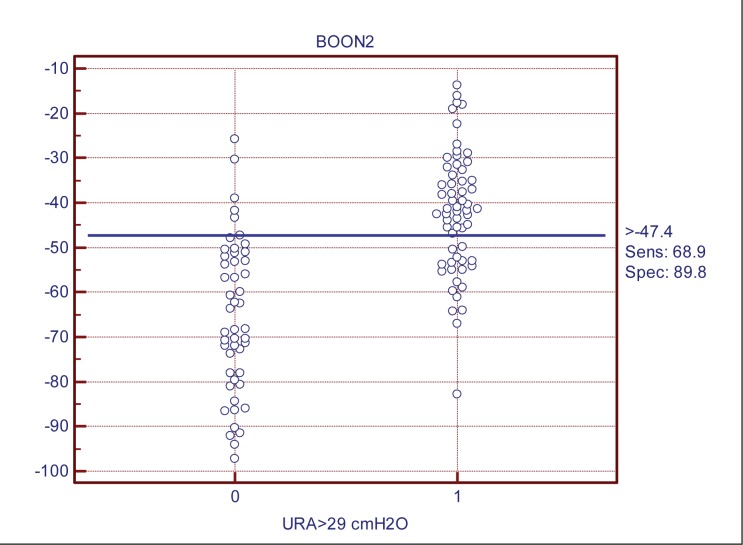
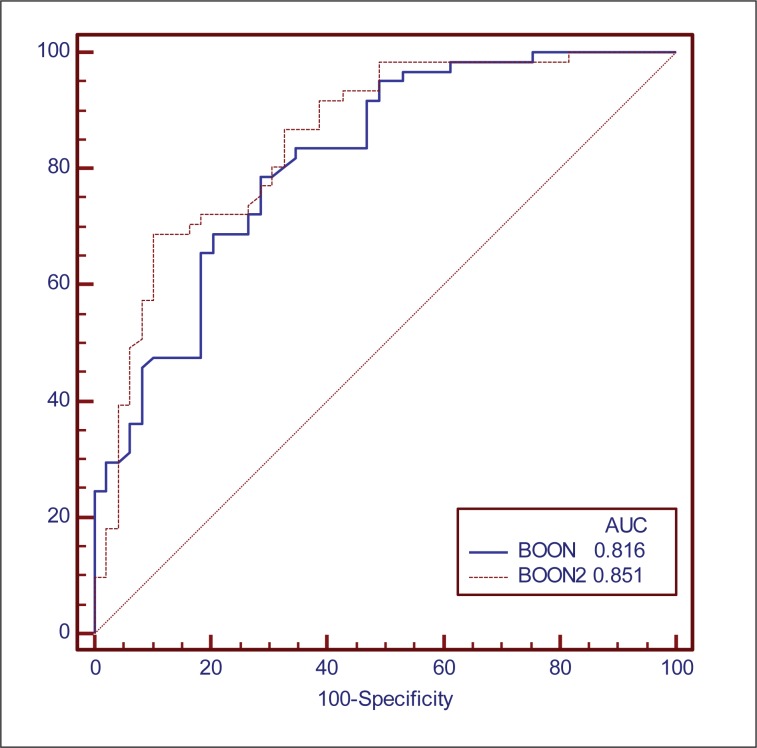
Results: There is a statistically significant correlation between the values of IPP and BOON (Spearman's rank correlation coefficient rho=0.48, p=0.0001). BOON is a more sensitive (sensitivity 82.4%, specificity 66.1%), while IPP is a more specific factor (sensitivity 58.8%, specificity 81.4%) in the group-wise prediction of bladder outlet obstruction (BOO). Positive predictive value in the diagnosis of obstruction increases at the individual level combining the cut-off values for BOON>-30, with IPP >10 mm (PP V 86.8%). Owing to a good correlation of IPP with different definitions of urodynamic obstruction, IPP was included in the BOON formula instead of prostate volume. This number was arbitrarily called BOON2. The combination of IPP >10 mm and cut-off value for BOON2 >-50 showed that 88.6% of the patients were accurately classified in the zone of obstruction (mean IPP 14.9 mm), while BOON2<-50 carried a high NPV.
Conclusion: The combination of cut-off values for BOON and IPP increases test accuracy according to BOO at the individual level, thus facilitating clinical decision making regarding diagnostics and optimal choice of therapy in patients with BPE. Owing to its good correlation with obstruction determinants, IPP can be included in the formula for BOON instead of prostate volume.
Keywords: Intravesical prostatic protrusion; UDS.; benign prostatic enlargement; bladder outlet obstruction number.
Figures
References
-
- Lim KB, Ho H, Foo KT, Wong MY, Fook-Chong S. Comparison of intravesical prostatic protrusion, prostate volume and serum prostatic-specific antigen in the evaluation of bladder outlet obstruction. Int J Urol. 2006;13:1509–1513. - PubMed
-
- Reis LO, Barreior GC, Baracat J, Prudente A, D’Ancona CA. Intravesical protrusion of the prostate as a predictive method of bladder outlet obstruction. Inter Braz J Urol. 2008;34(5):627–637. - PubMed
-
- Franco G, De Nunzio C, Leonardo C, Tubaro A, Ciccariello M, De Dominicis C, Miano L, Laurenti C. Ultrasound assessment of intravesical prostatic protrusion and detrusor wall thickness - new standards for noninvasive bladder outlet obstruction diagnosis? J Urol. 2010;183(6):2270–2274. - PubMed
-
- Chia SJ, Heng CT, Chan SP, Foo KT. Correlation of intravesical prostatic protrusion with bladder outlet obstruction. BJU Inter. 2003;91:371–374. - PubMed
LinkOut - more resources
Full Text Sources
Miscellaneous