


Esophagus and regenerative medicine
- PMID: 23322986
- PMCID: PMC3531672
- DOI: 10.3748/wjg.v18.i47.6894
Esophagus and regenerative medicine
Abstract
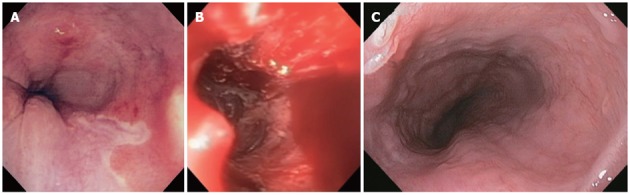
In addition to squamous cell carcinoma, the incidence of Barrett's esophagus with high-grade dysplasia and esophageal adenocarcinoma is rapidly increasing worldwide. Unfortunately, the current standard of care for esophageal pathology involves resection of the affected tissue, sometimes involving radical esophagectomy. Without exception, these procedures are associated with a high morbidity, compromised quality of life, and unacceptable mortality rates. Regenerative medicine approaches to functional tissue replacement include the use of biological and synthetic scaffolds to promote tissue remodeling and growth. In the case of esophageal repair, extracellular matrix (ECM) scaffolds have proven to be effective for the reconstruction of small patch defects, anastomosis reinforcement, and the prevention of stricture formation after endomucosal resection (EMR). More so, esophageal cancer patients treated with ECM scaffolds have shown complete restoration of a normal, functional, and disease-free epithelium after EMR. These studies provide evidence that a regenerative medicine approach may enable aggressive resection of neoplastic tissue without the need for radical esophagectomy and its associated complications.
Keywords: Biomaterial mediated esophageal repair; Esophageal repair; Extracellular matrix; Extracellular matrix scaffold.
Figures
References
-
- Werner S, Grose R. Regulation of wound healing by growth factors and cytokines. Physiol Rev. 2003;83:835–870. - PubMed
-
- Diegelmann RF, Evans MC. Wound healing: an overview of acute, fibrotic and delayed healing. Front Biosci. 2004;9:283–289. - PubMed
-
- Adamson R. Role of macrophages in normal wound healing: an overview. J Wound Care. 2009;18:349–351. - PubMed
Publication types
MeSH terms
Substances
Grants and funding
LinkOut - more resources
Full Text Sources
Other Literature Sources
