


Hematologic and Clinical Aspects of Experimental Ovine Anaplasmosis Caused by Anaplasma ovis in Iran
- PMID: 23323097
- PMCID: PMC3537476
Hematologic and Clinical Aspects of Experimental Ovine Anaplasmosis Caused by Anaplasma ovis in Iran
Abstract
Background: Anaplasma ovis infections can cause clinical symptoms in acute phase and lead to huge economic losses in flocks. The aim of the present study was to investigate the hematological and parasitological changes in experimental anaplasmosis in sheep with Iranian strain of A. ovis.
Method: Five male sheep without any blood parasite infection were selected. One hundred ml heparinized blood was collected from splenectomised sheep that showed 6% A. ovis parasitemia. Inoculums of 20 ml blood were administered intravenously to each test animal. Hematological, parasitological and clinical changes of experimental anaplasmosis were studied in 0-38 days post infection.
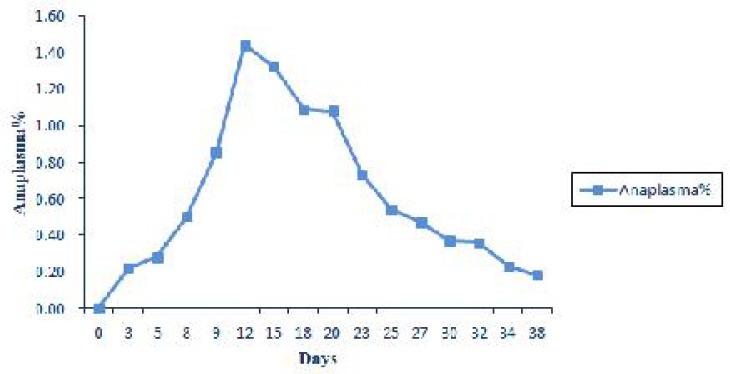
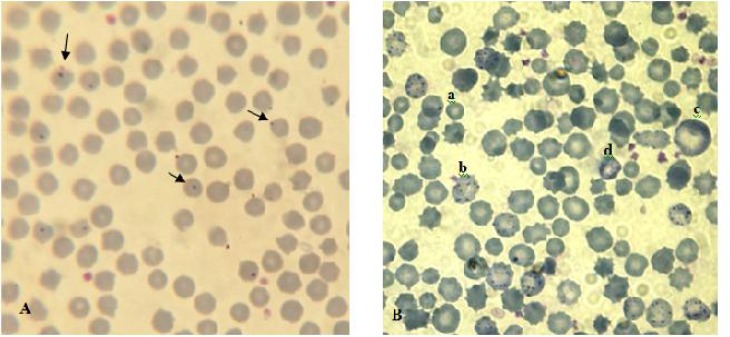
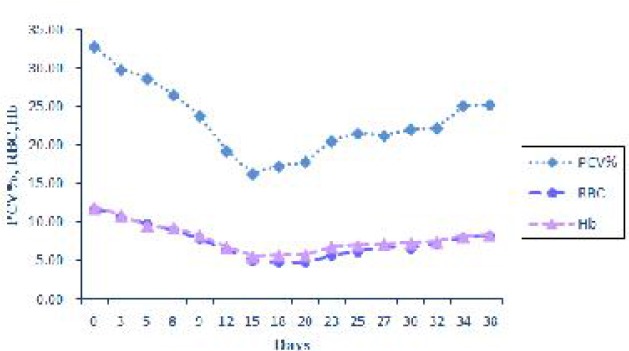
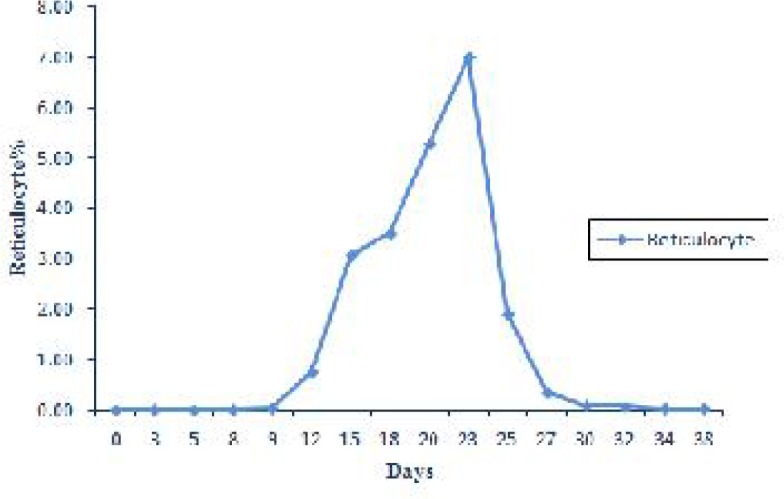
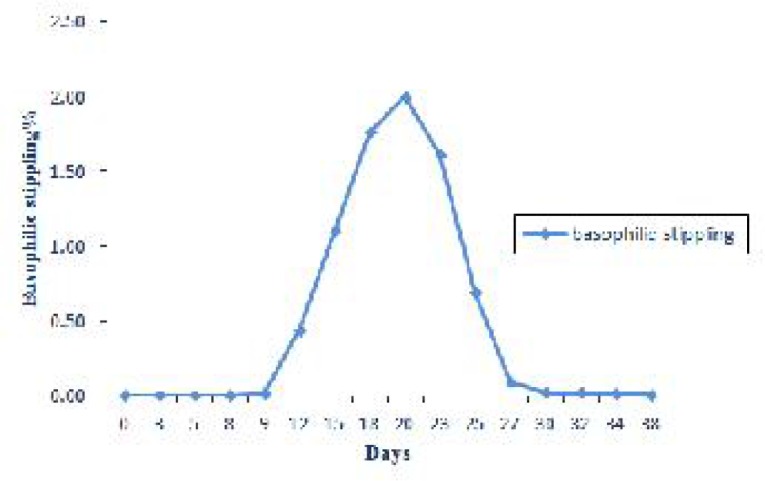
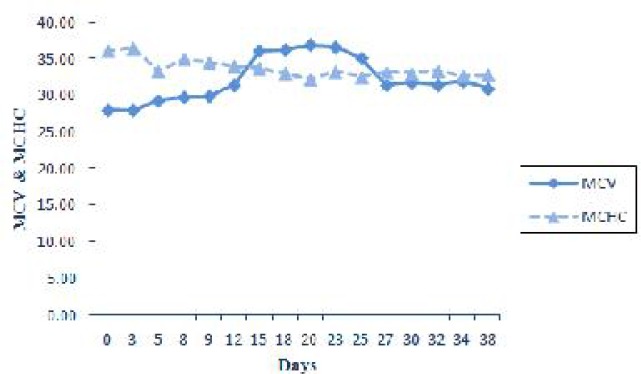
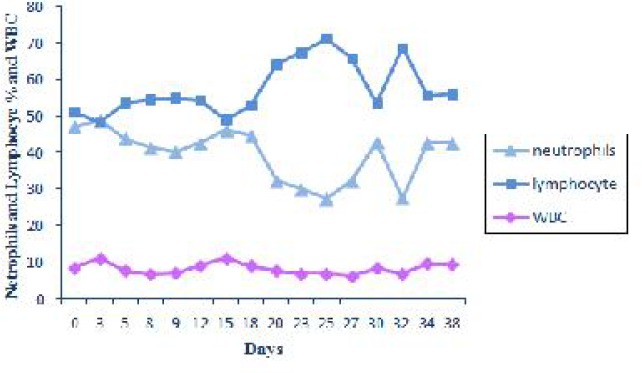
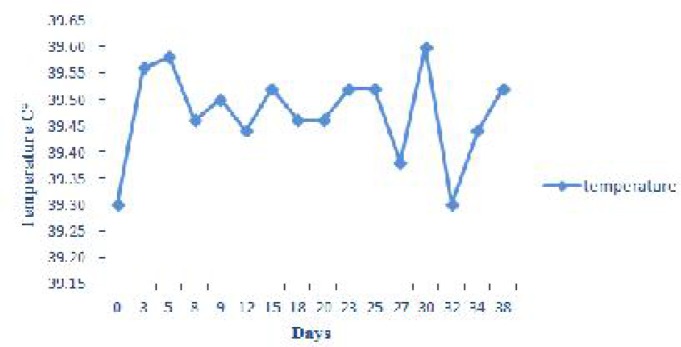
Result: Parasitemia was detected 3 days post infection and reached its maximum level on the day 12 of experiment in test animals. Then the parasitemia was declined, but the organism could be found persistently until the last day of study. The red cell counts, packed cell volume and hemoglobin concentration were decreased and mean corpuscular volume was increased significantly during the infection period. Reticulocytosis and basophilic stippling were also detected. No significant changes were observed in total and differential leukocyte count and animal body temperature.
Conclusion: Experimental A. ovis infection in sheep resulted in marked normocytic normochromic anemia at the beginning of the infection which became macrocytic normochromic by the development of the disease. There were negative correlations between parasitemia and RBC, PCV and Hb values, therefore hematological assessment can be considered as a practical diagnostic tool in ovine anaplasmosis.
Keywords: Anaplasma ovis; Anemia; Experimental; Iran; Sheep.
Figures
References
-
- Kuttler KL. Anaplasma infections in wild and domestic Ruminants: a review. J Wildl Dis. 1984;20:12–20. - PubMed
-
- Zaugg JL, Goff WL, Foreyt W, Hunter DL. Susceptibility of elk (Cervus elaphus) to experimental infection with Anaplasma marginale and A. ovis . J Wildl Dis. 1996;32:62–66. - PubMed
-
- Radostitis OM, Gay CC, Blood DC, Hinchcliff KW. Veterinary Medicine. 9th ed. London, New York, Philadelphia: WB Saunders Co; 2000. pp. 1261–1265.
-
- Yabsley MJ, Davidson WR, Stallknecht DE, Varela AS, Swift PK, Devos JC, Jr, Dubay SA. Evidence of tick-borne organisms in mule deer (Odocoileus hemionus) from the western United States. Vector Borne Zoonotic Dis. 2005;5:351–362. - PubMed
-
- de la Fuente J, Atkinson MW, Naranjo V, Fernandez de Mera IG, Mangold AJ, Keating KA, Kocan KM. Sequence analysis of the msp4 gene of Anaplasma ovis strains. Vet Microbiol. 2007;119:375–381. - PubMed
LinkOut - more resources
Full Text Sources