The role of gut-liver axis in the pathogenesis of liver cirrhosis and portal hypertension
- PMID: 23323248
- PMCID: PMC3540369
- DOI: 10.3350/cmh.2012.18.4.337
The role of gut-liver axis in the pathogenesis of liver cirrhosis and portal hypertension
Abstract
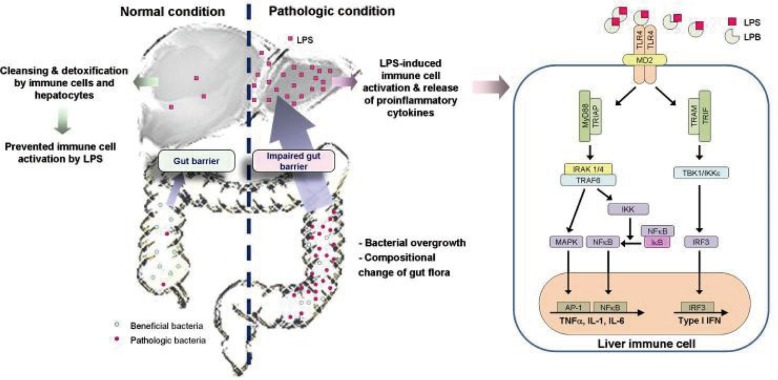
Because of the anatomical position and its unique vascular system, the liver is susceptible to the exposure to the microbial products from the gut. Although large amount of microbes colonize in the gut, translocation of the microbes or microbial products into the liver and systemic circulation is prevented by gut epithelial barrier function and cleansing and detoxifying functions of the liver in healthy subjects. However, when the intestinal barrier function is disrupted, large amount of bacterial products can enter into the liver and systemic circulation and induce inflammation through their receptors. Nowadays, there have been various reports suggesting the role of gut flora and bacterial translocation in the pathogenesis of chronic liver disease and portal hypertension. This review summarizes the current knowledge about bacterial translocation and its contribution to the pathogenesis of chronic liver diseases and portal hypertension.
Keywords: Bacterial translocation; Kupffer cell; Leaky gut; Lipopolysaccharide; Toll-like receptor.
Conflict of interest statement
The authors have no conflicts to disclose.
Figures
References
-
- Shah VJ, Kamath PS. Portal hypertension and gastrointestinal bleeding. In: Feldman M, Fridman LS, Brandt LJ, editors. Sleisenger and Fordtran's gastrointestinal and liver disease. 9th ed. Philadelphia PA: Saunders Elsevier; 2010. pp. 1489–1516.
-
- Seki E, Brenner DA. Toll-like receptors and adaptor molecules in liver disease: update. Hepatology. 2008;48:322–335. - PubMed
-
- Rao RK, Seth A, Sheth P. Recent Advances in Alcoholic Liver Disease I. Role of intestinal permeability and endotoxemia in alcoholic liver disease. Am J Physiol Gastrointest Liver Physiol. 2004;286:G881–G884. - PubMed
-
- Rao RK. Acetaldehyde-induced increase in paracellular permeability in Caco-2 cell monolayer. Alcohol Clin Exp Res. 1998;22:1724–1730. - PubMed
Publication types
MeSH terms
Substances
Grants and funding
LinkOut - more resources
Full Text Sources
Other Literature Sources
Medical