


On how mammalian transcription factors recognize methylated DNA
- PMID: 23324617
- PMCID: PMC3592898
- DOI: 10.4161/epi.23632
On how mammalian transcription factors recognize methylated DNA
Abstract
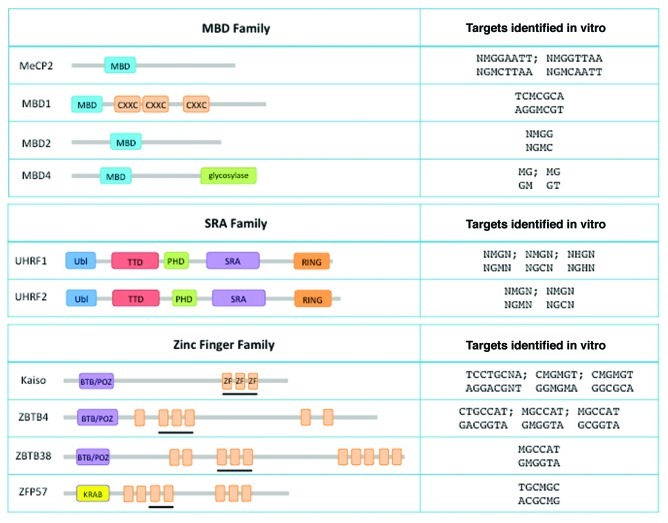
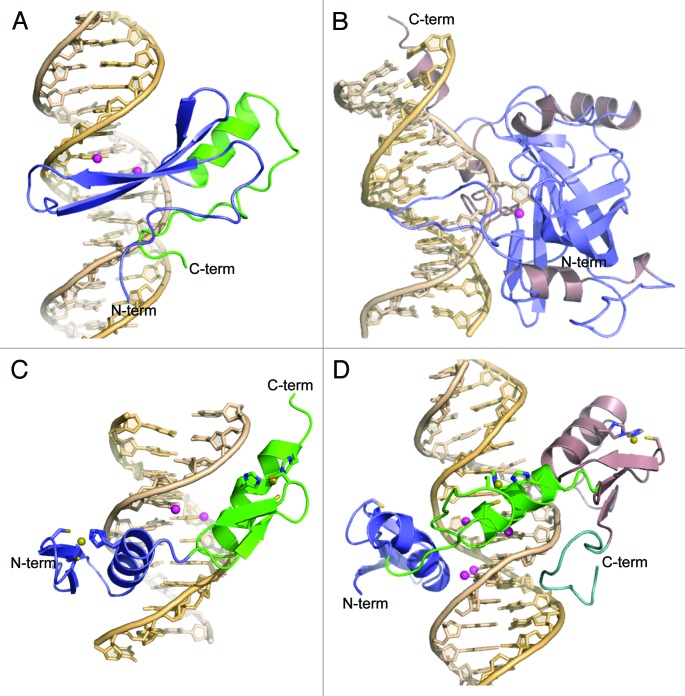
DNA methylation is an epigenetic mark that is essential for the development of mammals; it is frequently altered in diseases ranging from cancer to psychiatric disorders. The presence of DNA methylation attracts specialized methyl-DNA binding factors that can then recruit chromatin modifiers. These methyl-CpG binding proteins (MBPs) have key biological roles and can be classified into three structural families: methyl-CpG binding domain (MBD), zinc finger, and SET and RING finger-associated (SRA) domain. The structures of MBD and SRA proteins bound to methylated DNA have been previously determined and shown to exhibit two very different modes of methylated DNA recognition. The last piece of the puzzle has been recently revealed by the structural resolution of two different zinc finger proteins, Kaiso and ZFP57, in complex with methylated DNA. These structures show that the two methyl-CpG binding zinc finger proteins adopt differential methyl-CpG binding modes. Nonetheless, there are similarities with the MBD proteins suggesting some commonalities in methyl-CpG recognition across the various MBP domains. These fresh insights have consequences for the analysis of the many other zinc finger proteins present in the genome, and for the biology of methyl-CpG binding zinc finger proteins.
Keywords: DNA methylation; Kaiso; MBD; SRA domain; ZFP57; methyl-CpG binding proteins; protein structure; zinc finger.
Figures
References
-
- Stadler MB, Murr R, Burger L, Ivanek R, Lienert F, Schöler A, et al. DNA-binding factors shape the mouse methylome at distal regulatory regions. Nature. 2011;480:490–5. - PubMed
Publication types
MeSH terms
Substances
LinkOut - more resources
Full Text Sources
Other Literature Sources
Miscellaneous
