


Double dissociation of the requirement for GluN2B- and GluN2A-containing NMDA receptors in the destabilization and restabilization of a reconsolidating memory
- PMID: 23325248
- PMCID: PMC4241020
- DOI: 10.1523/JNEUROSCI.3273-12.2013
Double dissociation of the requirement for GluN2B- and GluN2A-containing NMDA receptors in the destabilization and restabilization of a reconsolidating memory
Abstract
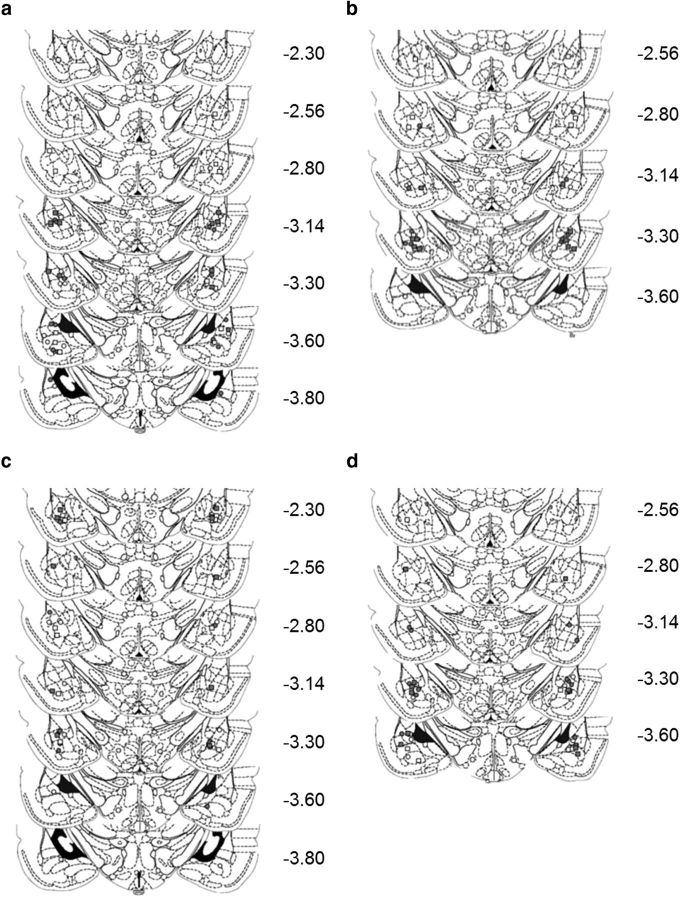
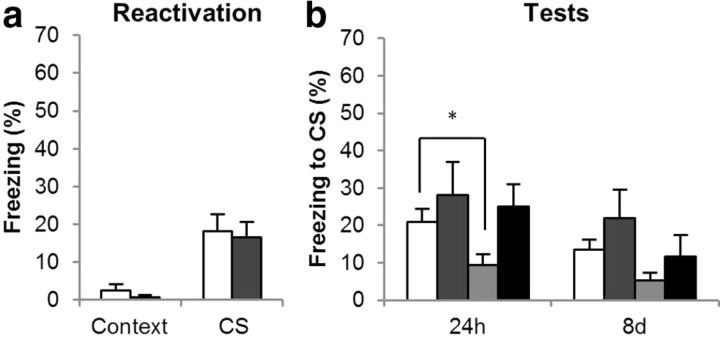
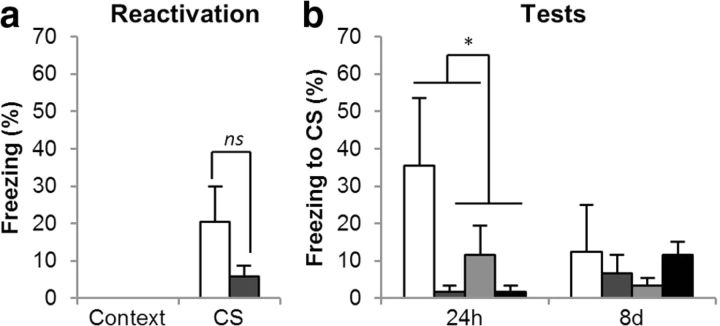
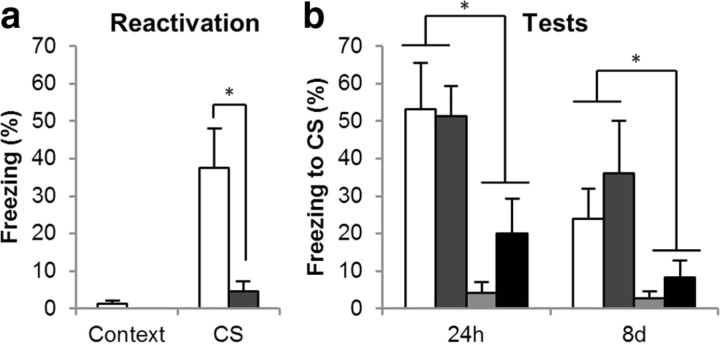
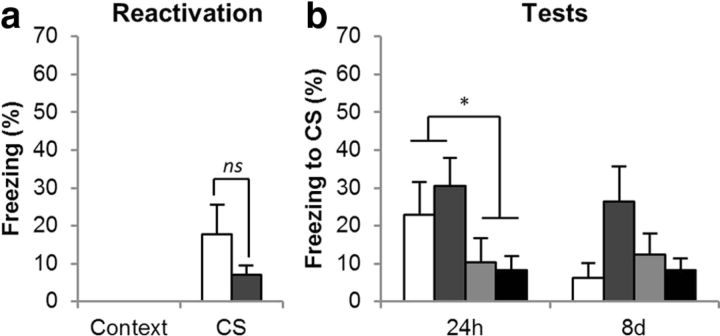
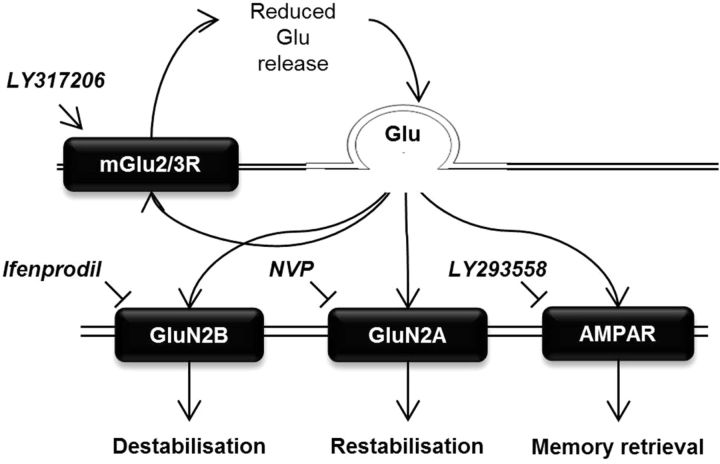
Signaling at NMDA receptors (NMDARs) is known to be important for memory reconsolidation, but while most studies show that NMDAR antagonists prevent memory restabilization and produce amnesia, others have shown that GluN2B-selective NMDAR antagonists prevent memory destabilization, protecting the memory. These apparently paradoxical, conflicting data provide an opportunity to define more precisely the requirement for different NMDAR subtypes in the mechanisms underlying memory reconsolidation and to further understand the contribution of glutamatergic signaling to this process. Here, using rats with fully consolidated pavlovian auditory fear memories, we demonstrate a double dissociation in the requirement for GluN2B-containing and GluN2A-containing NMDARs within the basolateral amygdala in the memory destabilization and restabilization processes, respectively. We further show a double dissociation in the mechanisms underlying memory retrieval and memory destabilization, since AMPAR antagonism prevented memory retrieval while still allowing the destabilization process to occur. These data demonstrate that glutamatergic signaling mechanisms within the basolateral amygdala differentially and dissociably mediate the retrieval, destabilization, and restabilization of previously consolidated fear memories.
Figures
References
-
- Auberson YP, Allgeier H, Bischoff S, Lingenhoehl K, Moretti R, Schmutz M. 5-Phosphonomethylquinoxalinediones as competitive NMDA receptor antagonists with a preference for the human 1A/2A, rather than 1A/2B receptor composition. Bioorg Med Chem Lett. 2002;12:1099–1102. - PubMed
-
- Ben Mamou C, Gamache K, Nader K. NMDA receptors are critical for unleashing consolidated auditory fear memories. Nat Neurosci. 2006;9:1237–1239. - PubMed
-
- Bingol B, Wang CF, Arnott D, Cheng D, Peng J, Sheng M. Autophosphorylated CaMKIIα acts as a scaffold to recruit proteasomes to dendritic spines. Cell. 2010;140:567–578. - PubMed
Publication types
MeSH terms
Substances
Grants and funding
LinkOut - more resources
Full Text Sources
Other Literature Sources
Medical
