


An autonomous chromatin/DNA-PK mechanism for localized DNA damage signaling in mammalian cells
- PMID: 23325849
- PMCID: PMC3597672
- DOI: 10.1093/nar/gks1478
An autonomous chromatin/DNA-PK mechanism for localized DNA damage signaling in mammalian cells
Abstract
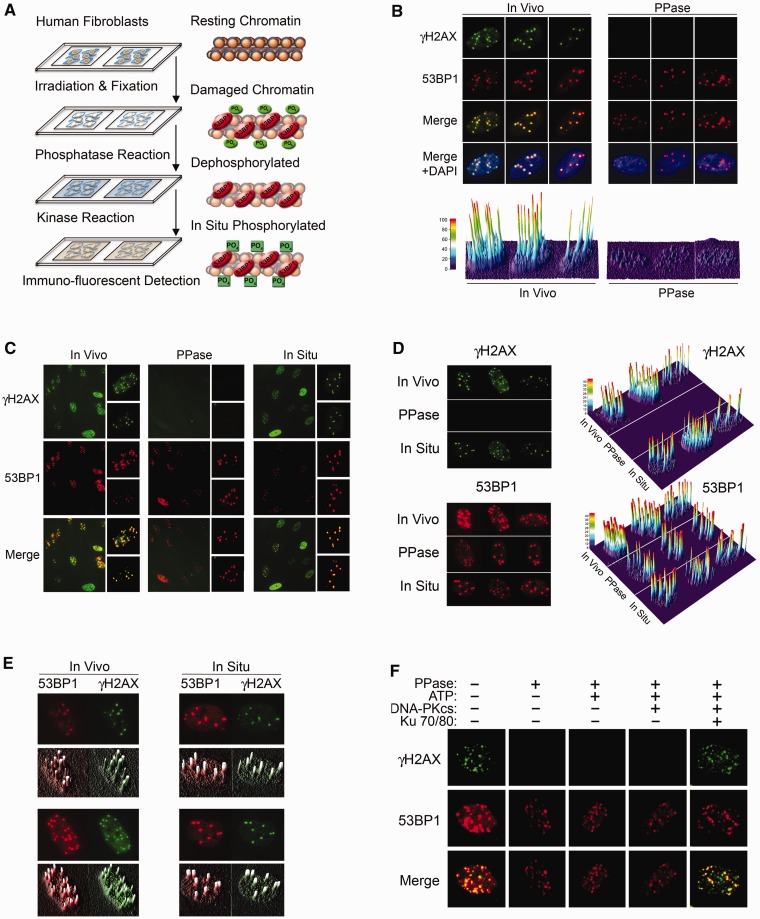
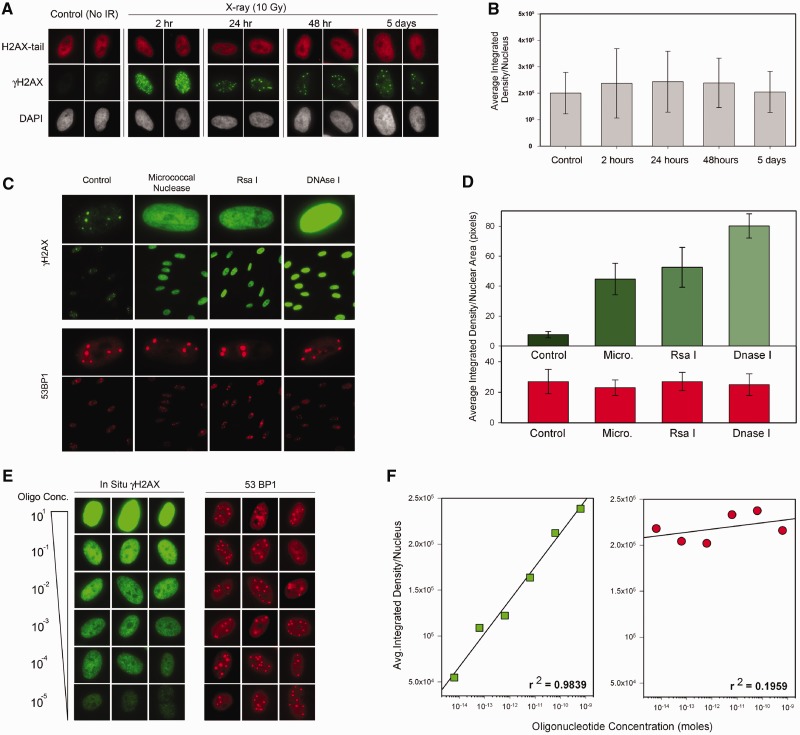
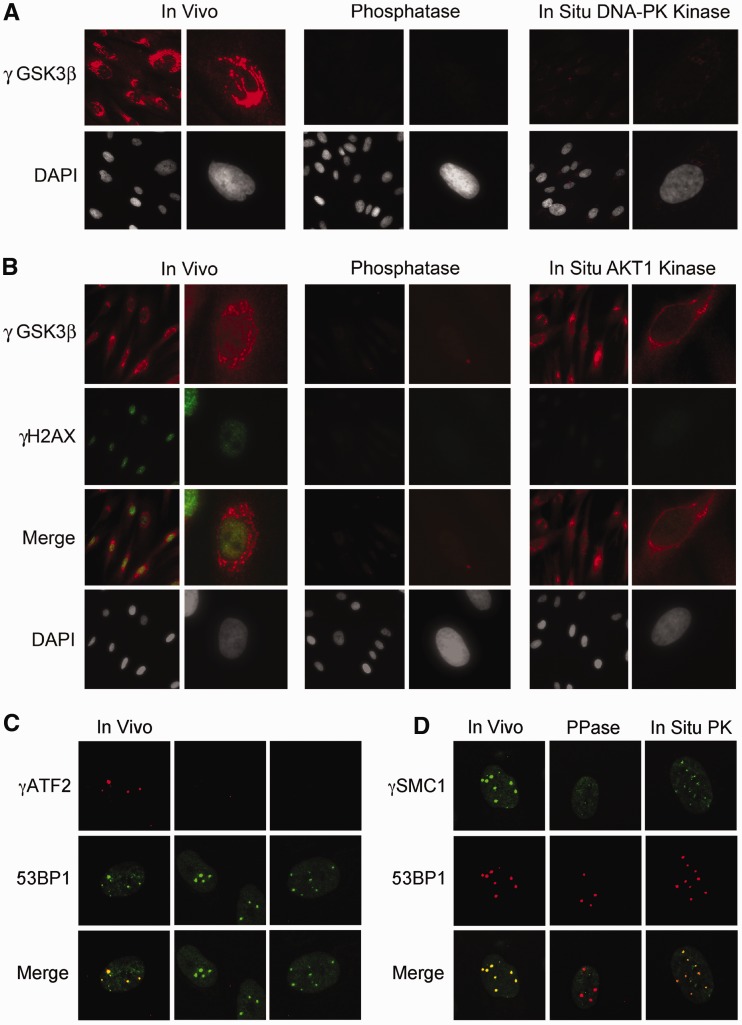
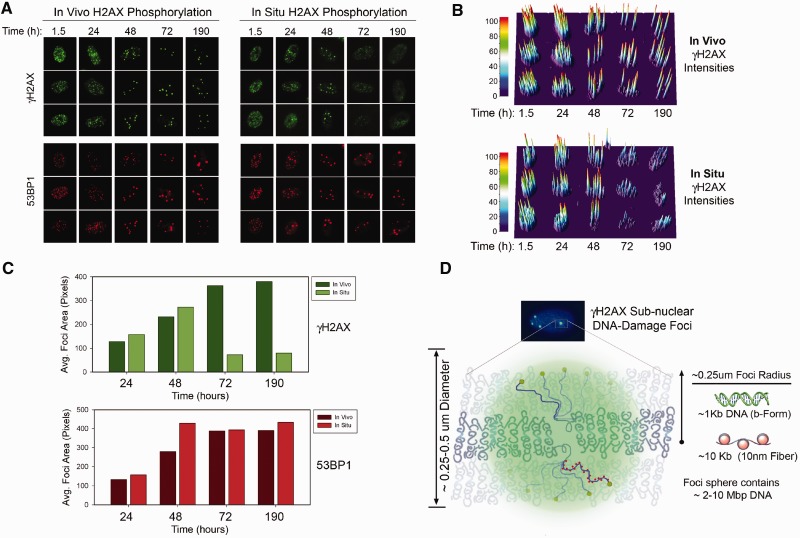
Rapid phosphorylation of histone variant H2AX proximal to DNA breaks is an initiating event and a hallmark of eukaryotic DNA damage responses. Three mammalian kinases are known to phosphorylate H2AX in response to DNA damage. However, the mechanism(s) for damage-localized phosphorylation remains incompletely understood. The DNA-dependent protein kinase (DNA-PK) is the most abundant H2AX-modifying kinases and uniquely activated by binding DNA termini. Here, we have developed a novel approach to examine enzyme activity and substrate properties by executing biochemical assays on intact cellular structures. We apply this approach to examine the mechanisms of localized protein modification in chromatin within fixed cells. DNA-PK retains substrate specificity and independently generates break-localized γH2AX foci in chromatin. In situ DNA-PK activity recapitulates localization and intensity of in vivo H2AX phosphorylation and requires no active cellular processes. Nuclease treatments or addition of exogenous DNA resulted in genome-wide H2AX phosphorylation, showing that DNA termini dictated the locality of H2AX phosphorylation in situ. DNA-PK also reconstituted focal phosphorylation of structural maintenance of chromatin protein 1, but not activating transcription factor 2. Allosteric regulation of DNA-PK by DNA termini protruding from chromatin constitutes an autonomous mechanism for break-localized protein phosphorylation that generates sub-nuclear foci. We discuss generalized implications of this mechanism in localizing mammalian DNA damage responses.
Figures
References
-
- Luger K, Rechsteiner TJ, Flaus AJ, Waye MM, Richmond TJ. Characterization of nucleosome core particles containing histone proteins made in bacteria. J. Mol. Biol. 1997;272:301–311. - PubMed
-
- Fernandez-Capetillo O, Lee A, Nussenzweig M, Nussenzweig A. H2AX: the histone guardian of the genome. DNA Repair (Amst) 2004;3:959–967. - PubMed
-
- Rogakou EP, Pilch DR, Orr AH, Ivanova VS, Bonner WM. DNA double-stranded breaks induce histone H2AX phosphorylation on serine 139. J. Biol. Chem. 1998;273:5858–5868. - PubMed
-
- Bekker-Jensen S, Mailand N. Assembly and function of DNA double-strand break repair foci in mammalian cells. DNA Repair (Amst) 2010;9:1219–1228. - PubMed
Publication types
MeSH terms
Substances
Grants and funding
LinkOut - more resources
Full Text Sources
Other Literature Sources
Research Materials
Miscellaneous
