


Alterations in the intestinal assimilation of oxidized PUFAs are ameliorated by a polyphenol-rich grape seed extract in an in vitro model and Caco-2 cells
- PMID: 23325921
- PMCID: PMC3713019
- DOI: 10.3945/jn.112.160101
Alterations in the intestinal assimilation of oxidized PUFAs are ameliorated by a polyphenol-rich grape seed extract in an in vitro model and Caco-2 cells
Abstract
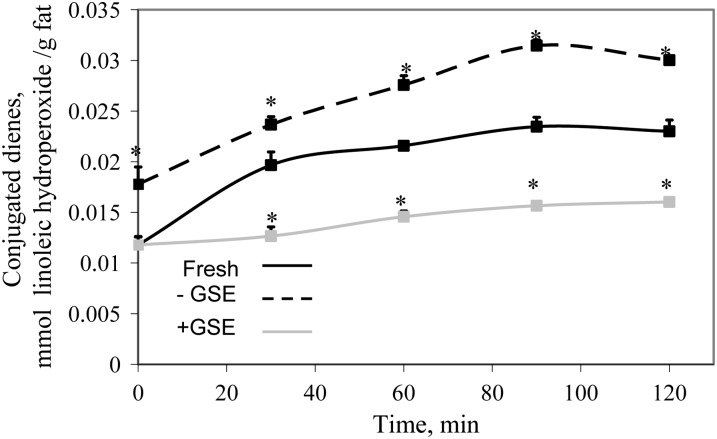
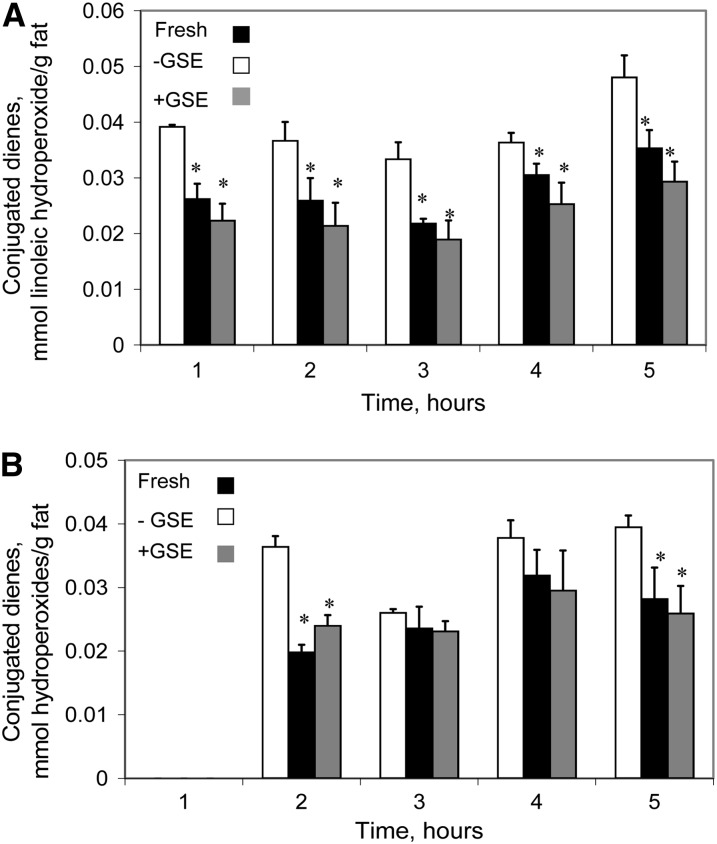
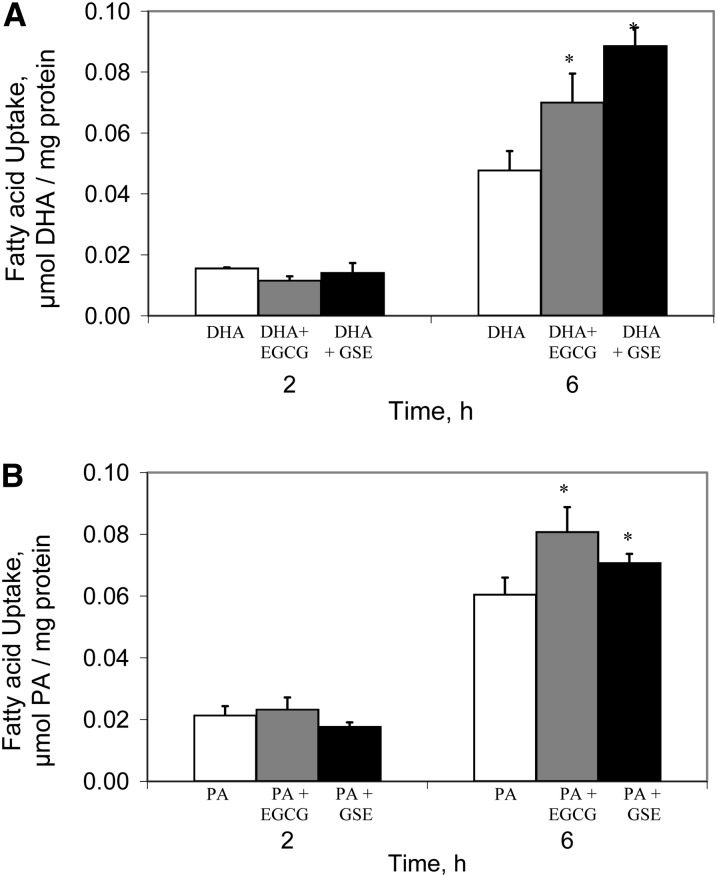
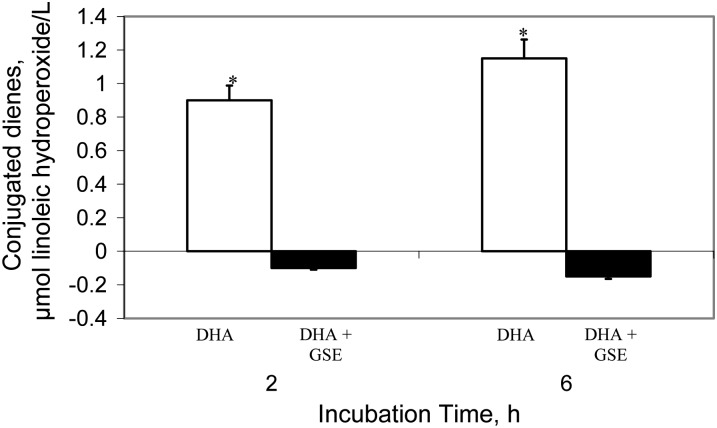
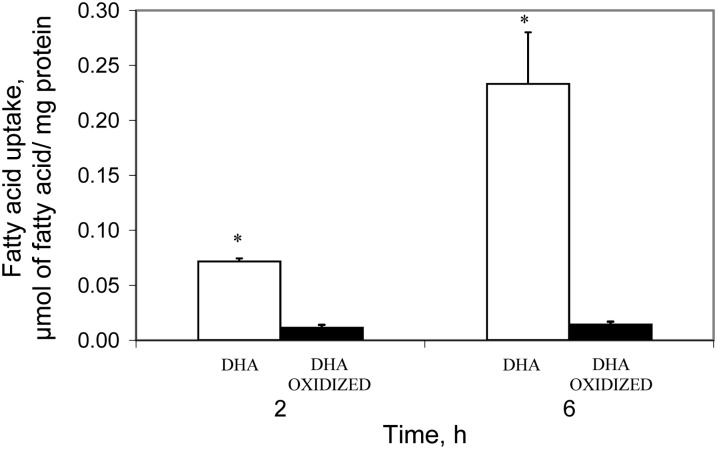
The (n-3) PUFAs 20:5 (n-3) (EPA) and 22:6 (n-3) (DHA) are thought to benefit human health. The presence of prooxidant compounds in foods, however, renders them susceptible to oxidation during both storage and digestion. The development of oxidation products during digestion and the potential effects on intestinal PUFA uptake are incompletely understood. In the present studies, we examined: (1) the development and bioaccessibility of lipid oxidation products in the gastrointestinal lumen during active digestion of fatty fish using the in vitro digestive tract TNO Intestinal Model-1 (TIM-1); (2) the mucosal cell uptake and metabolism of oxidized compared with unoxidized PUFAs using Caco-2 intestinal cells; and 3) the potential to limit the development of oxidation products in the intestine by incorporating antioxidant polyphenols in food. We found that during digestion, the development of oxidation products occurs in the stomach compartment, and increased amounts of oxidation products became bioaccessible in the jejunal and ileal compartments. Inclusion of a polyphenol-rich grape seed extract (GSE) during the digestion decreased the amounts of oxidation products in the stomach compartment and intestinal dialysates (P < 0.05). In Caco-2 intestinal cells, the uptake of oxidized (n-3) PUFAs was ~10% of the uptake of unoxidized PUFAs (P < 0.05) and addition of GSE or epigallocatechin gallate protected against the development of oxidation products, resulting in increased uptake of PUFAs (P < 0.05). These results suggest that addition of polyphenols during active digestion can limit the development of (n-3) PUFA oxidation products in the small intestine lumen and thereby promote intestinal uptake of the beneficial, unoxidized, (n-3) PUFAs.
Conflict of interest statement
Author disclosures: R. Maestre, J. D. Douglass, S. Kodukula, I. Medina, and J. Storch, no conflicts of interest.
Figures
References
-
- Lee KW, Lip GY. The role of omega-3 fatty acids in the secondary prevention of cardiovascular disease. QJM. 2003;96:465–80 - PubMed
-
- Niedernhofer LJ, Daniels JS, Rouzer CA, Greene RE, Marnett LJ. Malondialdehyde, a product of lipid peroxidation, is mutagenic in human cells. J Biol Chem. 2003;278:31426–33 - PubMed
-
- Wang T-G, Gotoh Y, Jennings MH, Rhoads CA, Aw TY. Lipid hydroperoxide-induced apoptosis in human colonic Caco-2 cells associated with an early loss of cellular redox balance. FASEBJ 2000;14:1567–76 - PubMed
Publication types
MeSH terms
Substances
Grants and funding
LinkOut - more resources
Full Text Sources
Other Literature Sources
Medical
Research Materials
