


A(2A) adenosine receptors are differentially modulated by pharmacological treatments in rheumatoid arthritis patients and their stimulation ameliorates adjuvant-induced arthritis in rats
- PMID: 23326596
- PMCID: PMC3543361
- DOI: 10.1371/journal.pone.0054195
A(2A) adenosine receptors are differentially modulated by pharmacological treatments in rheumatoid arthritis patients and their stimulation ameliorates adjuvant-induced arthritis in rats
Abstract
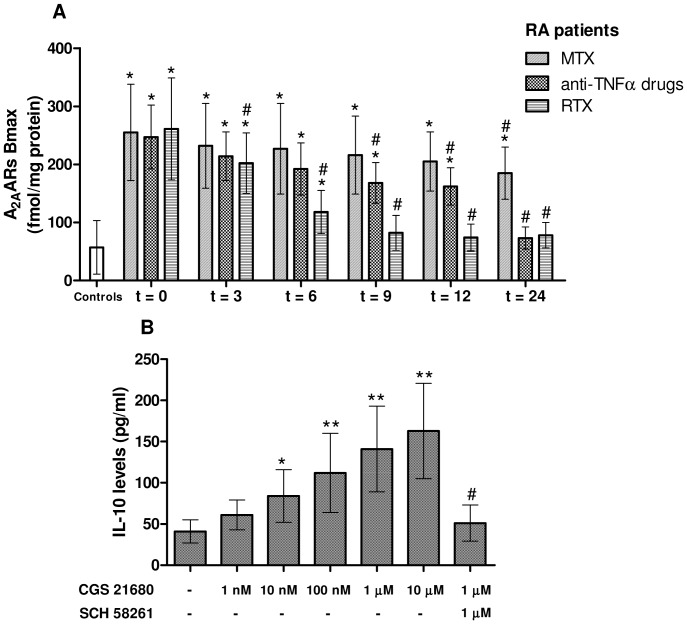
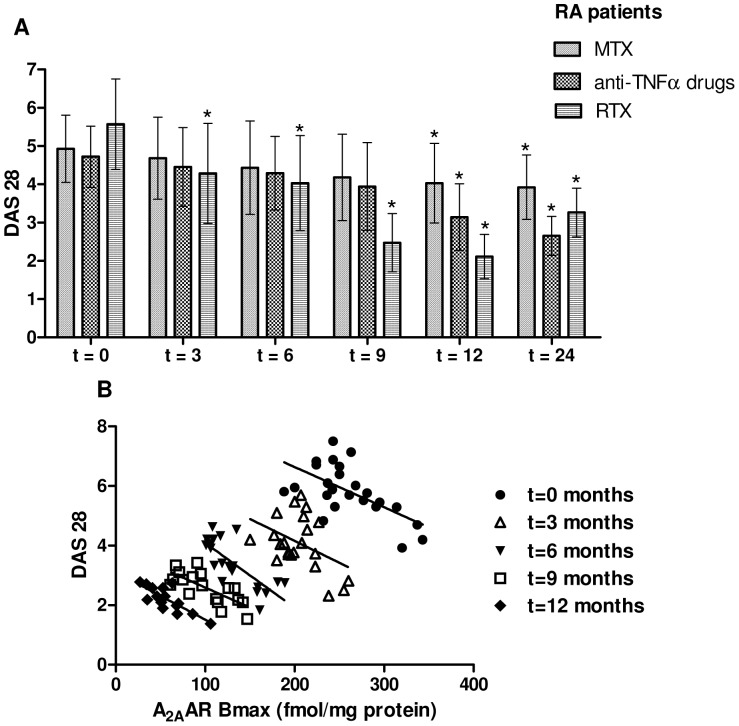
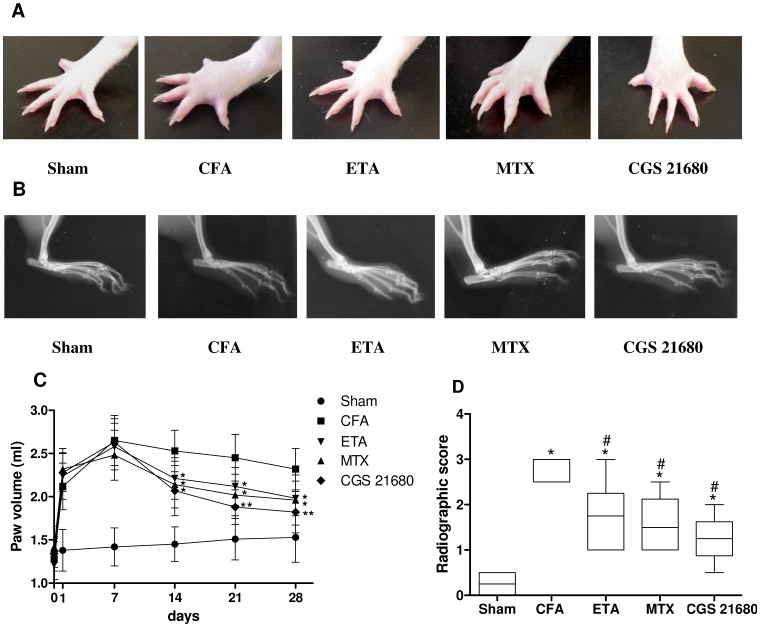
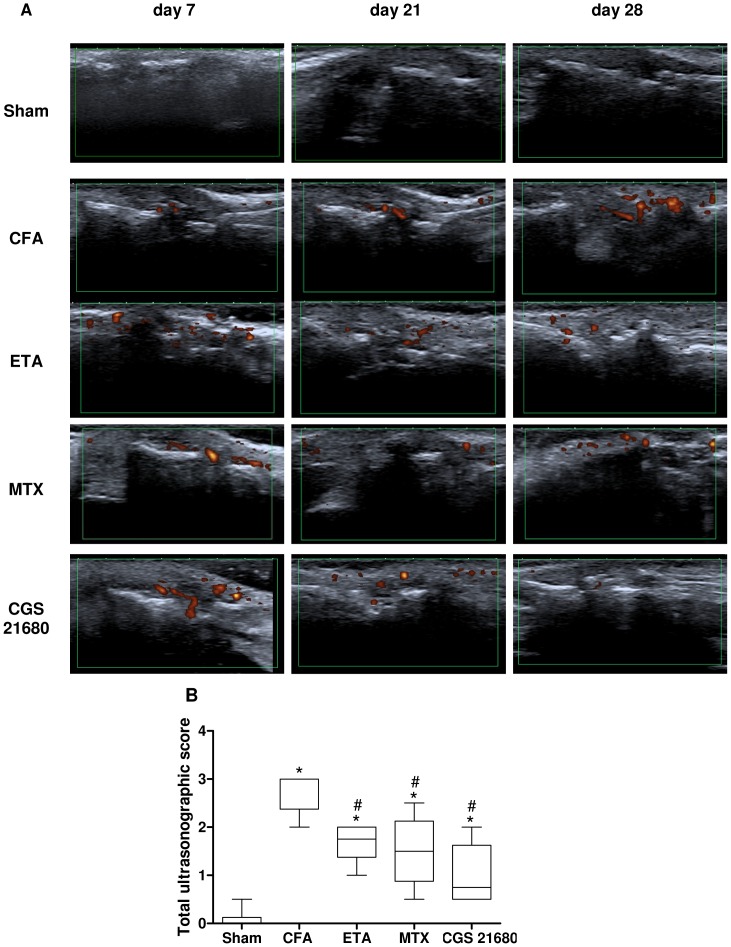
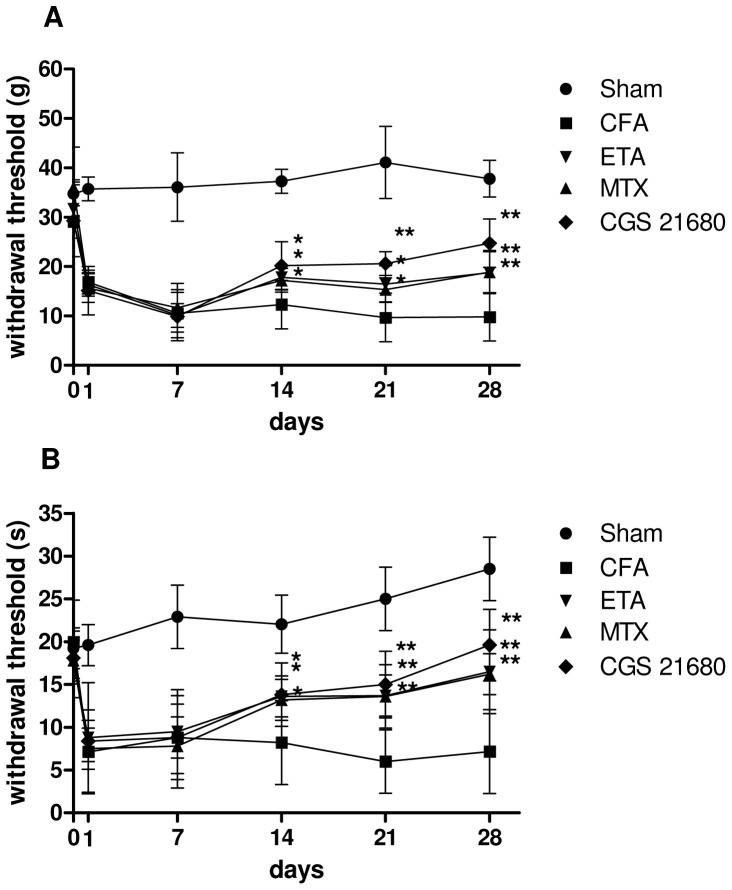
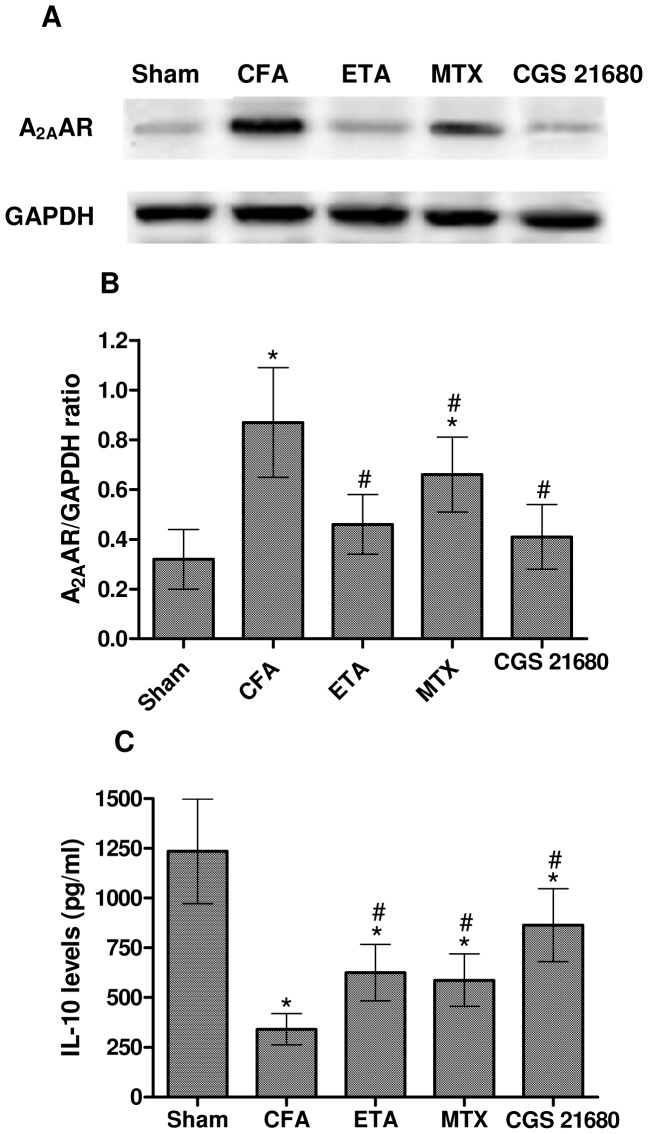
A(2A) adenosine receptors (ARs) play a key role in the inhibition of the inflammatory process. The purpose of this study was to evaluate the modulation of A(2A)ARs in rheumatoid arthritis (RA) patients after different pharmacological treatments and to investigate the effect of A(2A)AR stimulation in a rat model of arthritis. We investigated A(2A)AR density and functionality in RA progression by using a longitudinal study in RA patients before and after methotrexate (MTX), anti-TNFα agents or rituximab treatments. A(2A)ARs were analyzed by saturation binding assays in lymphocytes from RA patients throughout the 24-month study timeframe. In an adjuvant-induced arthritis model in rats we showed the efficacy of the A(2A)AR agonist, CGS 21680 in comparison with standard therapies by means of paw volume assessment, radiographic and ultrasonographic imaging. Arthritic-associated pain was investigated in mechanical allodynia and thermal hyperalgesia tests. IL-10 release following A(2A)AR stimulation in lymphocytes from RA patients and in serum from arthritic rats was measured. In lymphocytes obtained from RA patients, the A(2A)AR up-regulation was gradually reduced in function of the treatment time and the stimulation of these receptors mediated a significant increase of IL-10 production. In the same cells, CGS 21680 did not affected cell viability and did not produced cytotoxic effects. The A(2A)AR agonist CGS 21680 was highly effective, as suggested by the marked reduction of clinical signs, in rat adjuvant-induced arthritis and associated pain. This study highlighted that A(2A)AR agonists represent a physiological-like therapeutic alternative for RA treatment as suggested by the anti-inflammatory role of A(2A)ARs in lymphocytes from RA patients. The effectiveness of A(2A)AR stimulation in a rat model of arthritis supported the role of A(2A)AR agonists as potential pharmacological treatment for RA.
Conflict of interest statement
Figures
References
-
- McInnes IB, Schett G (2011) The pathogenesis of rheumatoid arthritis. N Engl J Med 365: 2205–2219. - PubMed
-
- Joseph A, Brasington R, Kahl L, Ranganathan P, Cheng TP, et al. (2010) Immunologic rheumatic disorders. J Allergy Clin Immunol 125: 204–215. - PubMed
-
- Belavic JM (2010) Annual Drug Update 2010 in review. Nurse Pract 36: 10–22. - PubMed
-
- Varani K, Padovan M, Govoni M, Vincenzi F, Trotta F, et al. (2010) The role of adenosine receptors in rheumatoid arthritis. Autoimmun Rev 10: 61–64. - PubMed
-
- Emery P, Dörner T (2011) Optimising treatment in rheumatoid arthritis: a review of potential biological markers of response. Ann Rheum Dis 70: 2063–2070. - PubMed
Publication types
MeSH terms
Substances
LinkOut - more resources
Full Text Sources
Other Literature Sources
Medical
Research Materials
