Water fluoridation and the association of sugar-sweetened beverage consumption and dental caries in Australian children
- PMID: 23327241
- PMCID: PMC3673496
- DOI: 10.2105/AJPH.2012.300889
Water fluoridation and the association of sugar-sweetened beverage consumption and dental caries in Australian children
Abstract
Objectives: We examined demographic and socioeconomic differences in the consumption of sugar-sweetened beverages (SSBs), its association with dental caries in children, and whether exposure to water fluoridation modifies this association.
Methods: In a cross-sectional study, we used a stratified, clustered sampling design to obtain information on 16 508 children aged 5 to 16 years enrolled in Australian school dental services in 2002 to 2005. Dental staff assessed dental caries, and parents completed a questionnaire about their child's residential history, sources of drinking water, toothbrushing frequency, socioeconomic status (SES), and SSB consumption.
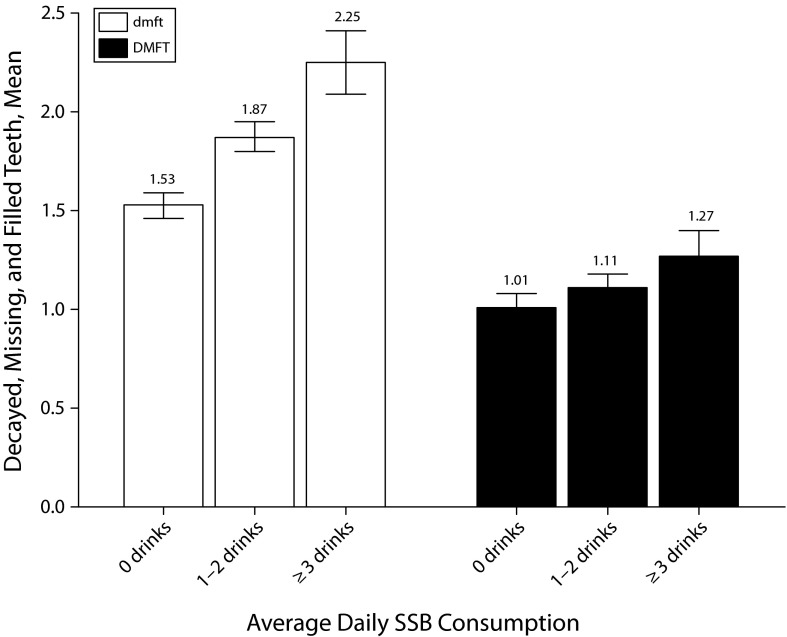
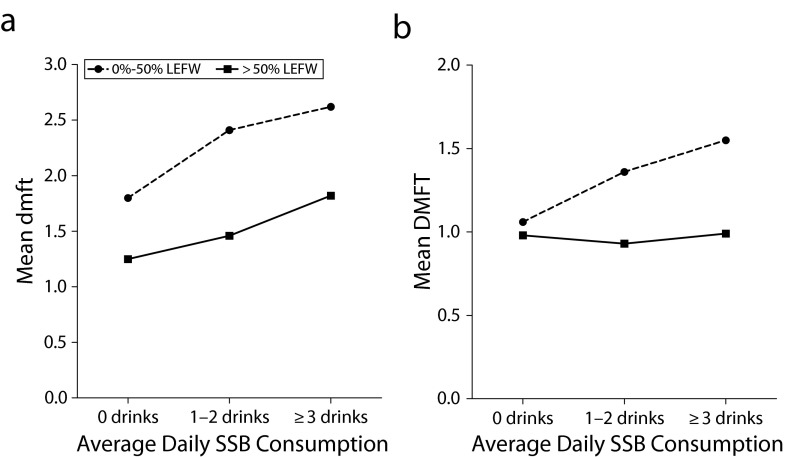
Results: Children who brushed their teeth less often and were older, male, of low SES, from rural or remote areas consumed significantly more SSBs. Caries was significantly associated with greater SSB consumption after controlling for potential confounders. Finally, greater exposure to fluoridated water significantly reduced the association between children's SSB consumption and dental caries.
Conclusions: Consumption of SSBs should be considered a major risk factor for dental caries. However, increased exposure to fluoridated public water helped ameliorate the association between SSB consumption and dental decay. These results reconfirm the benefits of community water fluoridation for oral health.
Figures
References
-
- Putnam JJ, Allshouse JE. Food Consumption, Prices, and Expenditures, 1970–97. Washington, DC: US Department of Agriculture, Economic Research Service, Food and Consumers Economics Division; 1999
-
- Sebastian RS, Cleveland LE, Goldman JD, Moshfegh AJ. Trends in the food intakes of children 1977-2002. Consumer Interests Annual. 2006;52:433–434
-
- Hector D, Rangan A, Louie J, Flood V, Gill T. Soft Drinks, Weight Status and Health: A Review. Sydney, New South Wales, Australia: NSW Centre for Public Health Nutrition; 2009
-
- Ludwig DS, Peterson KE, Gortmaker SL. Relation between consumption of sugar-sweetened drinks and childhood obesity: a prospective, observational analysis. Lancet. 2001;357(9255):505–508 - PubMed
-
- Sanigorski AM, Bell AC, Swinburn BA. Association of key foods and beverages with obesity in Australian schoolchildren. Public Health Nutr. 2007;10(2):152–157 - PubMed
Publication types
MeSH terms
Substances
LinkOut - more resources
Full Text Sources
Other Literature Sources
Medical