


Systemic LPS induces spinal inflammatory gene expression and impairs phrenic long-term facilitation following acute intermittent hypoxia
- PMID: 23329821
- PMCID: PMC3633437
- DOI: 10.1152/japplphysiol.01347.2012
Systemic LPS induces spinal inflammatory gene expression and impairs phrenic long-term facilitation following acute intermittent hypoxia
Abstract
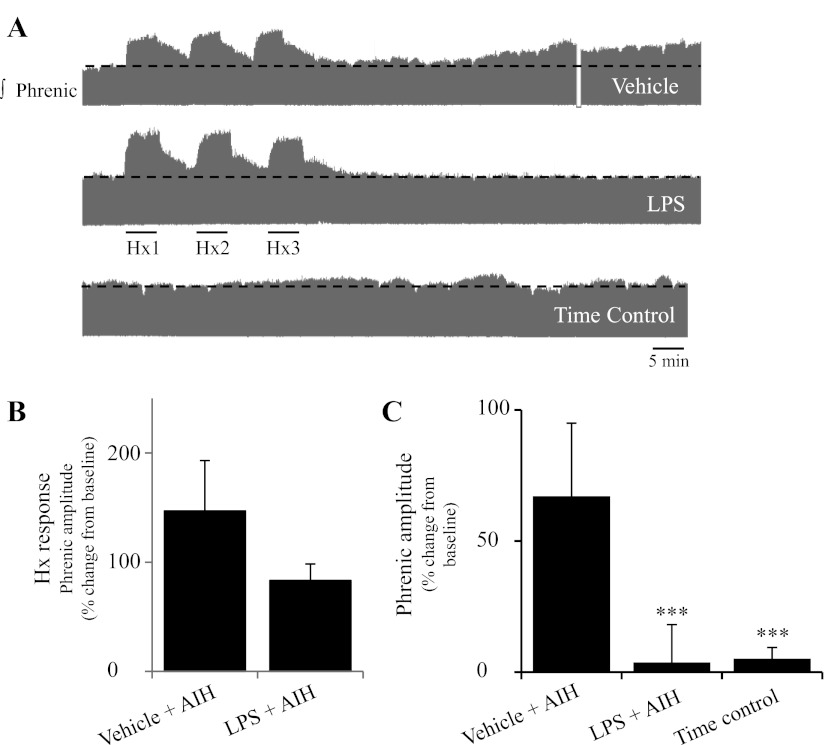
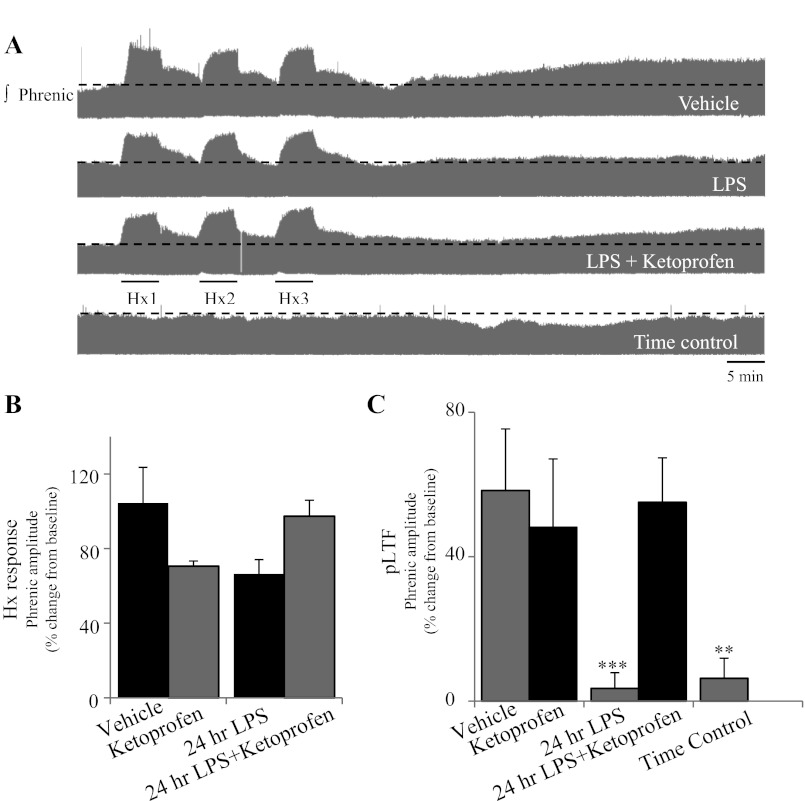
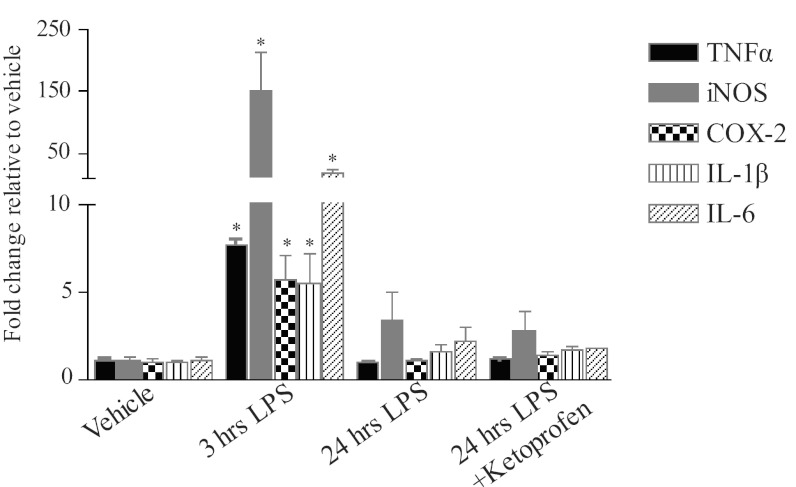
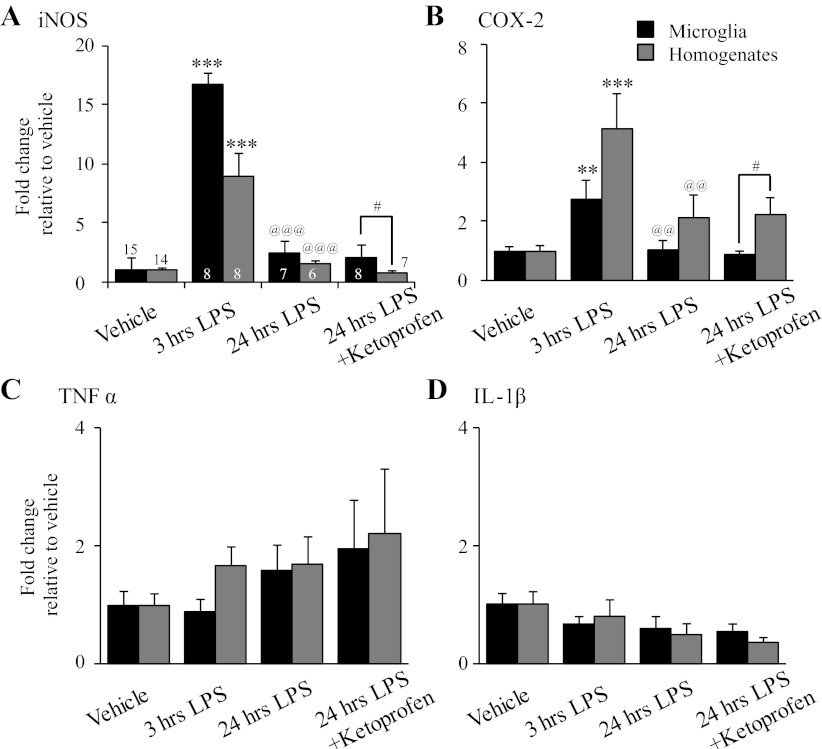
Although systemic inflammation occurs in most pathological conditions that challenge the neural control of breathing, little is known concerning the impact of inflammation on respiratory motor plasticity. Here, we tested the hypothesis that low-grade systemic inflammation induced by lipopolysaccharide (LPS, 100 μg/kg ip; 3 and 24 h postinjection) elicits spinal inflammatory gene expression and attenuates a form of spinal, respiratory motor plasticity: phrenic long-term facilitation (pLTF) induced by acute intermittent hypoxia (AIH; 3, 5 min hypoxic episodes, 5 min intervals). pLTF was abolished 3 h (vehicle control: 67.1 ± 27.9% baseline; LPS: 3.7 ± 4.2%) and 24 h post-LPS injection (vehicle: 58.3 ± 17.1% baseline; LPS: 3.5 ± 4.3%). Pretreatment with the nonsteroidal anti-inflammatory drug ketoprofen (12.5 mg/kg ip) restored pLTF 24 h post-LPS (55.1 ± 12.3%). LPS increased inflammatory gene expression in the spleen and cervical spinal cord (homogenates and isolated microglia) 3 h postinjection; however, all molecules assessed had returned to baseline by 24 h postinjection. At 3 h post-LPS, cervical spinal iNOS and COX-2 mRNA were differentially increased in microglia and homogenates, suggesting differential contributions from spinal cells. Thus LPS-induced systemic inflammation impairs AIH-induced pLTF, even after measured inflammatory genes returned to normal. Since ketoprofen restores pLTF even without detectable inflammatory gene expression, "downstream" inflammatory molecules most likely impair pLTF. These findings have important implications for many disease states where acute systemic inflammation may undermine the capacity for compensatory respiratory plasticity.
Figures
References
-
- Bach KB, Mitchell GS. Hypoxia-induced long-term facilitation of respiratory activity is serotonin dependent. Respir Physiol 104: 251–260, 1996 - PubMed
-
- Baker-Herman TL, Fuller DD, Bavis RW, Zabka AG, Golder FJ, Doperalski NJ, Johnson RA, Watters JJ, Mitchell GS. BDNF is necessary and sufficient for spinal respiratory plasticity following intermittent hypoxia. Nat Neurosci 7: 48–55, 2004 - PubMed
Publication types
MeSH terms
Substances
Grants and funding
LinkOut - more resources
Full Text Sources
Other Literature Sources
Research Materials
