


HIV and other sexually transmitted infections in a cohort of women involved in high-risk sexual behavior in Kampala, Uganda
- PMID: 23330152
- PMCID: PMC3920055
HIV and other sexually transmitted infections in a cohort of women involved in high-risk sexual behavior in Kampala, Uganda
Abstract
Background: Uganda has long been successful in controlling the HIV epidemic; however, there is evidence that HIV prevalence and incidence are increasing again. Data on the HIV/STI epidemic among sex workers are so far lacking from Uganda. This paper describes the baseline epidemiology of HIV/STI in a newly established cohort of women involved in high-risk sexual behavior in Kampala, Uganda.
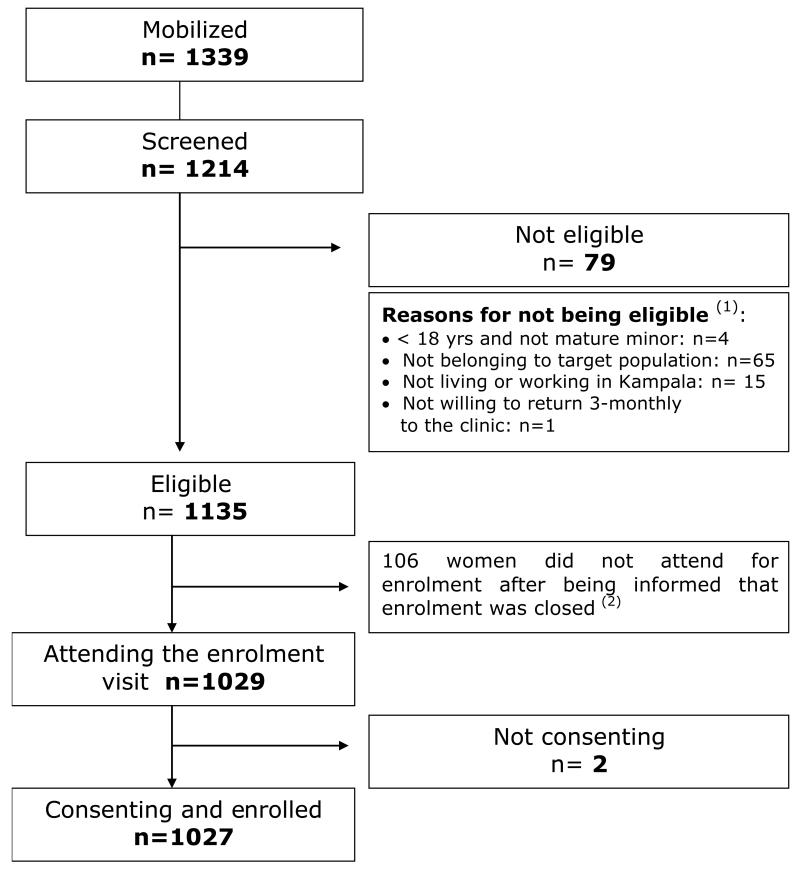
Methods: Women were recruited from red-light areas in Kampala. Between April 2008 and May 2009, 1027 eligible women were enrolled. Sociodemographic and behavioral information were collected; blood and genital samples were tested for HIV/STI. Risk factors for HIV infection were examined using multivariate logistic regression.
Results: HIV seroprevalence was 37%. The prevalence of Neisseria gonorrhoeae was 13%, Chlamydia trachomatis, 9%; Trichomonas vaginalis, 17%; bacterial vaginosis, 56% and candida infection, 11%. Eighty percent had herpes simplex virus 2 antibodies (HSV-2), 21% were TPHA-positive and 10% had active syphilis (RPR+TPHA+). In 3% of the genital ulcers, Treponema pallidum (TP) was identified, Haemophilus ducreyi in 6%, and HSV-2 in 35%. Prevalent HIV was independently associated with older age, being widowed, lack of education, sex work as sole income, street-based sex work, not knowing HIV-status, using alcohol, and intravaginal cleansing with soap. HIV infection was associated with N. gonorrhoeae, T. vaginalis, bacterial vaginosis, HSV-2 seropositivity and active syphilis.
Conclusions: Prevalence of HIV/STI is high among women involved in high-risk sexual behavior in Kampala. Targeted HIV prevention interventions including regular STI screening, voluntary HIV testing and counseling, condom promotion, and counseling for reducing alcohol use are urgently needed in this population.
Figures
Comment in
-
The need to focus on sex workers in generalized HIV epidemic settings.Sex Transm Dis. 2011 Apr;38(4):324-5. Sex Transm Dis. 2011. PMID: 23330153 Free PMC article. No abstract available.
References
-
- Kamali A, Carpenter LM, Whitworth JAG, et al. Seven-year trends in HIV-1 infection rates and changes in sexual behaviour among adults in rural Uganda. AIDS. 2000;14(4):427–434. - PubMed
-
- Mbulaiteye SM, Mahe C, Whitworth JAG, et al. Declining HIV-1 incidence and associated prevalence over 10 years in a rural population in south-west Uganda: a cohort study. The Lancet. 2002;(360):41–46. - PubMed
-
- Shafer LA, Biraro S, Nakiyingi-Miiro J, et al. HIV prevalence and incidence are not longer falling in southwest Uganda: evidence from a rural population cohort 1989-2005. AIDS. 2008;22(13):1641–1649. - PubMed
-
- Nzila N, Laga M, Thiam MA, et al. HIV and other sexually transmitted diseases among female prostitutes in Kinshasa. AIDS. 1991 Jun;5(6):715–21. - PubMed
Publication types
MeSH terms
Grants and funding
LinkOut - more resources
Full Text Sources
Medical
Miscellaneous
