


Reconceptualizing efficacy in substance use prevention research: refusal response efficacy and drug resistance self-efficacy in adolescent substance use
- PMID: 23330857
- PMCID: PMC3924871
- DOI: 10.1080/10410236.2012.720245
Reconceptualizing efficacy in substance use prevention research: refusal response efficacy and drug resistance self-efficacy in adolescent substance use
Abstract
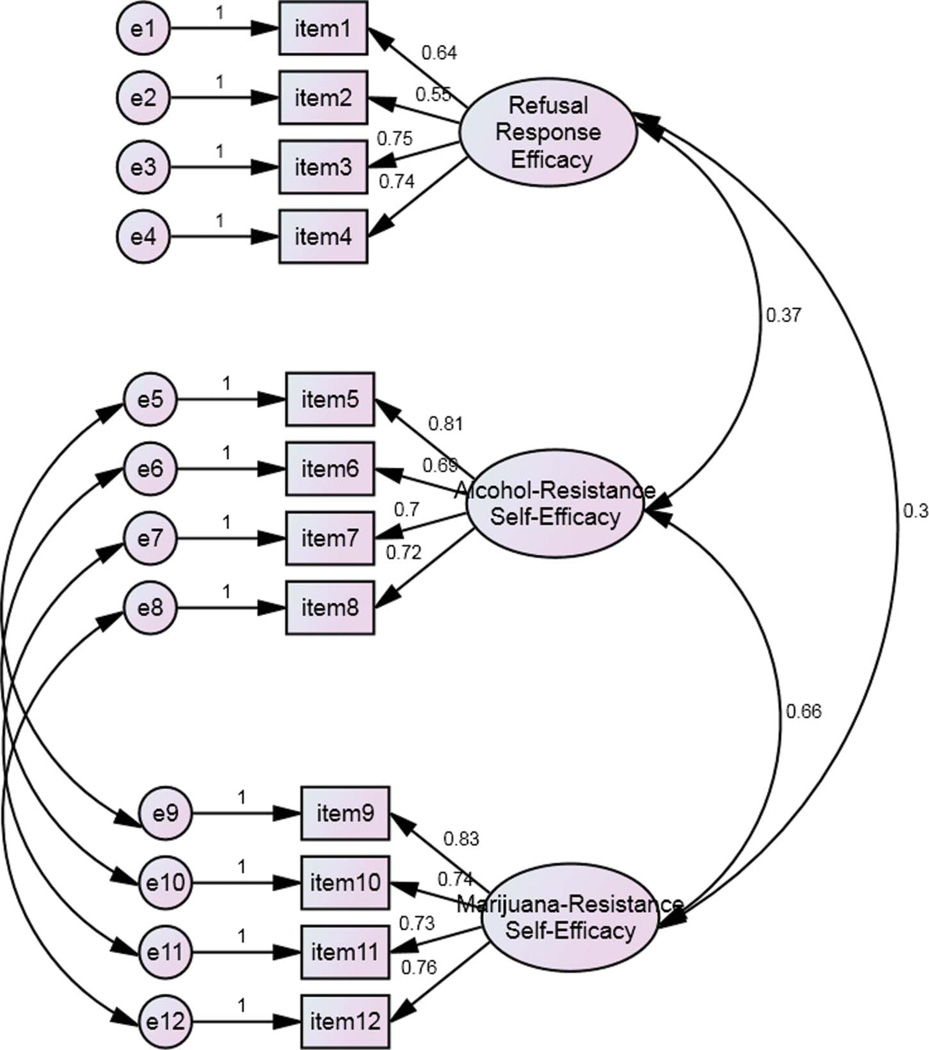
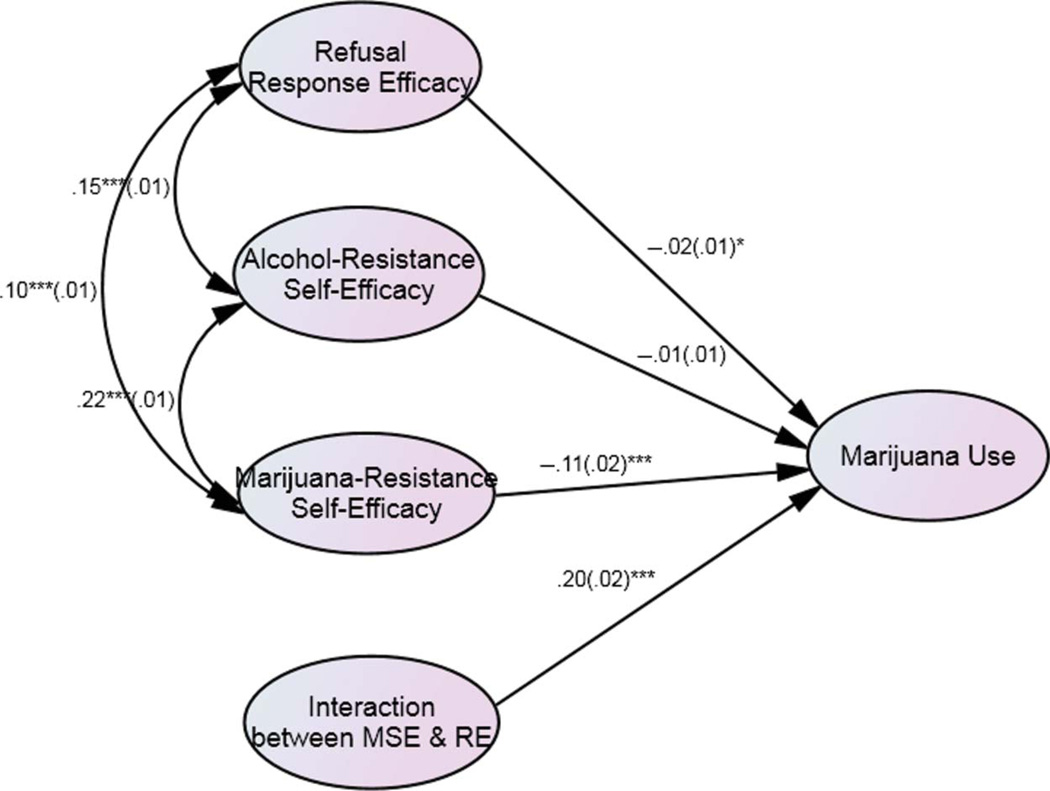
The purpose of this study is to utilize the Extended Parallel Process Model (EPPM) to expand the construct of efficacy in the adolescent substance use context. Using survey data collected from 2,129 seventh-grade students in 39 rural schools, we examined the construct of drug refusal efficacy and demonstrated relationships among response efficacy (RE), self-efficacy (SE), and adolescent drug use. Consistent with the hypotheses, confirmatory factor analyses of a 12-item scale yielded a three-factor solution: refusal RE, alcohol-resistance self-efficacy (ASE), and marijuana-resistance self-efficacy (MSE). Refusal RE and ASE/MSE were negatively related to alcohol use and marijuana use, whereas MSE was positively associated with alcohol use. These data demonstrate that efficacy is a broader construct than typically considered in drug prevention. Prevention programs should reinforce both refusal RE and substance-specific resistance SE.
Figures


References
-
- Ajzen I. From intentions to actions: A theory of planned behavior. In: Kuhl J, Beckmann J, editors. Action control: From cognition to behavior. Berlin, Germany: Springer-Verlag; 1985. pp. 11–39.
-
- Allahverdipour H, MacIntyre R, Hidarnia A, Schafii F, Kzamnegade A, Ghaleiha A, Emami A. Assessing protective factors against drug abuse among high school students: Self-control and the extended parallel process model. Journal of Addictions Nursing. 2007a;18:65–73.
-
- Allahverdipour H, Farhadinasab A, Galeeiha A, Mirzaee E. Behavioral intention to avoid drug abuse works as a protective factor among adolescent. Journal of Research on Health Sciences. 2007b;7:6–12. - PubMed
-
- Annis HM, Davis CS. Self-efficacy and the prevention of alcoholic relapse: Initial findings from a treatment trial. In: Baker TB, Cannon DS, editors. Assessment and treatment of addictive disorders. New York, NY: Praeger; 1988. pp. 88–112.
Publication types
MeSH terms
Grants and funding
LinkOut - more resources
Full Text Sources
Other Literature Sources
Medical