


High-fat diet acutely affects circadian organisation and eating behavior
- PMID: 23331763
- PMCID: PMC3645495
- DOI: 10.1111/ejn.12133
High-fat diet acutely affects circadian organisation and eating behavior
Abstract
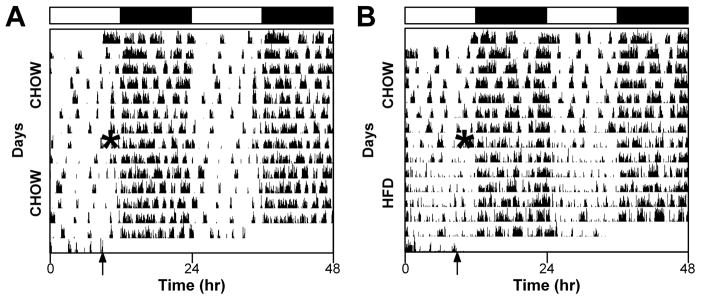
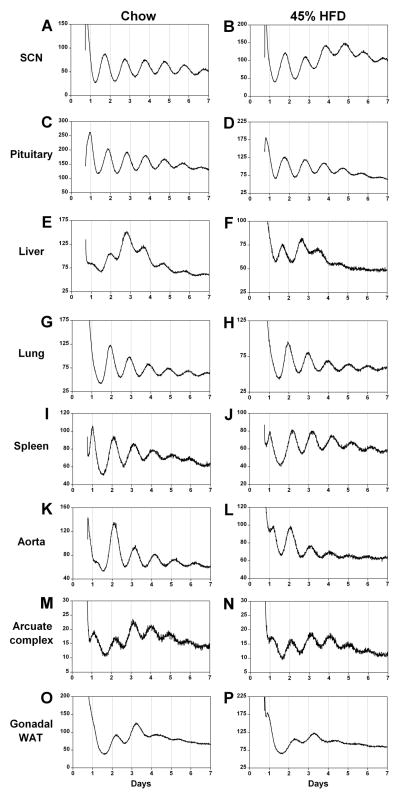
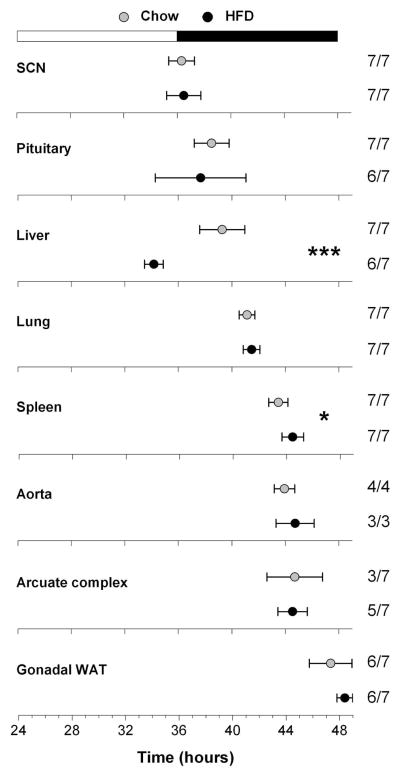
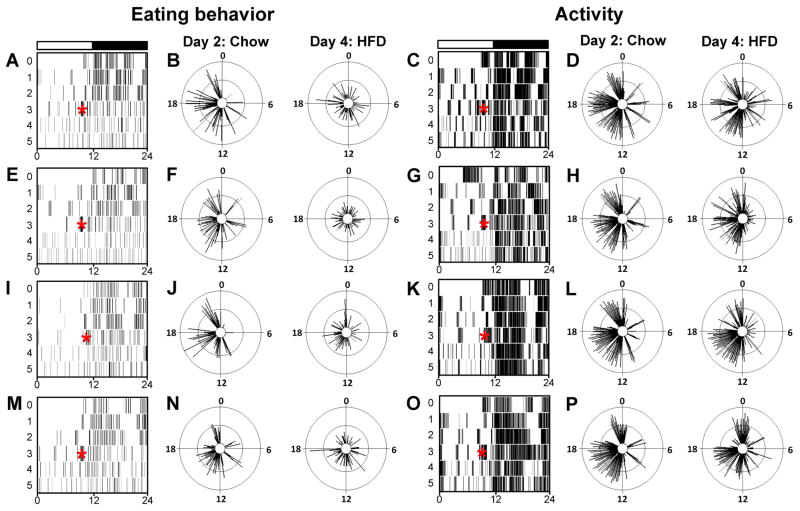
The organisation of timing in mammalian circadian clocks optimally coordinates behavior and physiology with daily environmental cycles. Chronic consumption of a high-fat diet alters circadian rhythms, but the acute effects on circadian organisation are unknown. To investigate the proximate effects of a high-fat diet on circadian physiology, we examined the phase relationship between central and peripheral clocks in mice fed a high-fat diet for 1 week. By 7 days, the phase of the liver rhythm was markedly advanced (by 5 h), whereas rhythms in other tissues were not affected. In addition, immediately upon consumption of a high-fat diet, the daily rhythm of eating behavior was altered. As the tissue rhythm of the suprachiasmatic nucleus was not affected by 1 week of high-fat diet consumption, the brain nuclei mediating the effect of a high-fat diet on eating behavior are likely to be downstream of the suprachiasmatic nucleus.
© 2013 Federation of European Neuroscience Societies and Blackwell Publishing Ltd.
Conflict of interest statement
High School Students (REHSS) program at Vanderbilt University. The authors declare no competing financial or non-financial interests.
Figures
References
-
- Cano P, Jimenez-Ortega V, Larrad A, Reyes Toso CF, Cardinali DP, Esquifino AI. Effect of a high-fat diet on 24-h pattern of circulating levels of prolactin, luteinizing hormone, testosterone, corticosterone, thyroid-stimulating hormone and glucose, and pineal melatonin content, in rats. Endocrine. 2008;33:118–125. - PubMed
Publication types
MeSH terms
Grants and funding
LinkOut - more resources
Full Text Sources
Other Literature Sources
Research Materials
