


The dynamic influence of commensal bacteria on the immune response to pathogens
- PMID: 23332724
- PMCID: PMC3622187
- DOI: 10.1016/j.mib.2012.12.002
The dynamic influence of commensal bacteria on the immune response to pathogens
Abstract
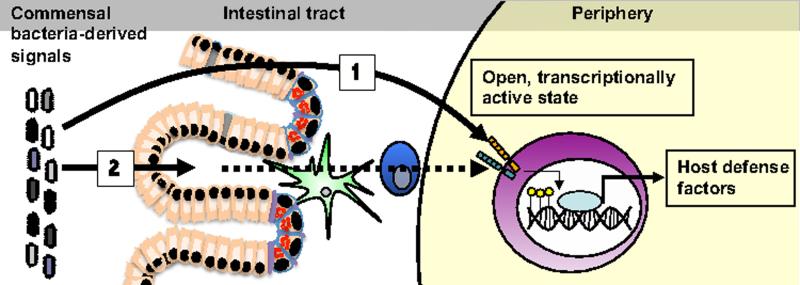
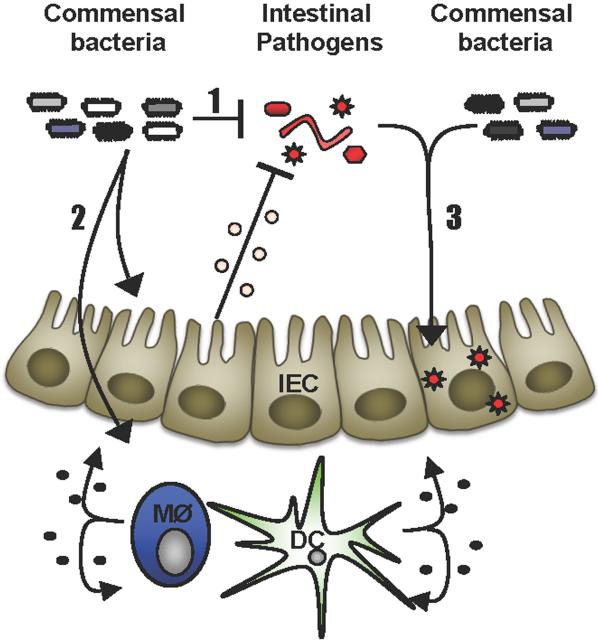
Alterations in the composition of commensal bacterial communities are associated with enhanced susceptibility to multiple inflammatory, allergic, metabolic and infectious diseases in humans. In the context of infection, commensal bacteria-derived signals can influence the host immune response to invasive pathogens by acting as an adjuvant to boost the immune response to infection or by providing tonic stimulation to induce basal expression of factors required for host defense. Conversely, some pathogens have evolved mechanisms that can utilize commensal bacteria to establish a replicative advantage within the host. Thus, examining the dynamic relationship that exists between the mammalian host, commensal bacteria and invasive pathogens can provide insights into the etiology of pathogenesis from an infection.
Copyright © 2012 Elsevier Ltd. All rights reserved.
Figures
References
-
- Ley RE, Peterson DA, Gordon JI. Ecological and evolutionary forces shaping microbial diversity in the human intestine. Cell. 2006;124(4):837–848. - PubMed
-
- Turnbaugh PJ, Ley RE, Mahowald MA, Magrini V, Mardis ER, Gordon JI. An obesity-associated gut microbiome with increased capacity for energy harvest. Nature. 2006;444(7122):1027–1031. - PubMed
Publication types
MeSH terms
Grants and funding
- R01 AI074878/AI/NIAID NIH HHS/United States
- R01 AI095466/AI/NIAID NIH HHS/United States
- AI061570/AI/NIAID NIH HHS/United States
- AI074878/AI/NIAID NIH HHS/United States
- AI087990/AI/NIAID NIH HHS/United States
- R01 AI102942/AI/NIAID NIH HHS/United States
- R21 AI087990/AI/NIAID NIH HHS/United States
- P30 CA016520/CA/NCI NIH HHS/United States
- R21 AI083480/AI/NIAID NIH HHS/United States
- U01 AI095608/AI/NIAID NIH HHS/United States
- R01 AI061570/AI/NIAID NIH HHS/United States
- R01 AI097333/AI/NIAID NIH HHS/United States
LinkOut - more resources
Full Text Sources
Other Literature Sources
