


Design, synthesis and biological evaluation of bivalent ligands against A(1)-D(1) receptor heteromers
- PMID: 23334237
- PMCID: PMC4002486
- DOI: 10.1038/aps.2012.151
Design, synthesis and biological evaluation of bivalent ligands against A(1)-D(1) receptor heteromers
Abstract
Aim: To design and synthesize bivalent ligands for adenosine A1-dopamine D1 receptor heteromers (A1-D1R), and evaluate their pharmacological activities.
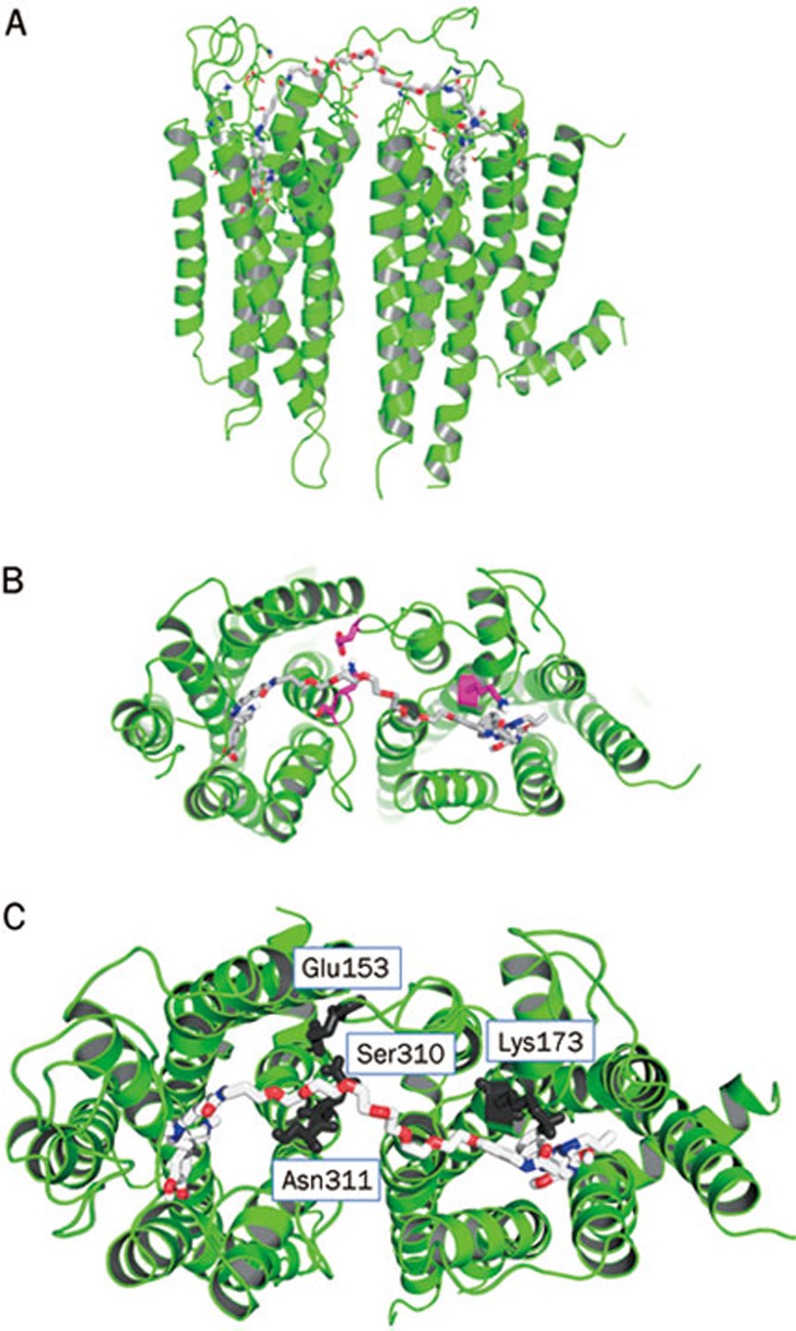
Methods: Bivalent ligands and their corresponding A1R monovalent ligands were designed and synthesized. The affinities of the bivalent ligands for A1R and D1R in rat brain membrane preparation were examined using radiolabeled binding assays. To demonstrate the formation of A1-D1R, fluorescence resonance energy transfer (FRET) was conducted in HEK293 cells transfected with D1-CFP and A1-YFP. Molecular modeling was used to analyze the possible mode of protein-protein and protein-ligand interactions.
Results: Two bivalent ligands for A1R and D1R (20a, 20b), as well as the corresponding A1R monovalent ligands (21a, 21b) were synthesized. In radiolabeled binding assays, the bivalent ligands showed affinities for A1R 10-100 times higher than those of the corresponding monovalent ligands. In FRET experiments, the bivalent ligands significantly increased the heterodimerization of A1R and D1R compared with the corresponding monovalent ligands. A heterodimer model with the interface of helixes 3, 4, 5 of A1R and helixes 1, 6, 7 from D1R was established with molecular modeling. The distance between the two ligand binding sites in the heterodimer model was approximately 48.4 Å, which was shorter than the length of the bivalent ligands.
Conclusion: This study demonstrates the existence of A1-D1R in situ and a simultaneous interaction of bivalent ligands with both the receptors.
Figures




References
-
- Milligan G. G protein-coupled receptor dimerization: function and ligand pharmacology. Mol Pharmacol. 2004;66:1–7. - PubMed
-
- Carriba P, Navarro G, Ciruela F, Ferre S, Casado V, Agnati L, et al. Detection of heteromerization of more than two proteins by sequential BRET-FRET. Nat Methods. 2008;5:727–33. - PubMed
-
- George SR, O'Dowd BF, Lee SP. G-protein-coupled receptor oligomerization and its potential for drug discovery. Nat Rev Drug Discov. 2002;1:808–20. - PubMed
-
- Milligan G. G-protein-coupled receptor heterodimers: pharmacology, function and relevance to drug discovery. Drug Discov Today. 2006;11:541–9. - PubMed
Publication types
MeSH terms
Substances
LinkOut - more resources
Full Text Sources
Other Literature Sources
Miscellaneous
