


Social cognition in borderline personality disorder
- PMID: 23335877
- PMCID: PMC3543980
- DOI: 10.3389/fnins.2012.00195
Social cognition in borderline personality disorder
Abstract
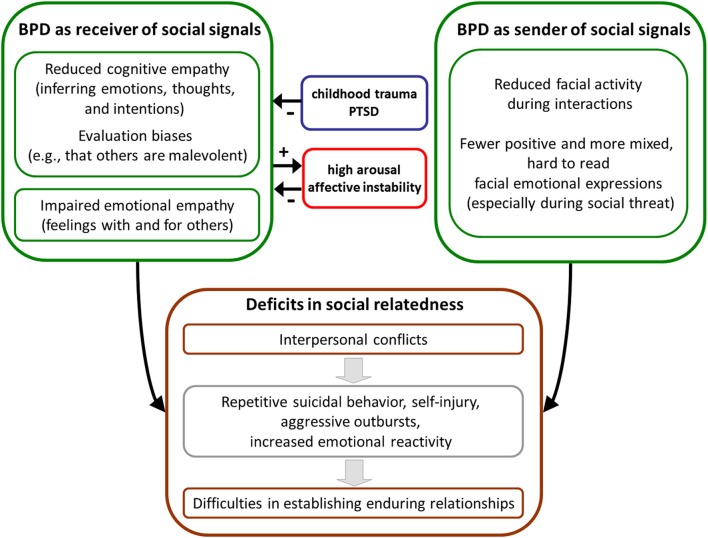
Many typical symptoms of borderline personality disorder (BPD) occur within interpersonal contexts, suggesting that BPD is characterized by aberrant social cognition. While research consistently shows that BPD patients have biases in mental state attribution (e.g., evaluate others as malevolent), the research focusing on accuracy in inferring mental states (i.e., cognitive empathy) is less consistent. For complex and ecologically valid tasks in particular, emerging evidence suggests that individuals with BPD have impairments in the attribution of emotions, thoughts, and intentions of others (e.g., Preißler et al., 2010). A history of childhood trauma and co-morbid PTSD seem to be strong additional predictors for cognitive empathy deficits. Together with reduced emotional empathy and aberrant sending of social signals (e.g., expression of mixed and hard-to-read emotions), the deficits in mental state attribution might contribute to behavioral problems in BPD. Given the importance of social cognition on the part of both the sender and the recipient in maintaining interpersonal relationships and therapeutic alliance, these impairments deserve more attention.
Keywords: affective instability; borderline personality disorder; empathy; posttraumatic stress disorder; social cognition.
Figures
References
-
- American Psychiatric Association (APA). (2000). Diagnostic and Statistical Manual of Mental Disorders: DSM-IV-TR. Washington, DC: American Psychiatric Association
LinkOut - more resources
Full Text Sources
Other Literature Sources
