


Utility of prognostic genomic tests in breast cancer practice: The IMPAKT 2012 Working Group Consensus Statement
- PMID: 23337633
- PMCID: PMC6267878
- DOI: 10.1093/annonc/mds645
Utility of prognostic genomic tests in breast cancer practice: The IMPAKT 2012 Working Group Consensus Statement
Abstract
Background: We critically evaluated the available evidence on genomic tests in breast cancer to define their prognostic ability and likelihood to determine treatment benefit.
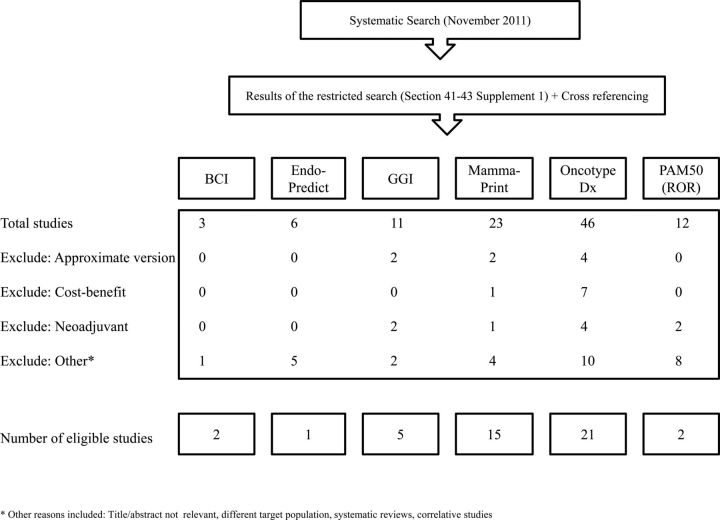
Design: Independent evaluation of six genomic tests [Oncotype Dx™, MammaPrint(®), Genomic Grade Index, PAM50 (ROR-S), Breast Cancer Index, and EndoPredict] was carried out by a panel of experts in three parameters: analytical validity, clinical validity, and clinical utility based on the principles of the EGAPP criteria. PANEL STATEMENTS: The majority of the working group members found the available evidence on the analytical and clinical validity of Oncotype Dx™ and MammaPrint(®) to be convincing. None of the genomic tests demonstrated robust evidence of clinical utility: it was not clear from the current evidence that modifying treatment decisions based on the results of a given genomic test could result in improving clinical outcome.
Conclusions: The IMPAKT 2012 Working Group proposed the following recommendations: (i) a need to develop models that integrate clinicopathologic factors along with genomic tests; (ii) demonstration of clinical utility should be made in the context of a prospective randomized trial; and (iii) the creation of registries for patients who are subjected to genomic testing in the daily practice.
Figures
References
-
- Perou CM, Sorlie T, Eisen MB, et al. Molecular portraits of human breast tumours. Nature. 2000;406:747–752. - PubMed
-
- Sotiriou C, Pusztai L. Gene-expression signatures in breast cancer. N Engl J Med. 2009;360:790–800. - PubMed
-
- Henry LR, Stojadinovic A, Swain SM, et al. The influence of a gene expression profile on breast cancer decisions. J Surg Oncol. 2009;99:319–323. - PubMed
Publication types
MeSH terms
Grants and funding
LinkOut - more resources
Full Text Sources
Other Literature Sources
Medical
Molecular Biology Databases
