


N6-methyl-adenosine modification in messenger and long non-coding RNA
- PMID: 23337769
- PMCID: PMC3608796
- DOI: 10.1016/j.tibs.2012.12.006
N6-methyl-adenosine modification in messenger and long non-coding RNA
Abstract
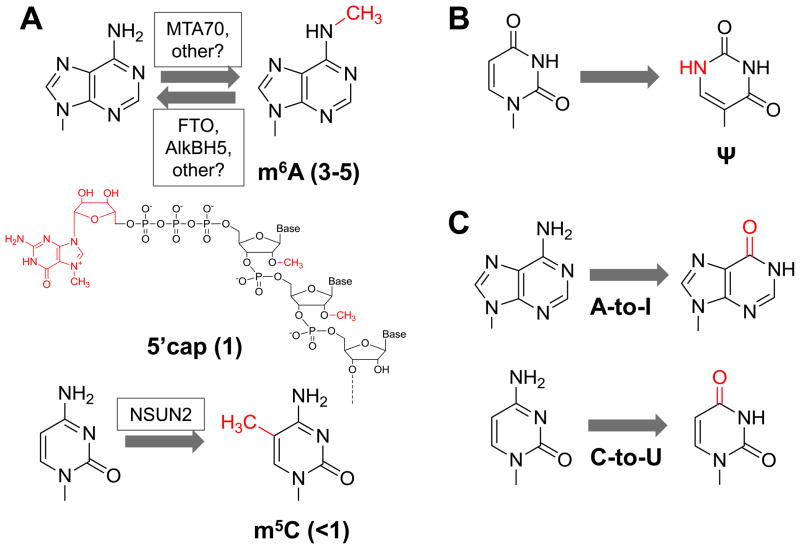
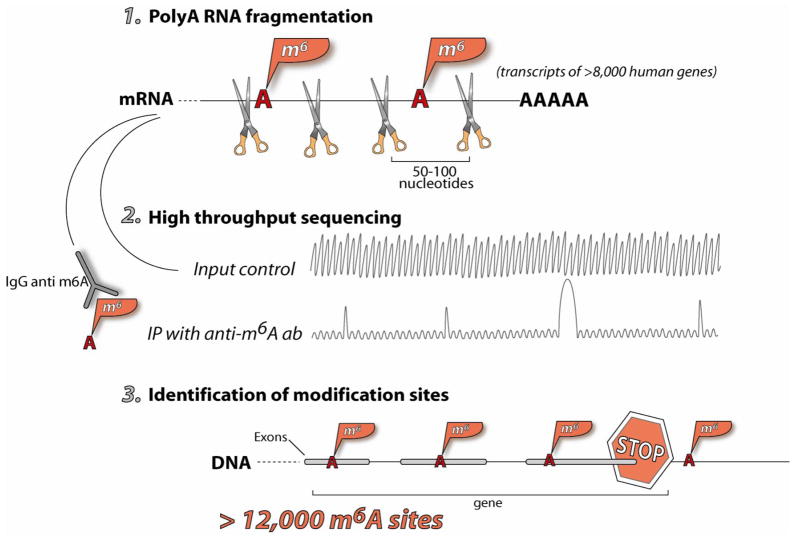
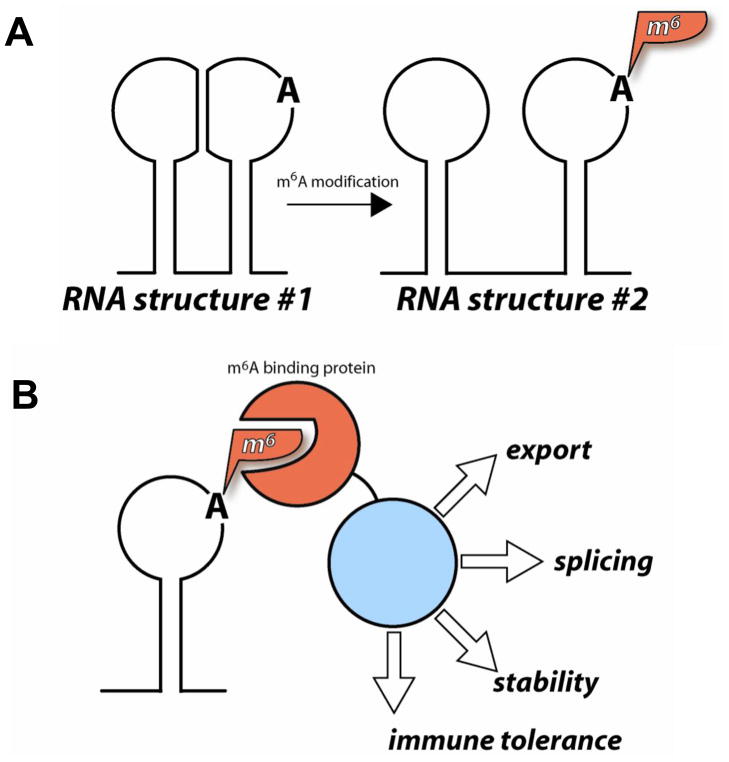
N6-methyl-adenosine (m(6)A) is the most abundant modification in mammalian mRNA and long non-coding RNA. First discovered in the 1970s, m(6)A modification has been proposed to function in mRNA splicing, export, stability, and immune tolerance. Interest and excitement in m(6)A modification has recently been revived based on the discovery of a mammalian enzyme that removes m(6)A and the application of deep sequencing to localize modification sites. The m(6)A demethylase fat mass and obesity associated protein (FTO) controls cellular energy homeostasis and is the first enzyme discovered that reverses an RNA modification. m(6)A Sequencing demonstrates cell-type- and cell-state-dependent m(6)A patterns, indicating that m(6)A modifications are highly regulated. This review describes the current knowledge of mammalian m(6)A modifications and future perspectives on how to push the field forward.
Copyright © 2012 Elsevier Ltd. All rights reserved.
Figures
References
-
- Grosjean H, editor. Fine-tuning of RNA functions by modification and editing. Springer-Verlag; 2005.
-
- Mamane Y, et al. eIF4E--from translation to transformation. Oncogene. 2004;23:3172–3179. - PubMed
-
- Topisirovic I, et al. Cap and cap-binding proteins in the control of gene expression. Wiley Interdiscip Rev RNA. 2011;2:277–298. - PubMed
Publication types
MeSH terms
Substances
Grants and funding
LinkOut - more resources
Full Text Sources
Other Literature Sources
