


Can a core outcome set improve the quality of systematic reviews?--a survey of the Co-ordinating Editors of Cochrane Review Groups
- PMID: 23339751
- PMCID: PMC3575292
- DOI: 10.1186/1745-6215-14-21
Can a core outcome set improve the quality of systematic reviews?--a survey of the Co-ordinating Editors of Cochrane Review Groups
Abstract
Background: Missing outcome data or the inconsistent reporting of outcome data in clinical research can affect the quality of evidence within a systematic review. A potential solution is an agreed standardized set of outcomes known as a core outcome set (COS) to be measured in all studies for a specific condition. We investigated the amount of missing patient data for primary outcomes in Cochrane systematic reviews, and surveyed the Co-ordinating Editors of Cochrane Review Groups (CRGs) on issues related to the standardization of outcomes in their CRG's reviews. These groups are responsible for the more than 7,000 protocols and full versions of Cochrane Reviews that are currently available, and the several hundred new reviews published each year, presenting the world's largest collection of standardized systematic reviews in health care.
Methods: Using an unselected cohort of Cochrane Reviews, we calculated and presented the percentage of missing patient data for the primary outcome measure chosen for each review published by each CRG. We also surveyed the CRG Co-ordinating Editors to see what their policies are with regards to outcome selection and outcomes to include in the Summary of Finding (SoF) tables in their Cochrane Reviews. They were also asked to list the main advantages and challenges of standardizing outcomes across all reviews within their CRG.
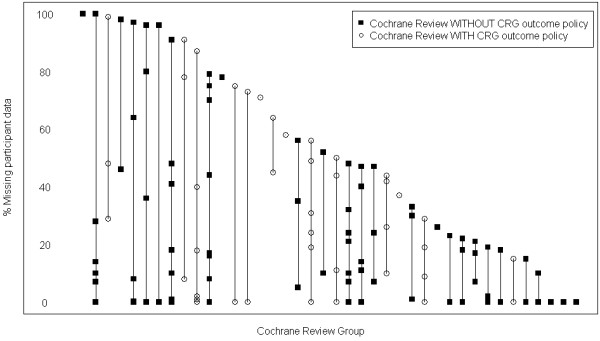
Results: In one fifth of the 283 reviews in the sample, more than 50% of the patient data for the primary outcome was missing. Responses to the survey were received from 90% of Co-ordinating Editors. Thirty-six percent of CRGs have a centralized policy regarding which outcomes to include in the SoF table and 73% of Co-ordinating Editors thought that a COS for effectiveness trials should be used routinely for a SoF table.
Conclusions: The reliability of systematic reviews, in particular meta-analyses they contain, can be improved if more attention is paid to missing outcome data. The availability of COSs for specific health conditions might help with this and the concept has support from the majority of Co-ordinating Editors in CRGs.
Figures
References
-
- Tovey D. Impact of Cochrane Reviews [editorial], The Cochrane Library. 2010. http://www.thecochranelibrary.com/details/editorial/756937/The-Impact-of... (accessed 21 August 2012) - PMC - PubMed
-
- Dwan K, Altman DG, Arnaiz JA, Bloom J, Chan A-W, Cronin E, Decullier E, Easterbrook PJ, Von Elm E, Gamble C, Ghersi D, Ioannidis JP, Simes J, Williamson PR. Systematic review of the empirical evidence of study publication bias and outcome reporting bias. PLoS One. 2008;3(8):e3081. doi: 10.1371/journal.pone.0003081. - DOI - PMC - PubMed
-
- Williamson PR, Altman D, Blazeby J, Clarke M, Gargon E. Driving up the quality and relevance of research through the use of agreed core outcomes. J Health Serv Res Policy. 2012;17:1–2. - PubMed
MeSH terms
Grants and funding
LinkOut - more resources
Full Text Sources
Other Literature Sources
