


Effects of exercise interventions on peripheral vascular endothelial vasoreactivity in patients with heart failure with reduced ejection fraction
- PMID: 23340198
- PMCID: PMC3679497
- DOI: 10.1016/j.hlc.2012.12.006
Effects of exercise interventions on peripheral vascular endothelial vasoreactivity in patients with heart failure with reduced ejection fraction
Abstract
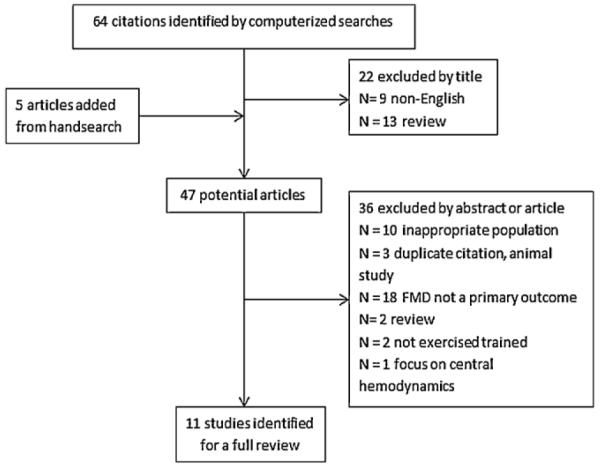
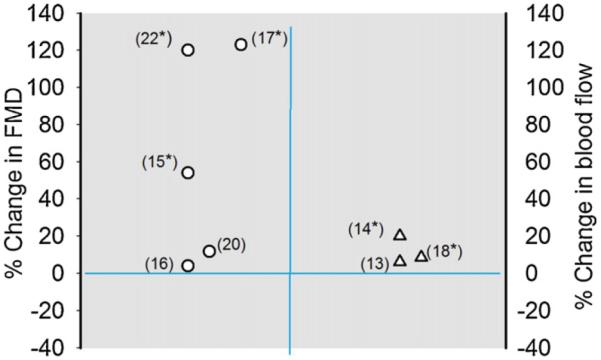
Changes in vascular function, such as endothelial dysfunction are linked to the progression of heart failure (HF) and poorer outcomes, such as increased hospitalisations. Exercise training may positively influence endothelial function in HF patients with reduced ejection fraction. The aim of this manuscript is to summarise HF studies evaluating the influence of exercise training on endothelial function as measured by flow mediated vasodilation as a primary outcome and to provide recommendations for future research studies designed to improve peripheral vascular function in HF. Databases were searched for studies published between 1995 and December 2011. Two reviewers determined eligibility and extracted information on study characteristics and quality, exercise interventions, and endothelial function. Eleven articles (N=318 HF participants with an ejection fraction <40%) were eligible for full review. Aerobic, resistance, or combined exercise training improved endothelium-dependent vasodilation as measured by ultrasound or plethysmography. There is less evidence supporting improvement in endothelium-independent function with exercise training. Sample sizes were small and predominantly male. Future research is needed to address the best mode and optimal dose of exercise for all patients with HF including women and subgroups with specific co-morbidities.
Copyright © 2012 Australian and New Zealand Society of Cardiac and Thoracic Surgeons (ANZSCTS) and the Cardiac Society of Australia and New Zealand (CSANZ). Published by Elsevier B.V. All rights reserved.
Figures
References
-
- Katz SD, Hryniewicz K, Hriljac I, Balidemaj K, Dimayuga C, Hudaihed A, et al. Vascular endothelial dysfunction and mortality risk of patients with chronic heart failure. Circulation. 2005;111(3):310–4. - PubMed
-
- Fisher D, Rossa S, Landmesser U, Spiekermann S, Engberding N, Honig B, et al. Endothelial dysfunction in patients with chronic heart failure is independently associated with increased incidence of hospitalization, cardiac transplantation or death. Eur Heart J. 2005;26(1):65–9. - PubMed
-
- de Berrazueta JR, Guerra-Ruiz A, Garcia-Unzueta MT, Toca GM, Laso SL, de Adana MS, et al. Endothelial dysfunction measured by reactive hyperaemia using strain-gauge plethysmography, is an independent predictor of adverse outcome in heart failure. Eur J Heart Fail. 2010;12(5):477–83. - PubMed
-
- Downing J, Balady GJ. The role of exercise training in heart failure. J Am Coll Cardiol. 2011;58(6):561–9. - PubMed
-
- Keteyian SJ. Exercise training in congestive heart failure: risks and benefits. Prog Cardiovasc Dis. 2011;53(6):419–28. - PubMed
Publication types
MeSH terms
Grants and funding
LinkOut - more resources
Full Text Sources
Other Literature Sources
Medical
Research Materials
Miscellaneous
