


β-Arrestin recruitment and G protein signaling by the atypical human chemokine decoy receptor CCX-CKR
- PMID: 23341447
- PMCID: PMC3591626
- DOI: 10.1074/jbc.M112.406108
β-Arrestin recruitment and G protein signaling by the atypical human chemokine decoy receptor CCX-CKR
Abstract
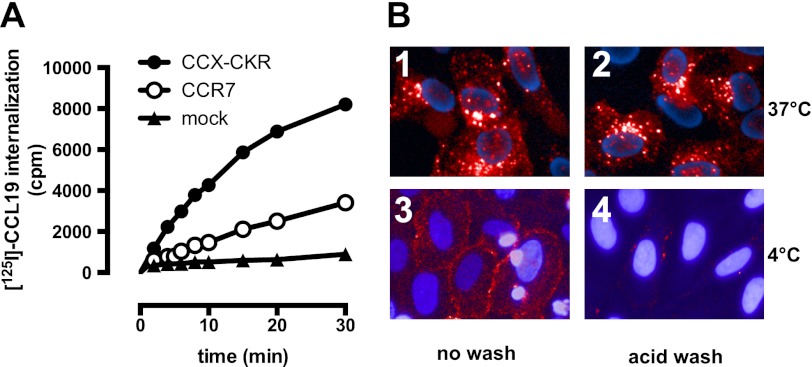
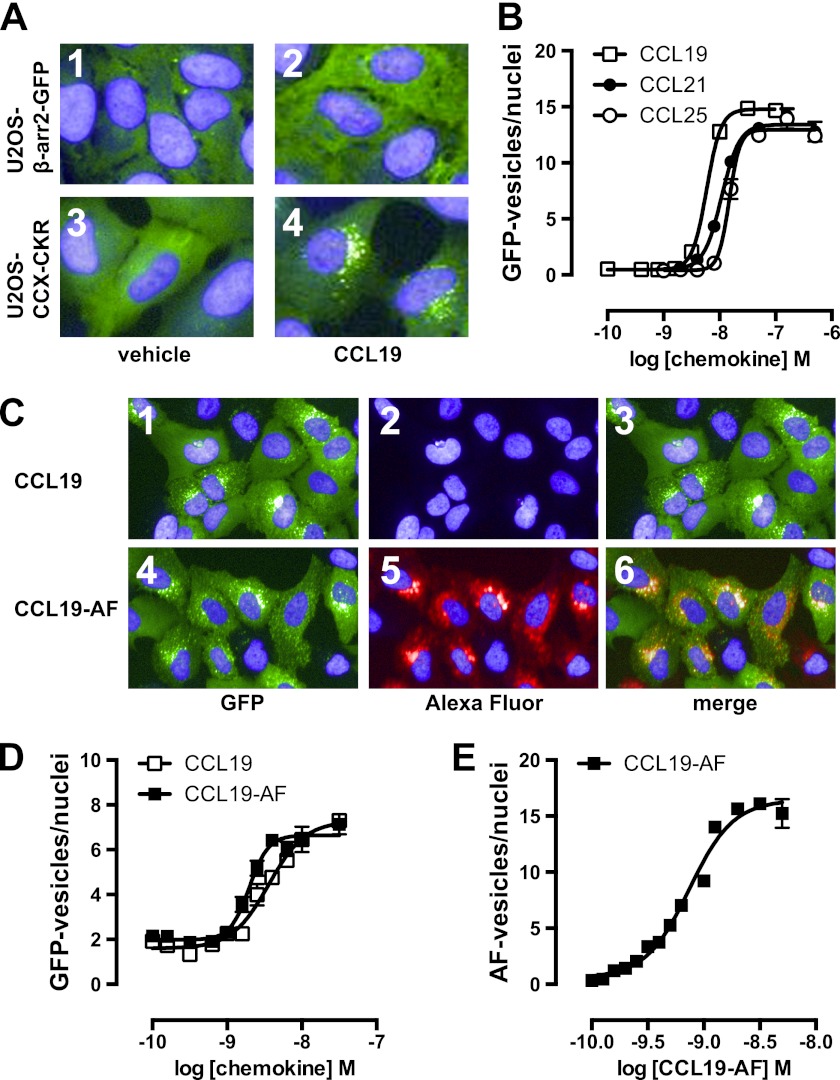
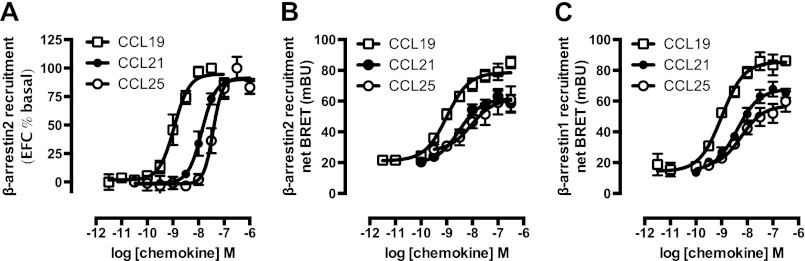
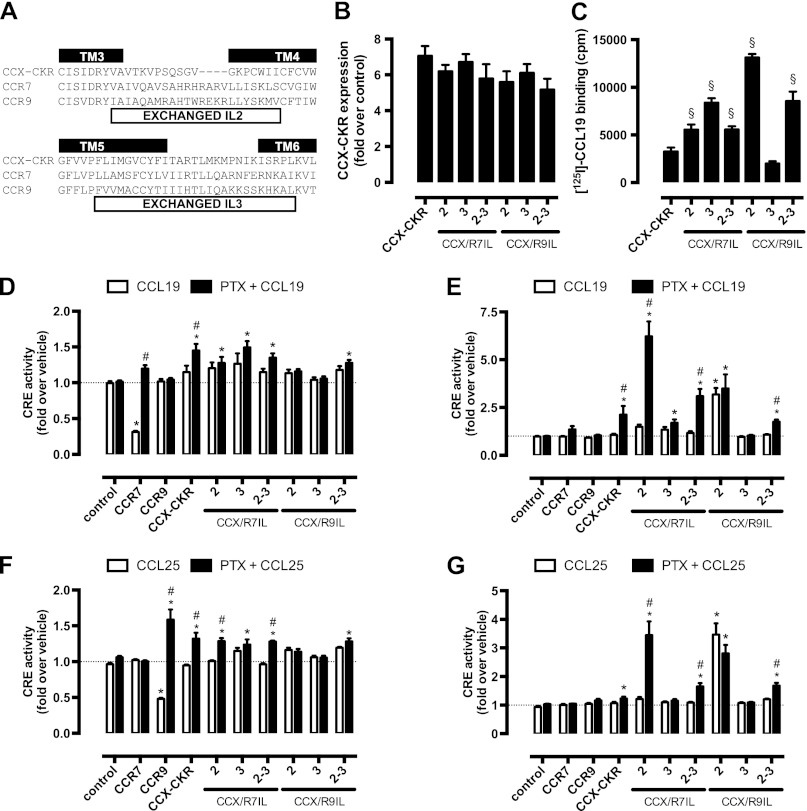
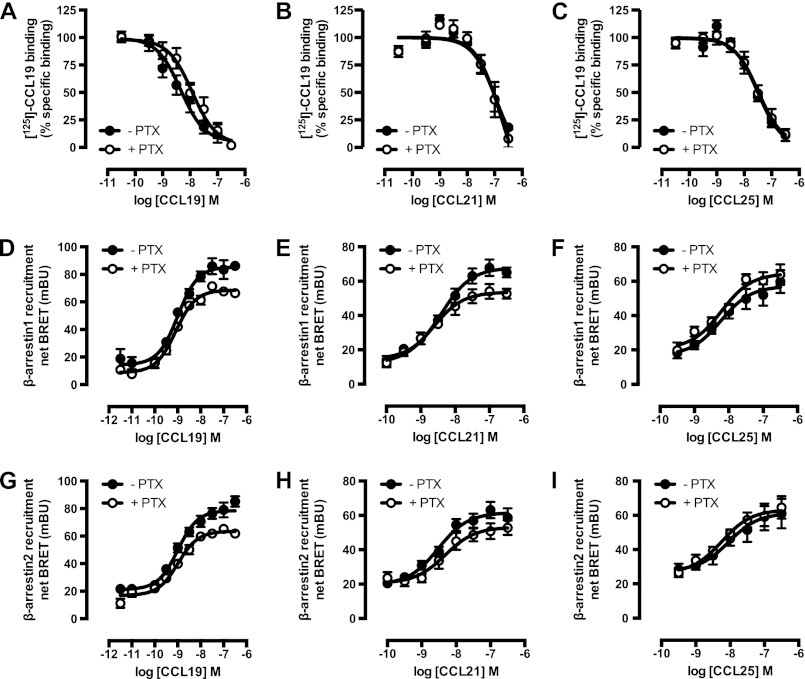
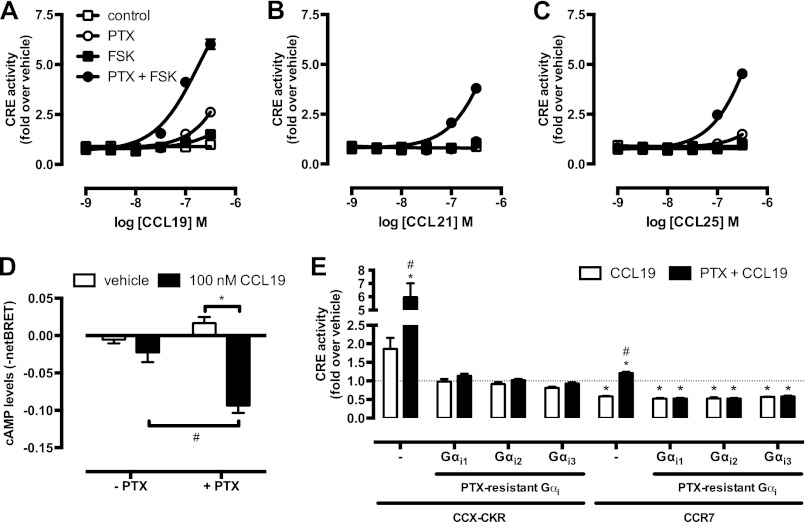
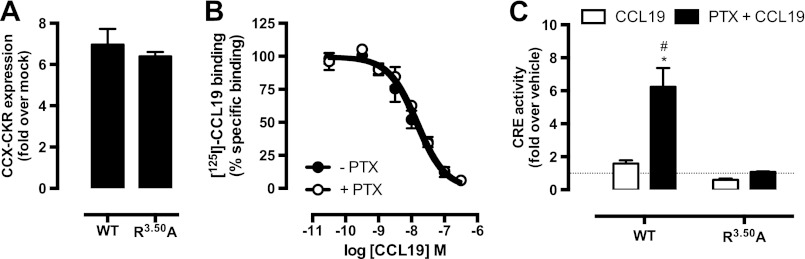
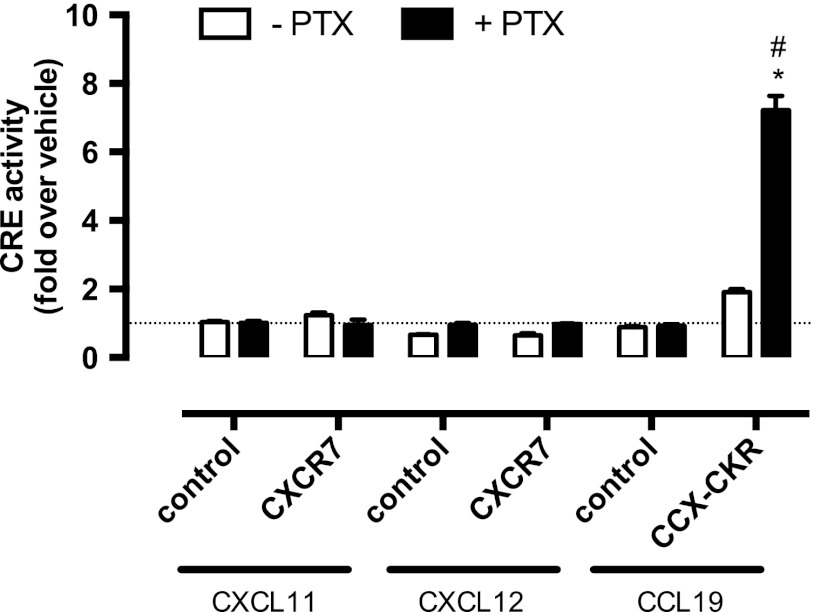
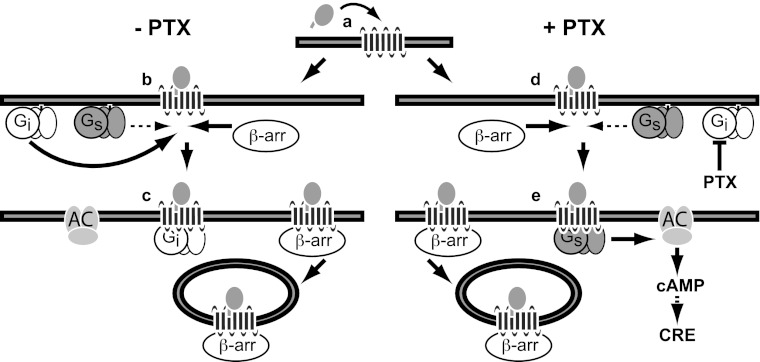
Chemokine receptors form a large subfamily of G protein-coupled receptors that predominantly activate heterotrimeric Gi proteins and are involved in immune cell migration. CCX-CKR is an atypical chemokine receptor with high affinity for CCL19, CCL21, and CCL25 chemokines, but is not known to activate intracellular signaling pathways. However, CCX-CKR acts as decoy receptor and efficiently internalizes these chemokines, thereby preventing their interaction with other chemokine receptors, like CCR7 and CCR9. Internalization of fluorescently labeled CCL19 correlated with β-arrestin2-GFP translocation. Moreover, recruitment of β-arrestins to CCX-CKR in response to CCL19, CCL21, and CCL25 was demonstrated using enzyme-fragment complementation and bioluminescence resonance energy transfer methods. To unravel why CCX-CKR is unable to activate Gi signaling, CCX-CKR chimeras were constructed by substituting its intracellular loops with the corresponding CCR7 or CCR9 domains. The signaling properties of chimeric CCX-CKR receptors were characterized using a cAMP-responsive element (CRE)-driven reporter gene assay. Unexpectedly, wild type CCX-CKR and a subset of the chimeras induced an increase in CRE activity in response to CCL19, CCL21, and CCL25 in the presence of the Gi inhibitor pertussis toxin. CCX-CKR signaling to CRE required an intact DRY motif. These data suggest that inactive Gi proteins impair CCX-CKR signaling most likely by hindering the interaction of this receptor with pertussis toxin-insensitive G proteins that transduce signaling to CRE. On the other hand, recruitment of the putative signaling scaffold β-arrestin to CCX-CKR in response to chemokines might allow activation of yet to be identified signal transduction pathways.
Figures

References
-
- O'Hayre M., Salanga C. L., Handel T. M., Allen S. J. (2008) Chemokines and cancer. Migration, intracellular signalling and intercellular communication in the microenvironment. Biochem. J. 409, 635–649 - PubMed
-
- Gosling J., Dairaghi D. J., Wang Y., Hanley M., Talbot D., Miao Z., Schall T. J. (2000) Cutting edge. Identification of a novel chemokine receptor that binds dendritic cell- and T cell-active chemokines including ELC, SLC, and TECK. J. Immunol. 164, 2851–2856 - PubMed
-
- Förster R., Davalos-Misslitz A. C., Rot A. (2008) CCR7 and its ligands. Balancing immunity and tolerance. Nat. Rev. Immunol. 8, 362–371 - PubMed
Publication types
MeSH terms
Substances
LinkOut - more resources
Full Text Sources
Other Literature Sources
Molecular Biology Databases
