


The intestine plays a substantial role in human vitamin B6 metabolism: a Caco-2 cell model
- PMID: 23342087
- PMCID: PMC3544708
- DOI: 10.1371/journal.pone.0054113
The intestine plays a substantial role in human vitamin B6 metabolism: a Caco-2 cell model
Abstract
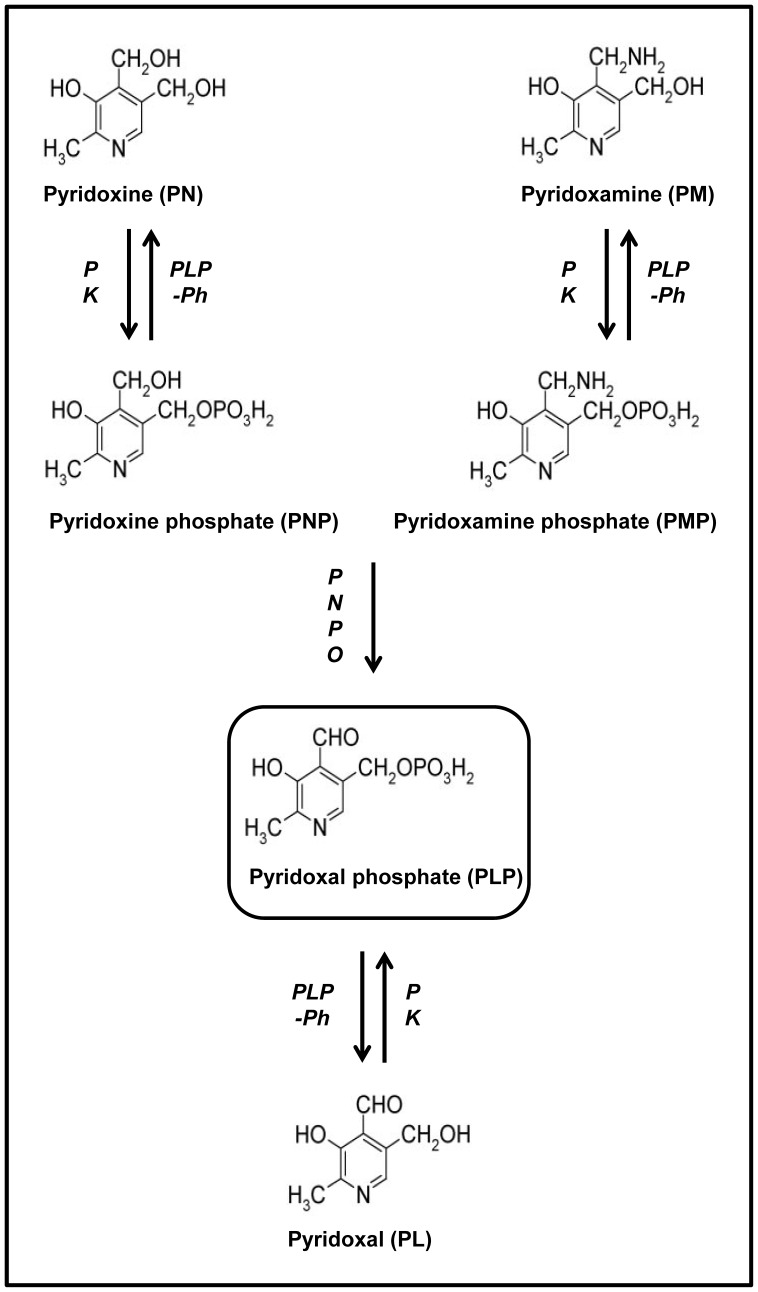
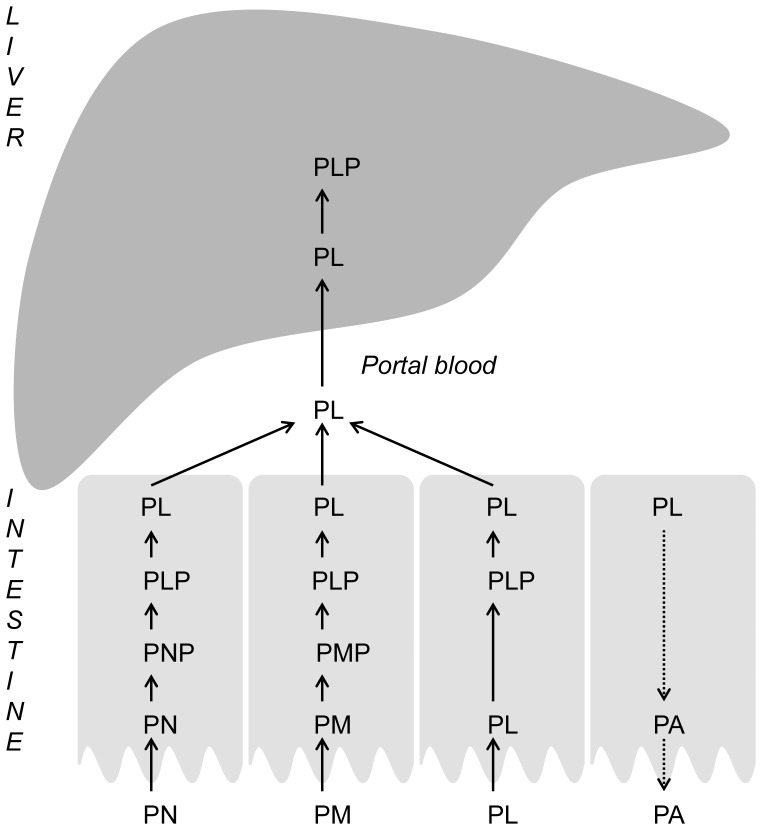
Background: Vitamin B6 is present in various forms (vitamers) in the diet that need to be metabolized to pyridoxal phosphate (PLP), the active cofactor form of vitamin B6. In literature, the liver has been reported to be the major site for this conversion, whereas the exact role of the intestine remains to be elucidated.
Objective: To gain insight into the role of the intestine in human vitamin B6 metabolism.
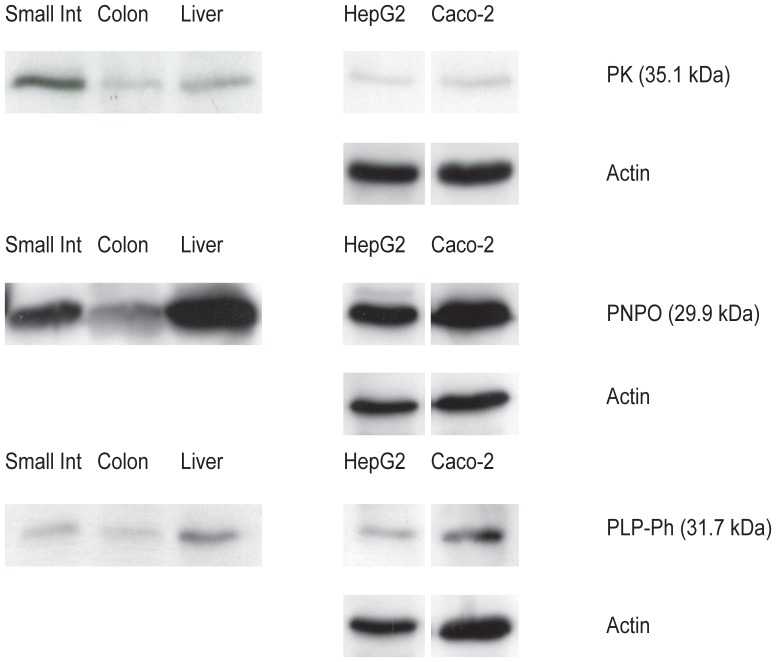
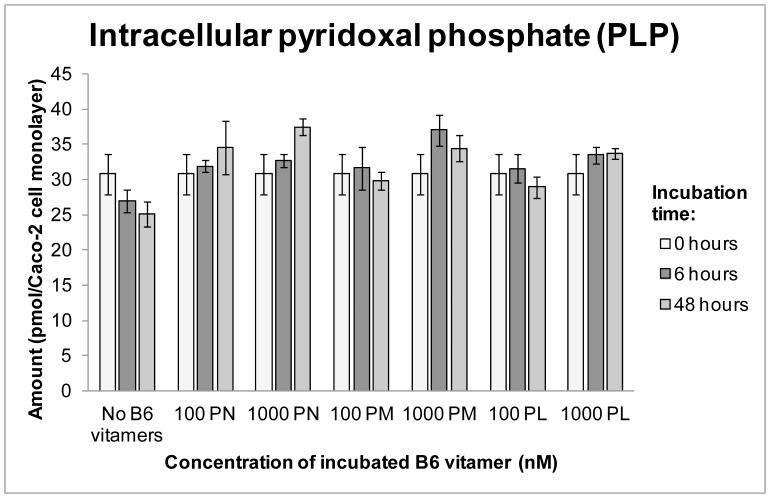
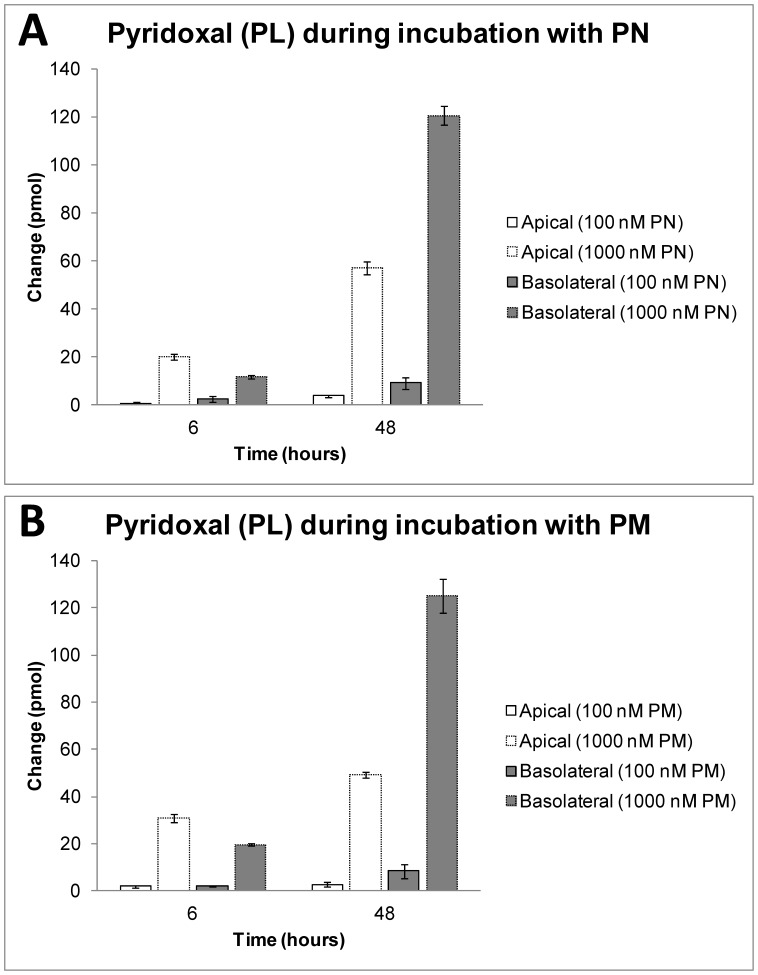
Materials and methods: Expression of the enzymes pyridoxal kinase (PK), pyridox(am)ine phosphate oxidase (PNPO) and PLP-phosphatase was determined in Caco-2 cells and in lysates of human intestine. Vitamin B6 uptake, conversion and excretion were studied in polarized Caco-2 cell monolayers. B6 vitamer concentrations (pyridoxine (PN), pyridoxal (PL), PLP, pyridoxamine (PM), pyridoxamine phosphate (PMP)) and pyridoxic acid (PA) were quantified by ultra performance liquid chromatography-tandem mass spectrometry (UPLC-MS/MS) using stable isotope-labeled internal standards.
Results: The enzymatic system involved in vitamin B6 metabolism (PK, PNPO and PLP-phosphatase) is fully expressed in Caco-2 cells as well as in human intestine. We show uptake of PN, PM and PL by Caco-2 cells, conversion of PN and PM into PL and excretion of all three unphosphorylated B6 vitamers.
Conclusion: We demonstrate, in a Caco-2 cell model, that the intestine plays a substantial role in human vitamin B6 metabolism.
Conflict of interest statement
Figures
References
-
- Bender DA (2005) Water-soluble vitamins: Vitamin B6. In: Geissler CA, Powers HJ, editors. Human Nutrition. London, United Kingsom: Elsevier/Churchill Livingstone. 194–196.
-
- Hamm MW, Mehansho H, Henderson LM (1979) Transport and metabolism of pyridoxamine and pyridoxamine phosphate in the small intestine of the rat. J Nutr 109: 1552–1559. - PubMed
-
- Mehansho H, Hamm MW, Henderson LM (1979) Transport and metabolism of pyridoxal and pyridoxal phosphate in the small intestine of the rat. J Nutr 109: 1542–1551. - PubMed
-
- Middleton HM 3rd (1977) Uptake of pyridoxine hydrochloride by the rat jejunal mucosa in vitro. J Nutr 107: 126–131. - PubMed
Publication types
MeSH terms
Substances
LinkOut - more resources
Full Text Sources
Other Literature Sources
Research Materials
