


Mosquitofish (Gambusia affinis) preference and behavioral response to animated images of conspecifics altered in their color, aspect ratio, and swimming depth
- PMID: 23342131
- PMCID: PMC3546983
- DOI: 10.1371/journal.pone.0054315
Mosquitofish (Gambusia affinis) preference and behavioral response to animated images of conspecifics altered in their color, aspect ratio, and swimming depth
Abstract
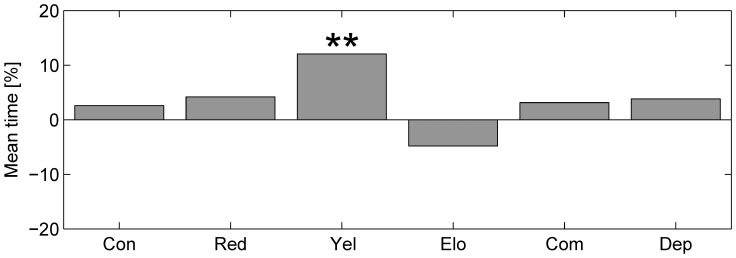
Mosquitofish (Gambusia affinis) is an example of a freshwater fish species whose remarkable diffusion outside its native range has led to it being placed on the list of the world's hundred worst invasive alien species (International Union for Conservation of Nature). Here, we investigate mosquitofish shoaling tendency using a dichotomous choice test in which computer-animated images of their conspecifics are altered in color, aspect ratio, and swimming level in the water column. Pairs of virtual stimuli are systematically presented to focal subjects to evaluate their attractiveness and the effect on fish behavior. Mosquitofish respond differentially to some of these stimuli showing preference for conspecifics with enhanced yellow pigmentation while exhibiting highly varying locomotory patterns. Our results suggest that computer-animated images can be used to understand the factors that regulate the social dynamics of shoals of Gambusia affinis. Such knowledge may inform the design of control plans and open new avenues in conservation and protection of endangered animal species.
Conflict of interest statement
Figures
References
-
- Stein BA, Kutner LS, Adams JS (2000) Precious heritage: the status of biodiversity in the United States; Stein BA, Kutner LS, Adams JS, editors. Oxford, UK: Oxford University Press.
-
- Krumholz LA (1948) Reproduction in the western mosquitofish, Gambusia affinis affinis (Baird & Girard), and its use in mosquito control. Ecol Monogr 18: 1–43.
-
- Wittenberg R, Cock MJW (2011) Invasive alien species: a toolkit of best prevention and management practices; Wittenberg R, Cock MJW, editors. Wallingford, Oxon, UK: CAB International.
-
- Lambertini M, Leape J, Marton-Lefevre J, Mitter-Meier RA, Rose M, et al. (2011) Invasives: A Major Conservation Threat. Science 333: 404–405. - PubMed
-
- Simberloff D, Alexander J, Allendorf F, Aronson J, Antunes PM, et al. (2011) Non-natives: 141 scientists object. Nature 475: 36–36. - PubMed
Publication types
MeSH terms
LinkOut - more resources
Full Text Sources
Other Literature Sources
