


Dose-dependent effects of calorie restriction on gene expression, metabolism, and tumor progression are partially mediated by insulin-like growth factor-1
- PMID: 23342276
- PMCID: PMC3544443
- DOI: 10.1002/cam4.23
Dose-dependent effects of calorie restriction on gene expression, metabolism, and tumor progression are partially mediated by insulin-like growth factor-1
Erratum in
-
Correction to "Dose-dependent effects of calorie restriction on gene expression, metabolism, and tumor progression are partially mediated by insulin-like growth factor-1".Cancer Med. 2024 Apr;13(7):e7143. doi: 10.1002/cam4.7143. Cancer Med. 2024. PMID: 38562031 Free PMC article. No abstract available.
Abstract
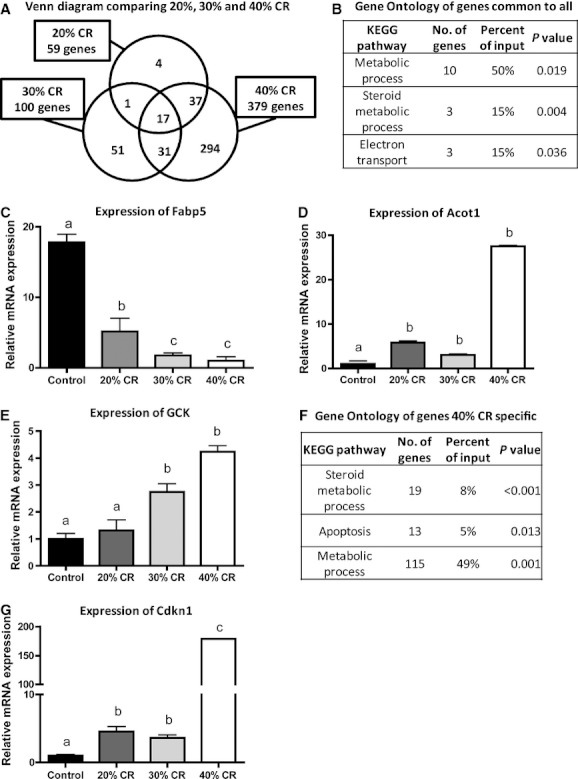
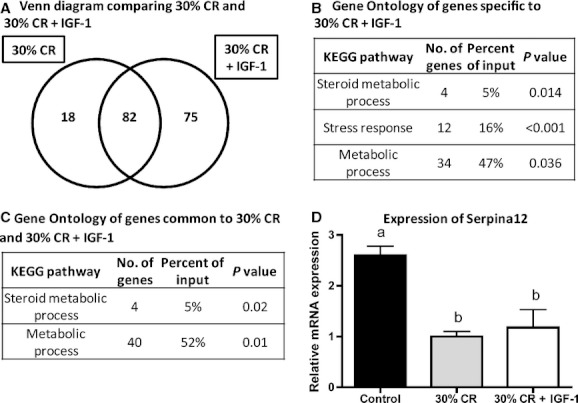
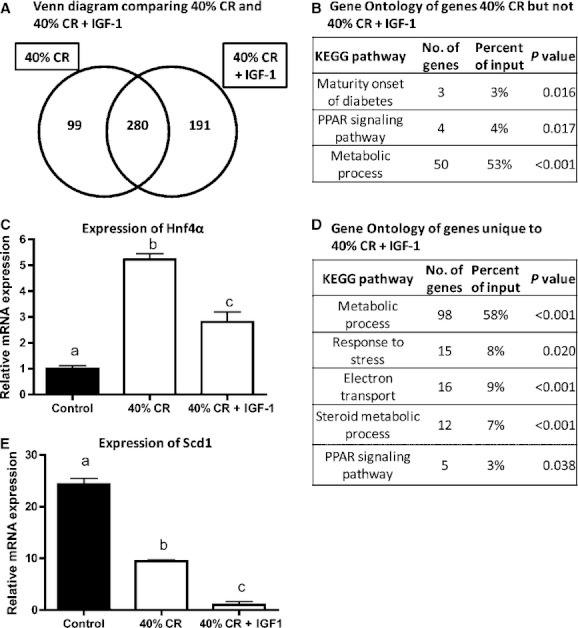
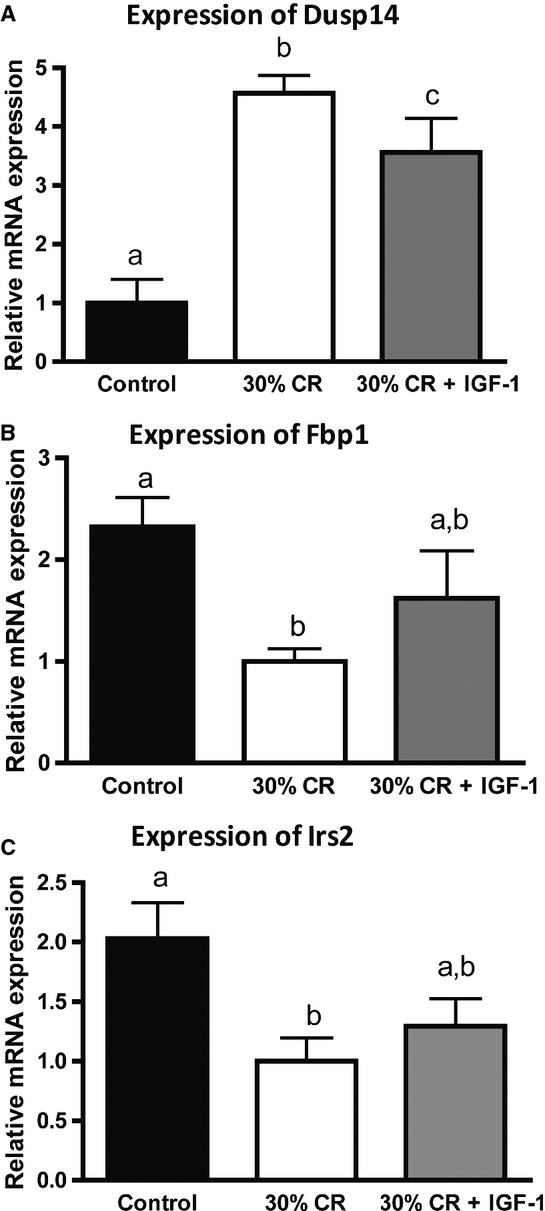
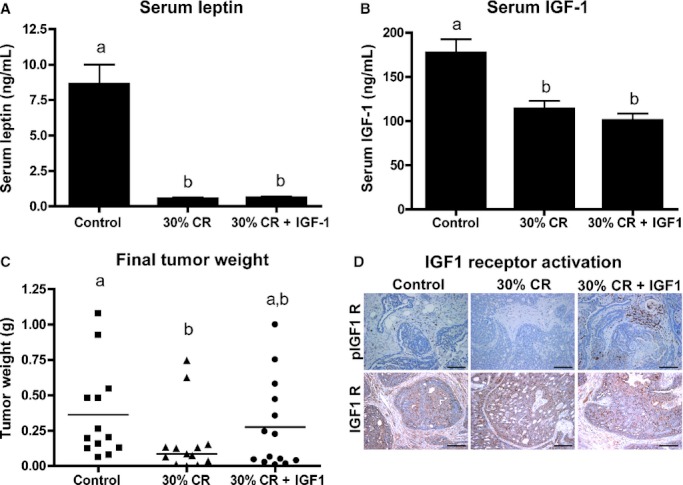
The prevalence of obesity, an established risk and progression factor for breast and many other cancer types, remains very high in the United States and throughout the world. Calorie restriction (CR), a reduced-calorie dietary regimen typically involving a 20-40% reduction in calorie consumption, prevents or reverses obesity, and inhibits mammary and other types of cancer in multiple tumor model systems. Unfortunately, the mechanisms underlying the tumor inhibitory effects of CR are poorly understood, and a better understanding of these mechanisms may lead to new intervention targets and strategies for preventing or controlling cancer. We have previously shown that the anticancer effects of CR are associated with decreased systemic levels of insulin-like growth factor-1 (IGF-1), the primary source of which is liver. We have also reported that CR strongly suppresses tumor development and growth in multiple mammary cancer models. To identify CR-responsive genes and pathways, and to further characterize the role of IGF-1 as a mediator of the anticancer effects of CR, we assessed hepatic and mammary gland gene expression, hormone levels and growth of orthotopically transplanted mammary tumors in control and CR mice with and without exogenous IGF-1. C57BL/6 mice were fed either control AIN-76A diet ad libitum (AL), subjected to 20%, 30%, or 40% CR plus placebo timed-release pellets, or subjected to 30% or 40% CR plus timed-release pellets delivering murine IGF-1 (mIGF-1, 20 μg/day). Compared with AL-fed controls, body weights were decreased 14.3% in the 20% CR group, 18.5% in the 30% CR group, and 38% in the 40% CR group; IGF-1 infusion had no effect on body weight. Hepatic transcriptome analyses indicated that compared with 20% CR, 30% CR significantly modulated more than twice the number of genes and 40% CR more than seven times the number of genes. Many of the genes specific to the 40% CR regimen were hepatic stress-related and/or DNA damage-related genes. Exogenous IGF-1 rescued the hepatic expression of several metabolic genes and pathways affected by CR. Exogenous IGF-1 also rescued the expression of several metabolism- and cancer-related genes affected by CR in the mammary gland. Furthermore, exogenous IGF-1 partially reversed the mammary tumor inhibitory effects of 30% CR. We conclude that several genes and pathways, particularly those associated with macronutrient and steroid hormone metabolism, are associated with the anticancer effects of CR, and that reduced IGF-1 levels can account, at least in part, for many of the effects of CR on gene expression and mammary tumor burden.
Keywords: Cancer biology; cancer prevention; carcinogenesis; nutrition.
Figures
References
-
- Hursting SD, Smith SM, Lashinger LM, Harvey AE, Perkins SN. Calories and carcinogenesis: lessons learned from 30 years of calorie restriction research. Carcinogenesis. 2010;31:83–89. - PubMed
-
- World Cancer Research Fund. Washington, DC: American Institute for Cancer Research; 2007. Food, nutrition, physical activity, and the prevention of cancer: a global perspective.
-
- Flegal KM, Carroll MD, Ogden CL, Curtin LR. Prevalence and trends in obesity among US adults, 1999–2008. J. Am. Med. Assoc. 2010;303:235–241. - PubMed
-
- Calle EE, Kaaks R. Overweight, obesity and cancer: epidemiological evidence and proposed mechanisms. Nat. Rev. Cancer. 2004;4:579–591. - PubMed
-
- Petrelli JM, Calle EE, Rodriguez C, Thun MJ. Body mass index, height, and postmenopausal breast cancer mortality in a prospective cohort of US women. Cancer Causes Control. 2002;13:325–332. - PubMed
Publication types
MeSH terms
Substances
LinkOut - more resources
Full Text Sources
Miscellaneous
