


Fusarium keratitis: genotyping, in vitro susceptibility and clinical outcomes
- PMID: 23343947
- PMCID: PMC3622819
- DOI: 10.1097/ICO.0b013e318277ac74
Fusarium keratitis: genotyping, in vitro susceptibility and clinical outcomes
Abstract
Purpose: To determine differences in the clinical characteristics and antifungal susceptibility patterns among molecularly characterized ocular Fusarium sp isolates.
Methods: Fifty-eight isolates of Fusarium sp obtained from 52 eyes of 52 patients were retrieved from the Ocular Microbiology Laboratory of the Bascom Palmer Eye Institute and grown in pure culture. These isolates were characterized based on DNA sequence analysis of the ITS1/2 and ribosomal deoxyribonucleic acid regions. Antifungal susceptibilities were determined for each isolate using broth microdilution methods, and the corresponding medical records were reviewed to determine the clinical outcomes.
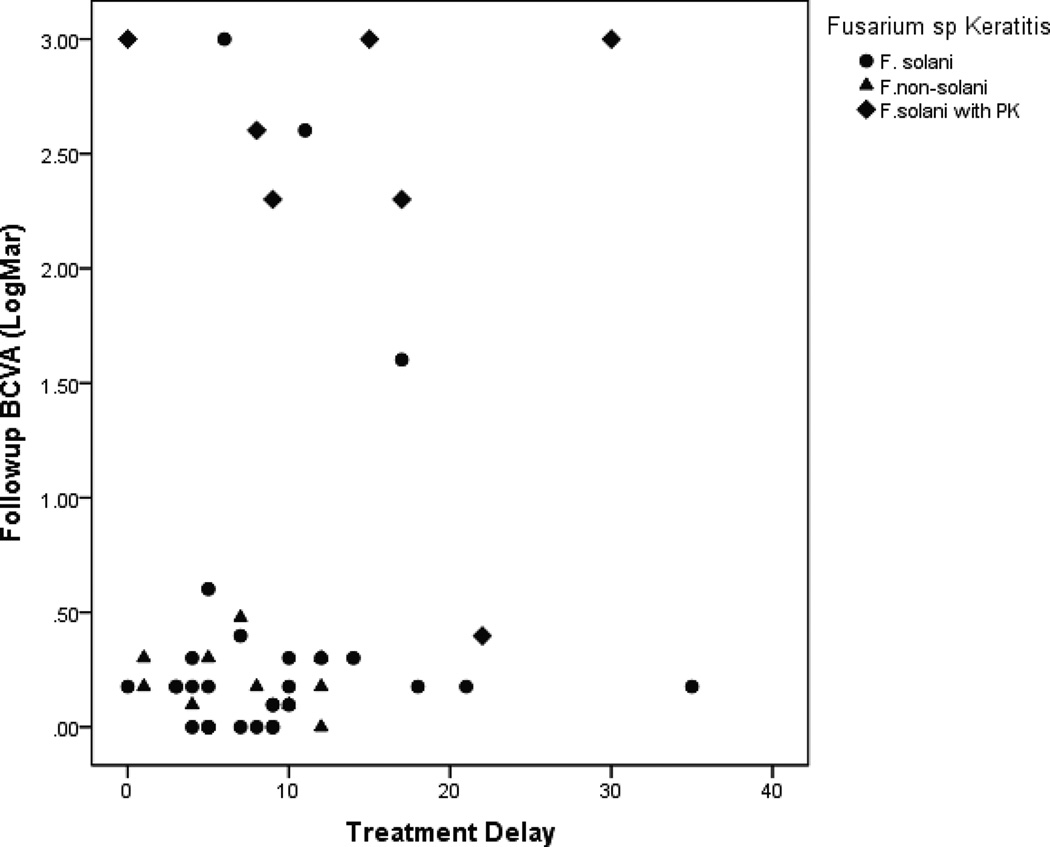
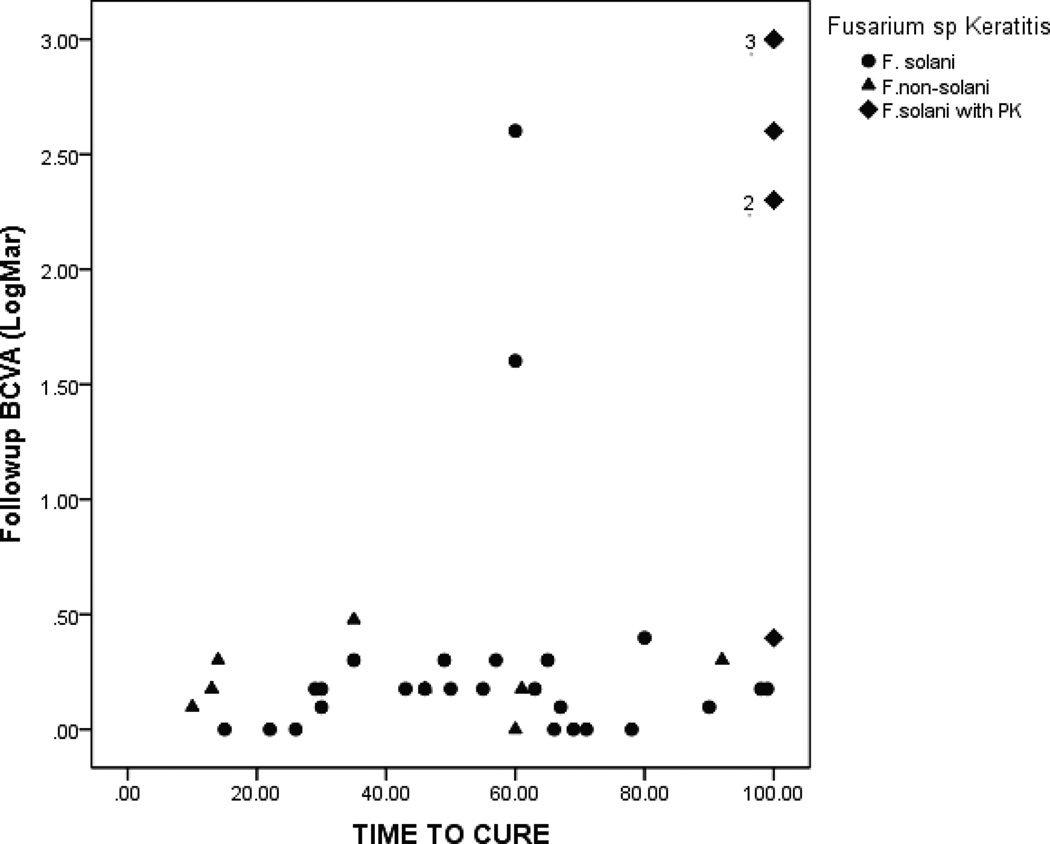
Results: Fusarium solani isolates had significantly higher values of minimum inhibitory concentration for 90% isolates (MIC90) with voriconazole than F. non-solani organisms (16 and 4 μg/mL, respectively). Isolates of F. solani also exhibited a significantly longer time to cure (65 vs. 40.5 days), a worse follow-up best-corrected visual acuity (20/118 vs. 20/36), and an increased need for urgent surgical management (7 vs. 0 penetrating keratoplasties) when compared with those of F. non-solani.
Conclusions: This is the first report to examine the correlation between ocular genotyped Fusarium sp and clinical outcomes. It supports the overall worse prognosis of F. solani versus F. non-solani isolates, including higher voriconazole resistance by the former. The clinical implementation of molecular-based diagnostics and antifungal efficacy testing may yield important prognostic and therapeutic information that could improve the management of fungal ocular infections.
Figures
References
-
- Xie L, Hu J, Shi W. Treatment failure after lamellar keratoplasty for fungal keratitis. Ophthalmology. 2008;115:33–36. - PubMed
-
- Xie L, Zhong W, Shi W, et al. Spectrum of fungal keratitis in north China. Ophthalmology. 2006;113:1943–1948. - PubMed
-
- Rosa RH, Jr, Miller D, Alfonso EC. The changing spectrum of fungal keratitis in south Florida. Ophthalmology. 1994;101:1005–1013. - PubMed
Publication types
MeSH terms
Substances
Grants and funding
LinkOut - more resources
Full Text Sources
Other Literature Sources
