


Transfer of multidrug-resistant bacteria between intermingled ecological niches: the interface between humans, animals and the environment
- PMID: 23343983
- PMCID: PMC3564142
- DOI: 10.3390/ijerph10010278
Transfer of multidrug-resistant bacteria between intermingled ecological niches: the interface between humans, animals and the environment
Abstract
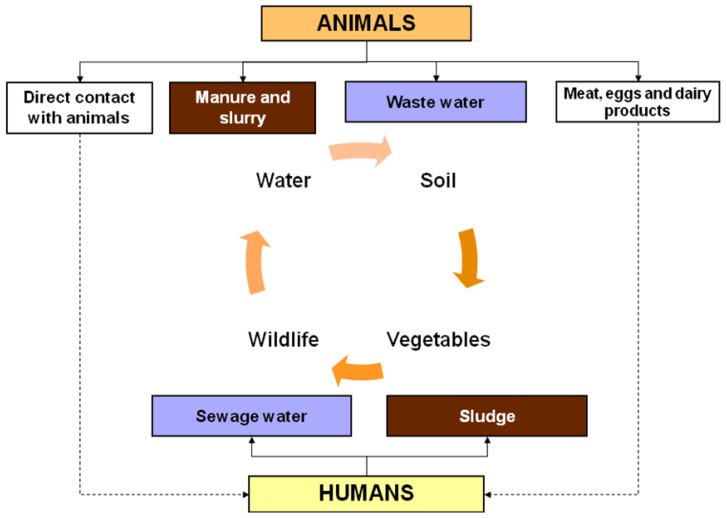
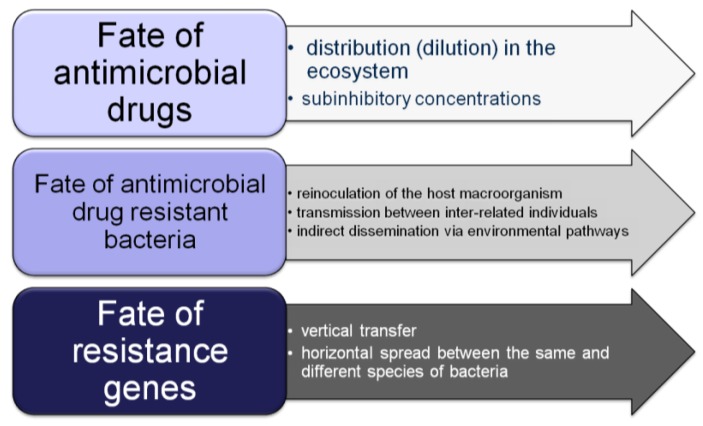
The use of antimicrobial agents has been claimed to be the driving force for the emergence and spread of microbial resistance. However, several studies have reported the presence of multidrug-resistant bacteria in populations exposed to low levels of antimicrobial drugs or even never exposed. For many pathogens, especially those organisms for which asymptomatic colonization typically precedes infection (e.g., Enterococcus spp. and Escherichia coli), the selective effects of antimicrobial use can only be understood if we considerer all biological and environmental pathways which enable these bacteria, and the genes they carry, to spread between different biomes. This ecological framework provides an essential perspective for formulating antimicrobial use policies, precisely because it encompasses the root causes of these problems rather than merely their consequences.
Figures
References
-
- Turnidge J., Christiansen K. Antibiotic use and resistance—Proving the obvious. Lancet. 2005;365:548–549. - PubMed
Publication types
MeSH terms
Substances
LinkOut - more resources
Full Text Sources
Other Literature Sources
Medical
Miscellaneous
