


Ovarian cancer: in search of better marker systems based on DNA repair defects
- PMID: 23344037
- PMCID: PMC3565287
- DOI: 10.3390/ijms14010640
Ovarian cancer: in search of better marker systems based on DNA repair defects
Abstract
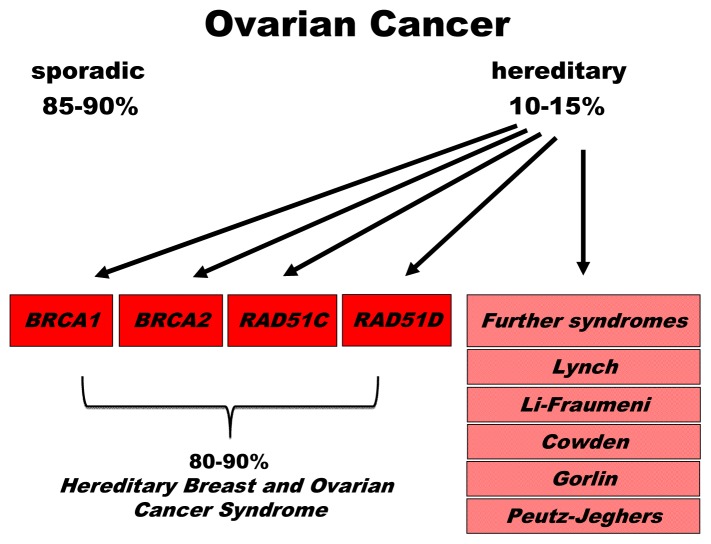
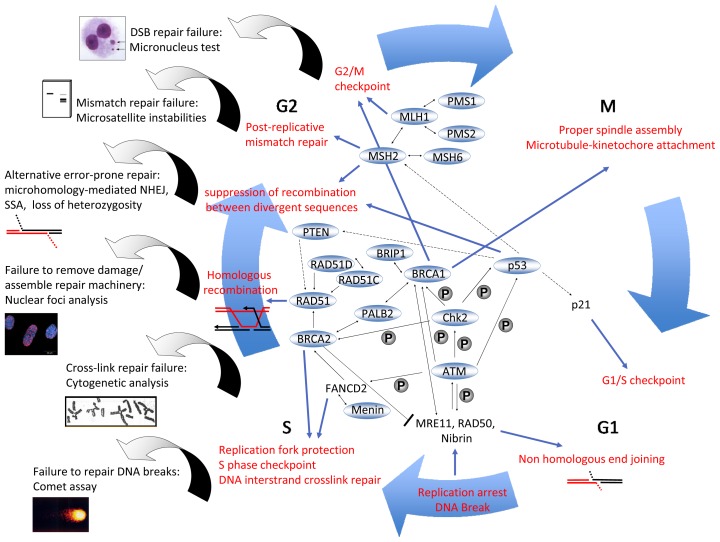
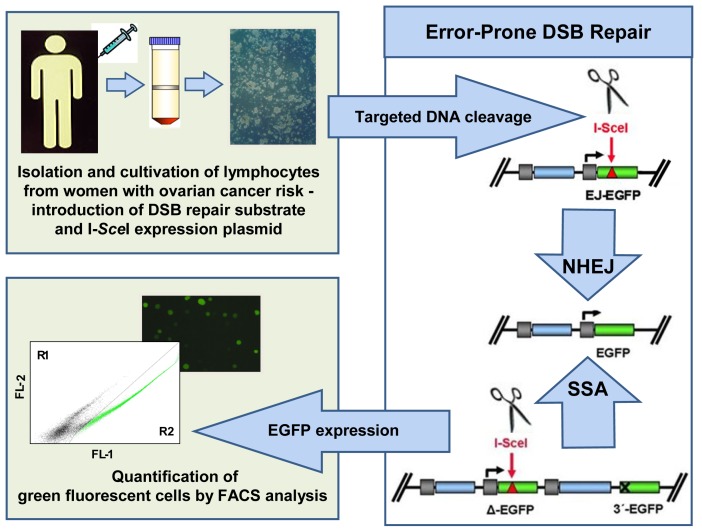
Ovarian cancer is the fifth most common female cancer in the Western world, and the deadliest gynecological malignancy. The overall poor prognosis for ovarian cancer patients is a consequence of aggressive biological behavior and a lack of adequate diagnostic tools for early detection. In fact, approximately 70% of all patients with epithelial ovarian cancer are diagnosed at advanced tumor stages. These facts highlight a significant clinical need for reliable and accurate detection methods for ovarian cancer, especially for patients at high risk. Because CA125 has not achieved satisfactory sensitivity and specificity in detecting ovarian cancer, numerous efforts, including those based on single and combined molecule detection and "omics" approaches, have been made to identify new biomarkers. Intriguingly, more than 10% of all ovarian cancer cases are of familial origin. BRCA1 and BRCA2 germline mutations are the most common genetic defects underlying hereditary ovarian cancer, which is why ovarian cancer risk assessment in developed countries, aside from pedigree analysis, relies on genetic testing of BRCA1 and BRCA2. Because not only BRCA1 and BRCA2 but also other susceptibility genes are tightly linked with ovarian cancer-specific DNA repair defects, another possible approach for defining susceptibility might be patient cell-based functional testing, a concept for which support came from a recent case-control study. This principle would be applicable to risk assessment and the prediction of responsiveness to conventional regimens involving platinum-based drugs and targeted therapies involving poly (ADP-ribose) polymerase (PARP) inhibitors.
Figures
References
-
- Hunn J., Rodriguez G.C. Ovarian cancer: Etiology, risk factors, and epidemiology. Clin. Obstet. Gynecol. 2012;55:3–23. - PubMed
-
- Altekruse S.F., Kosary C.L., Krapcho M., Neuman N., Aminou R., Waldron W., Ruhl J., Howlader N., Tatalovich Z., Cho H., et al. SEER Cancer Statistics Review, 1975–2009. [accessed on 17 July 2012]. Available online: http://seer.cancer.gov/csr/1975_2007/
-
- Stratton J.F., Pharoah P., Smith S.K., Easton D., Ponder B.A. A systematic review and meta-analysis of family history and risk of ovarian cancer. Br. J. Obstet. Gynaecol. 1998;105:493–499. - PubMed
-
- Miki Y., Swensen J., Shattuck-Eidens D., Futreal P.A., Harshman K., Tavtigian S., Liu Q., Cochran C., Bennett L.M., Ding W., et al. A strong candidate for the breast and ovarian cancer susceptibility gene BRCA1. Science. 1994;266:66–71. - PubMed
-
- Wooster R., Bignell G., Lancaster J., Swift S., Seal S., Mangion J., Collins N., Gregory S., Gumbs C., Micklem G. Identification of the breast cancer susceptibility gene BRCA2. Nature. 1995;378:789–792. - PubMed
Publication types
MeSH terms
Substances
LinkOut - more resources
Full Text Sources
Other Literature Sources
Medical
Research Materials
Miscellaneous
