


Integrating behavioral economics and behavioral genetics: delayed reward discounting as an endophenotype for addictive disorders
- PMID: 23344986
- PMCID: PMC3881595
- DOI: 10.1002/jeab.4
Integrating behavioral economics and behavioral genetics: delayed reward discounting as an endophenotype for addictive disorders
Abstract
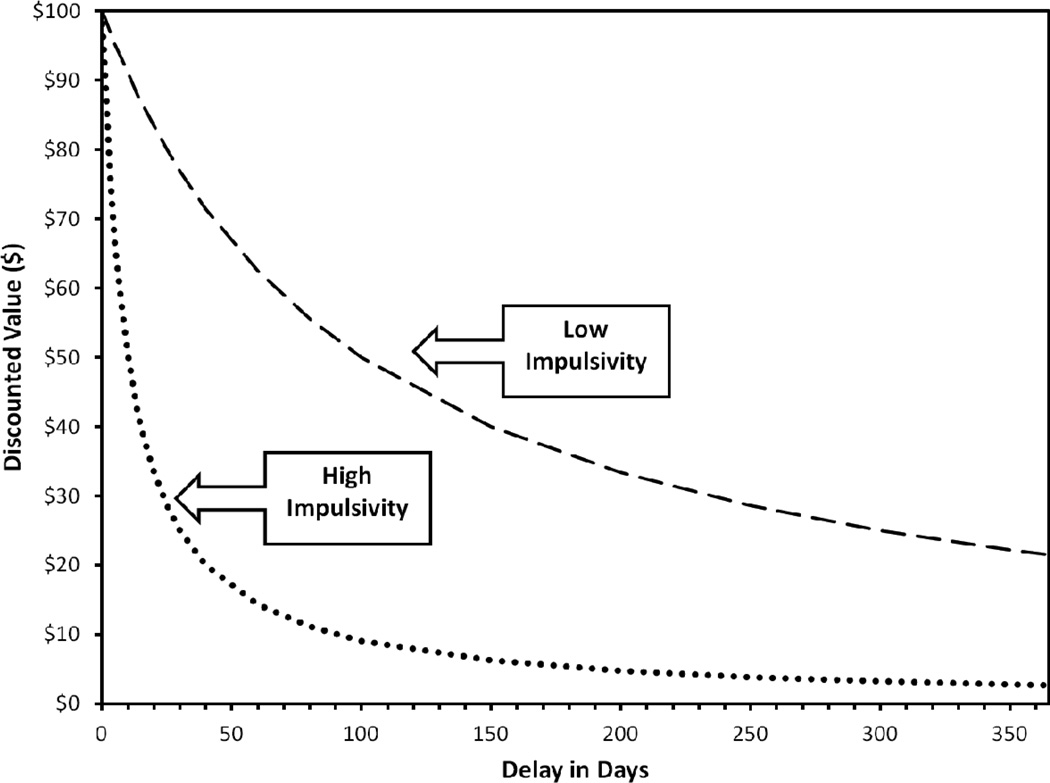
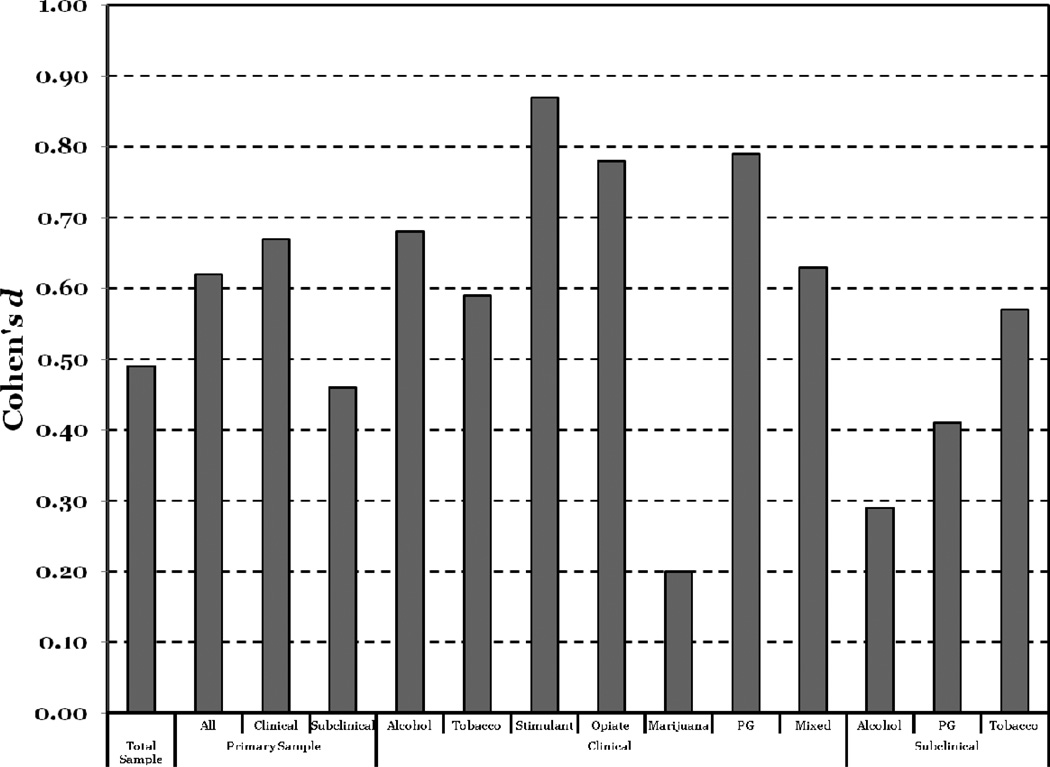
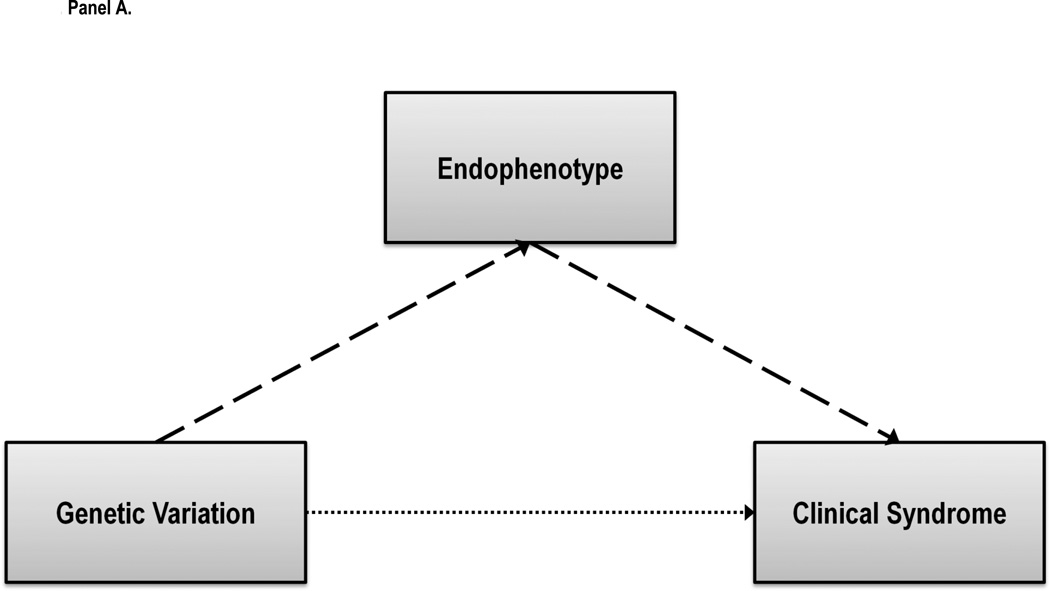
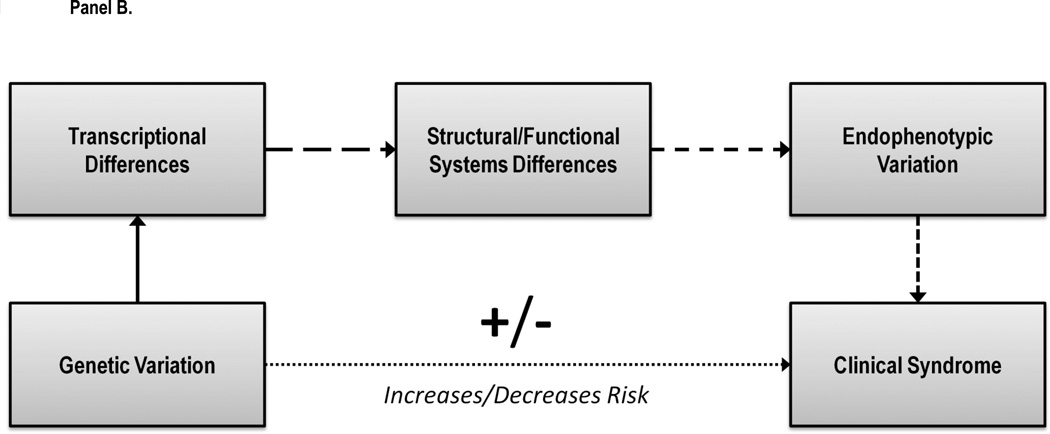
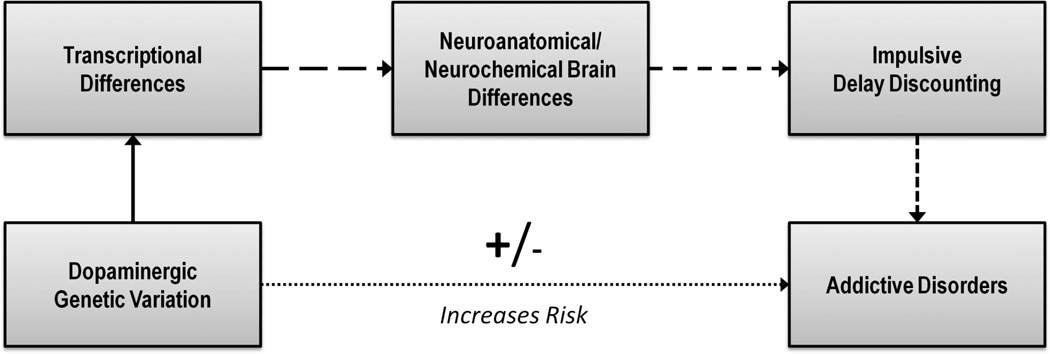
Delayed reward discounting is a behavioral economic index of impulsivity, referring to how much an individual devalues a reward based on its delay in time. As a behavioral process that varies considerably across individuals, delay discounting has been studied extensively as a model for self-control, both in the general population and in clinical samples. There is growing interest in genetic influences on discounting and, in particular, the prospect of discounting as an endophenotype for addictive disorders (i.e., a heritable mechanism partially responsible for conferring genetic risk). This review assembles and critiques the evidence supporting this hypothesis. Via numerous cross-sectional studies and a small number of longitudinal studies, there is considerable evidence that impulsive discounting is associated with addictive behavior and appears to play an etiological role. Moreover, there is increasing evidence from diverse methodologies that impulsive delay discounting is temporally stable, heritable, and that elevated levels are present in nonaffected family members. These findings suggest that impulsive discounting meets the criteria for being considered an endophenotype. In addition, recent findings suggest that genetic variation related to dopamine neurotransmission is significantly associated with variability in discounting preferences. A significant caveat, however, is that the literature is modest in some domains and, in others, not all the findings have been supportive or consistent. In addition, important methodological considerations are necessary in future studies. Taken together, although not definitive, there is accumulating support for the hypothesis of impulsive discounting as an endophenotype for addictive behavior and a need for further systematic investigation.
© Society for the Experimental Analysis of Behavior.
Conflict of interest statement
I have no conflicts of interest to declare with regard to this review.
Figures
References
-
- Ainslie G. Specious reward: a behavioral theory of impulsiveness and impulse control. Psychological Bulletin. 1975;82(4):463–496. - PubMed
-
- Ainslie G. Breakdown of Will. Cambridge University Press; 2001.
-
- Alessi SM, Petry NM. Pathological gambling severity is associated with impulsivity in a delay discounting procedure. Behavioural Processes. 2003;64(3):345–354. - PubMed
Publication types
MeSH terms
Grants and funding
LinkOut - more resources
Full Text Sources
Medical
Research Materials
