


Differential balance of prefrontal synaptic activity in successful versus unsuccessful cognitive aging
- PMID: 23345211
- PMCID: PMC6618737
- DOI: 10.1523/JNEUROSCI.3258-12.2013
Differential balance of prefrontal synaptic activity in successful versus unsuccessful cognitive aging
Abstract
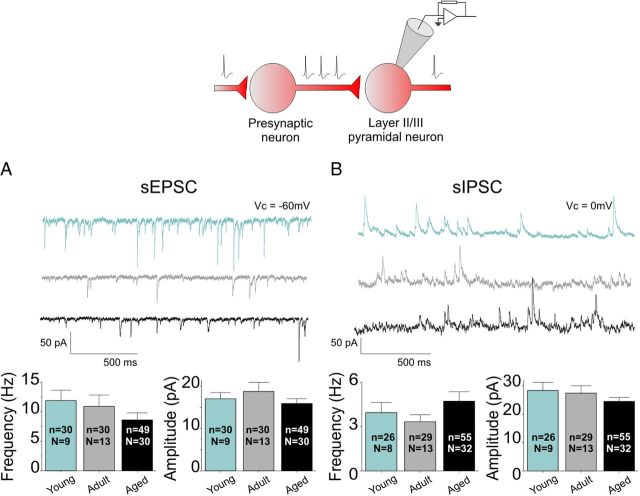
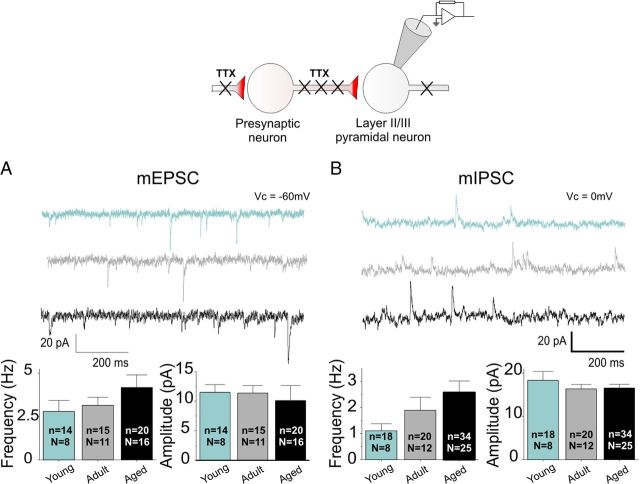
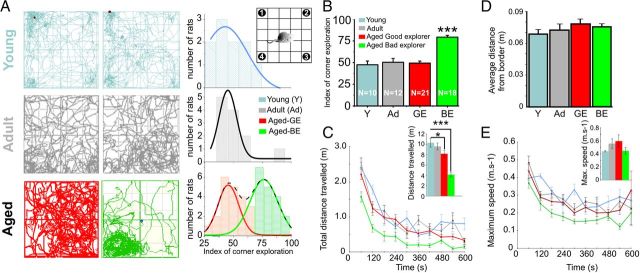
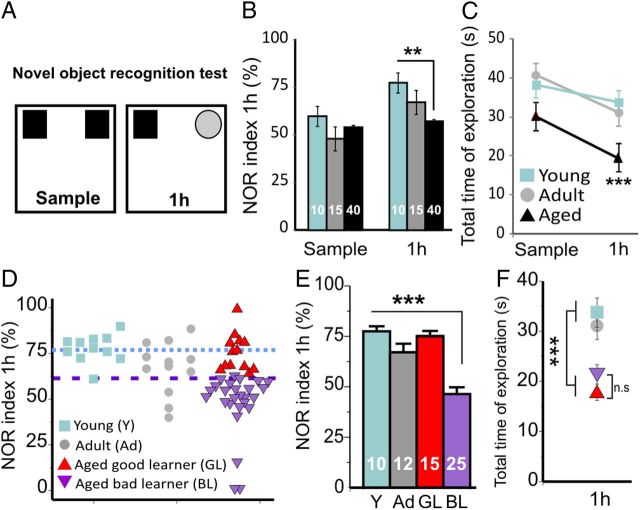
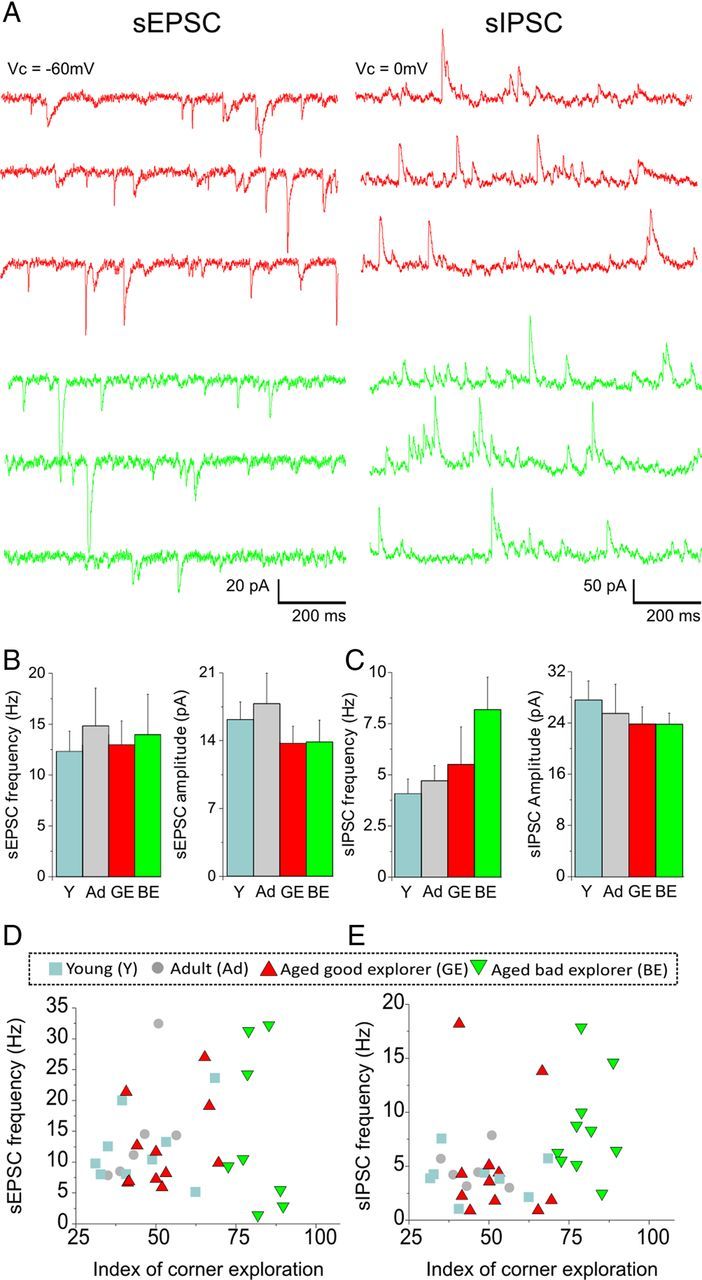
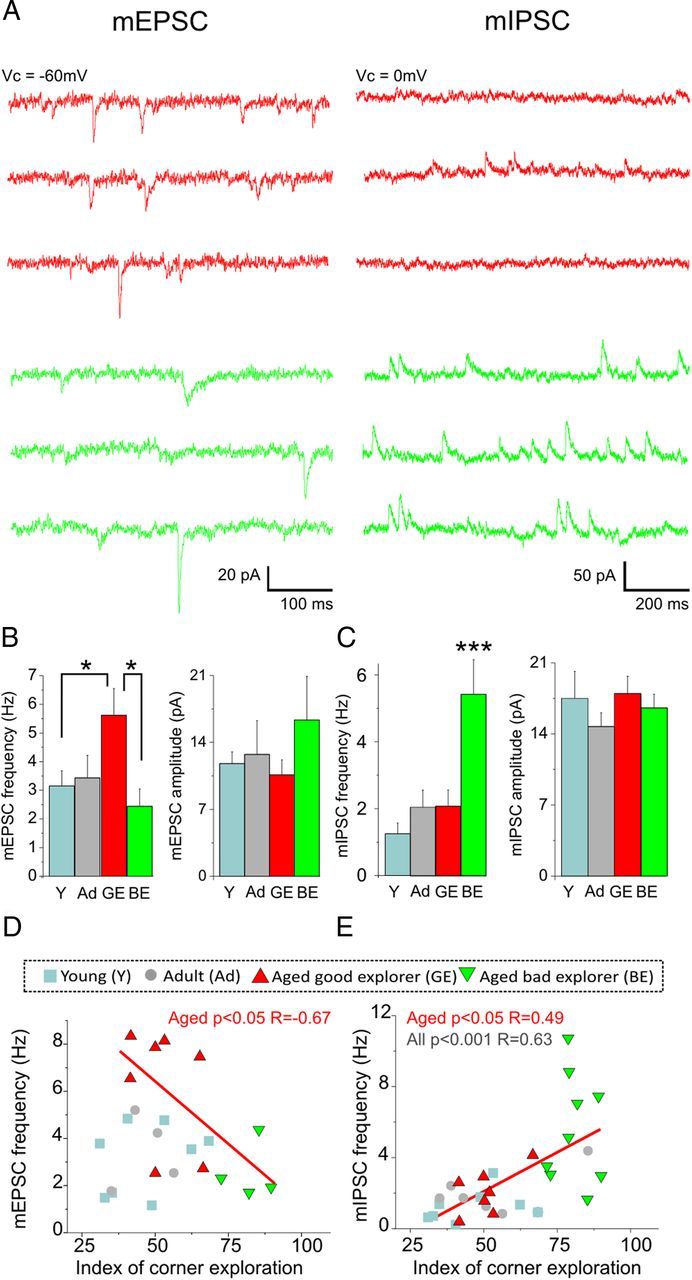
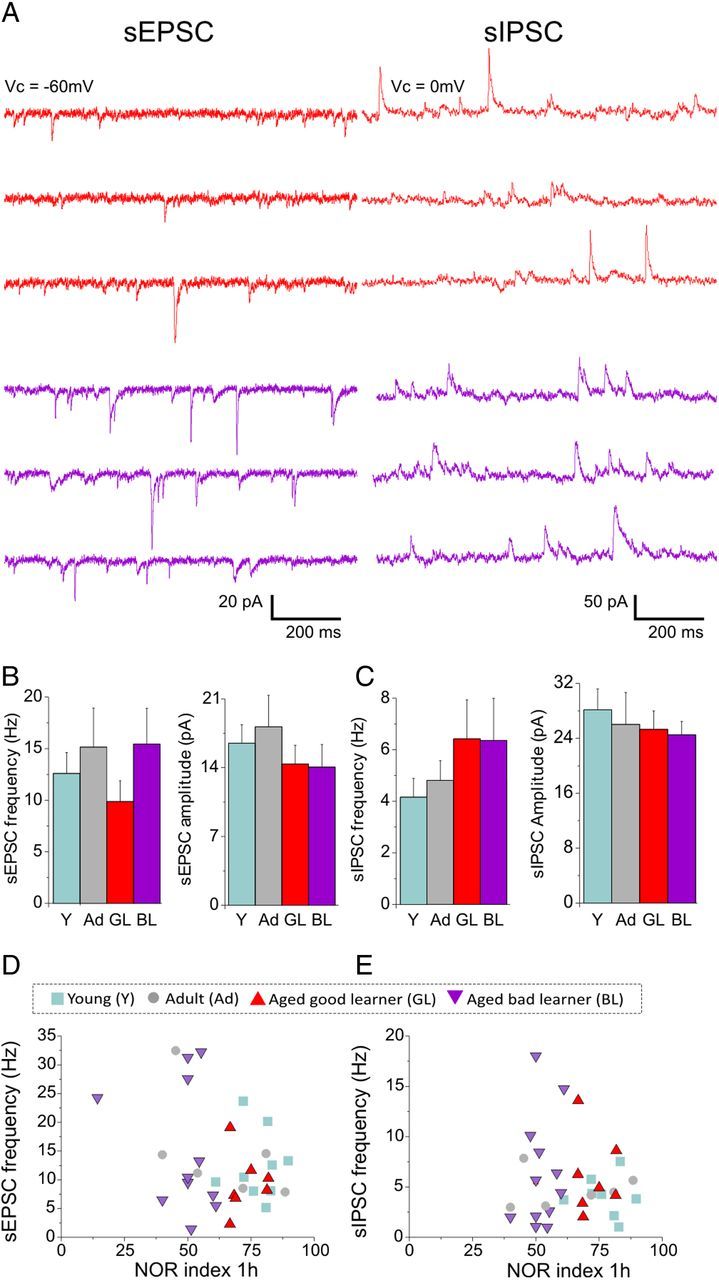
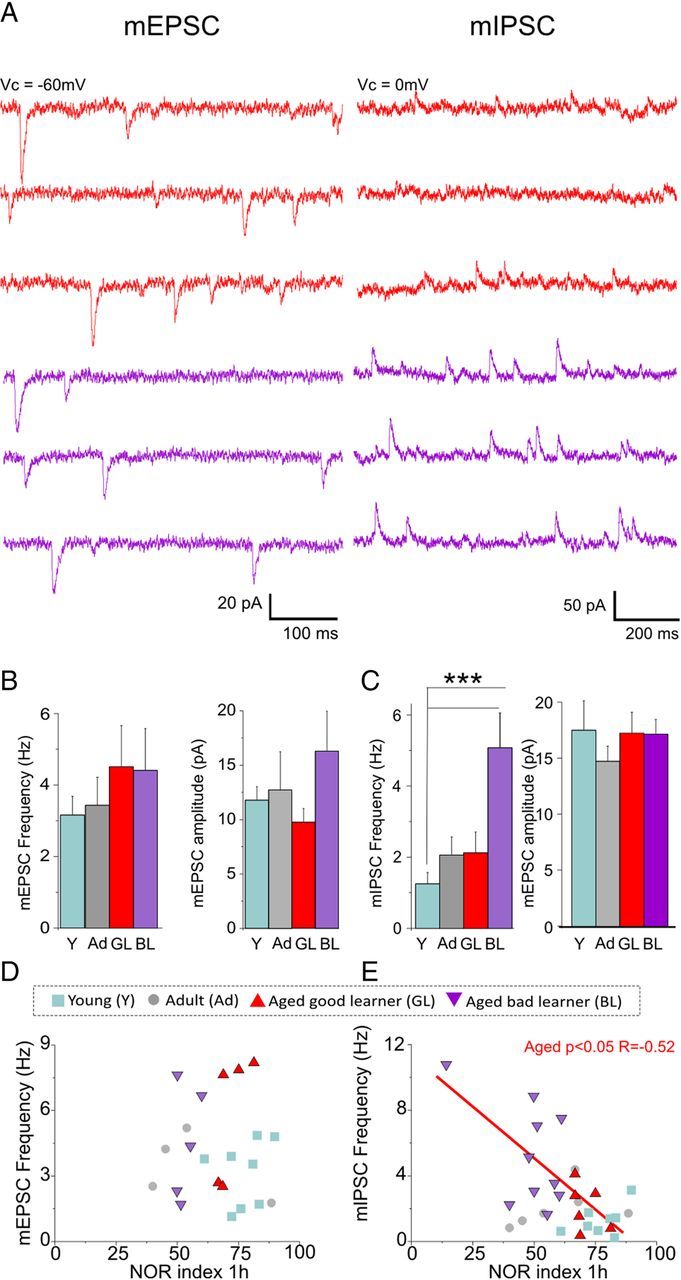
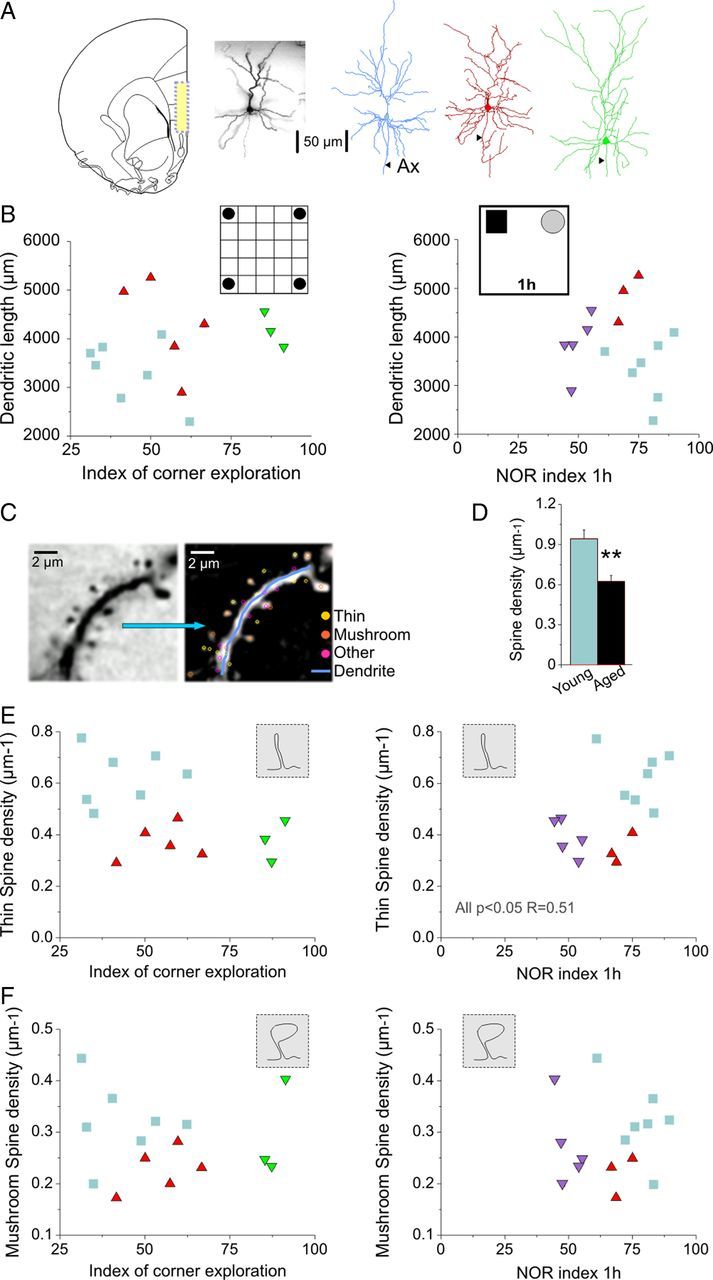
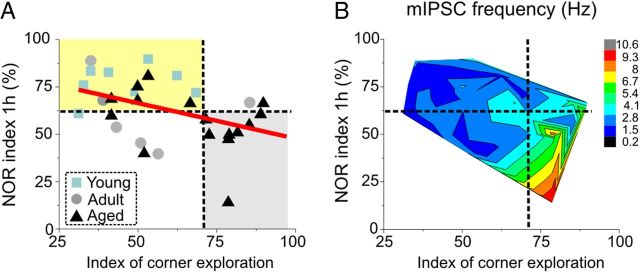
Normal aging is associated with a variable decline in cognitive functions. Among these, executive function, decision-making, and working memory are primarily associated with the prefrontal cortex. Although a number of studies have examined the structural substrates of cognitive decline associated with aging within this cortical area, their functional correlates remain poorly understood. To fill this gap, we aimed to identify functional synaptic substrates of age-associated frontal-dependent deficits in layer 2/3 pyramidal neurons of medial prefrontal cortex of 3-, 9-, and ≥ 23-month-old Fischer 344 rats. We combined, in the same animals, novelty recognition and exploratory behavioral tasks with assessment of structural and functional aspects of prefrontal synaptic properties. We found that subsets of aged animals displayed stereotyped exploratory behavior or memory deficits. Despite an age-dependent dendritic spine loss, patch-clamp recording of synaptic activity revealed an increase in miniature EPSC frequency restricted to aged animals with preserved exploratory behavior. In contrast, we found a strong positive relationship between miniature IPSC frequency and the occurrence of both stereotyped exploratory behavior and novelty-related memory deficits. The enhanced miniature inhibitory tone was accompanied by a deficit in activity-driven inhibition, also suggesting an impaired dynamic range for modulation of inhibition in the aged, cognitively impaired animals. Together, our data indicate that differential changes in the balance of inhibitory to excitatory synaptic tone may underlie distinct trajectories in the evolution of cognitive performance during aging.
Figures
References
-
- Abdulla FA, Abu-Bakra MA, Calaminici MR, Stephenson JD, Sinden JD. Importance of forebrain cholinergic and GABAergic systems to the age-related deficits in water maze performance of rats. Neurobiol Aging. 1995;16:41–52. - PubMed
-
- Akirav I, Maroun M. Ventromedial prefrontal cortex is obligatory for consolidation and reconsolidation of object recognition memory. Cereb Cortex. 2006;16:1759–1765. - PubMed
-
- Apergis-Schoute J, Pinto A, Paré D. Ultrastructural organization of medial prefrontal inputs to the rhinal cortices. Eur J Neurosci. 2006;24:135–144. - PubMed
-
- Beracochea D, Philippin JN, Meunier S, Morain P, Bernard K. Improvement of episodic contextual memory by S 18986 in middle-aged mice: comparison with donepezil. Psychopharmacology (Berl) 2007;193:63–73. - PubMed
-
- Bevins RA, Besheer J. Object recognition in rats and mice: a one-trial non-matching-to-sample learning task to study ‘recognition memory.’. Nat Protoc. 2006;1:1306–1311. - PubMed
Publication types
MeSH terms
Grants and funding
LinkOut - more resources
Full Text Sources
Other Literature Sources
Medical
Miscellaneous
