


Increased preference of surface ablation over laser in situ keratomileusis between 2008-2011 is correlated to risk of ecatasia
- PMID: 23345963
- PMCID: PMC3548437
- DOI: 10.2147/OPTH.S38959
Increased preference of surface ablation over laser in situ keratomileusis between 2008-2011 is correlated to risk of ecatasia
Abstract
Purpose: To evaluate the trends in corneal refractive procedure selection for the correction of myopia, focusing on the relative proportions of laser in situ keratomileusis (LASIK) and surface ablation procedures.
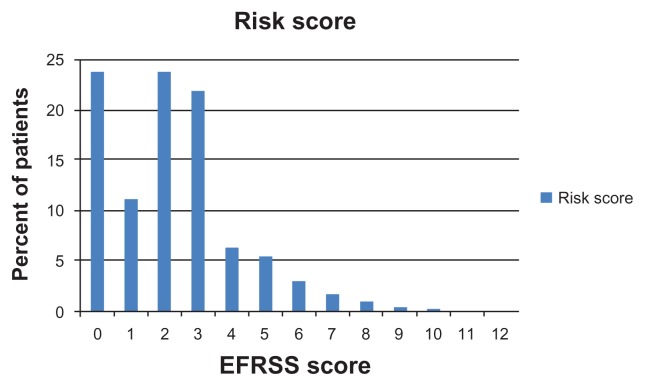
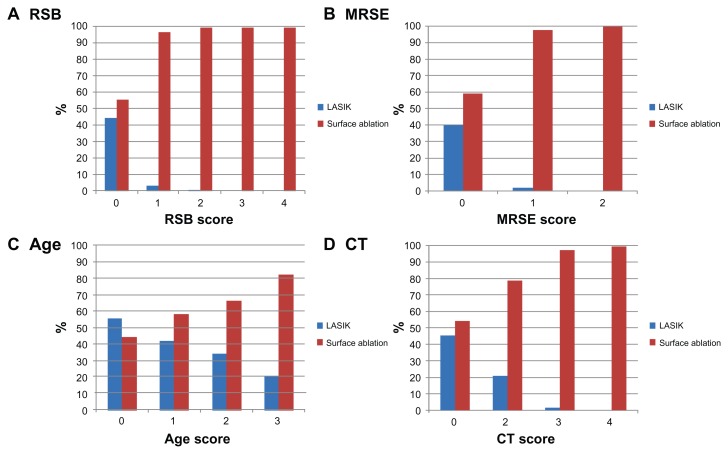
Methods: Only eyes that underwent LASIK or surface ablation for the correction of myopia between 2008-2011 were included in this retrospective study. Additional recorded parameters included patient age, preoperative manifest refraction, corneal thickness, and calculated residual corneal bed thickness. A risk score was given to each eye, based on these parameters, according to the Ectasia Risk Factor Score System (ERFSS), without the preoperative corneal topography.
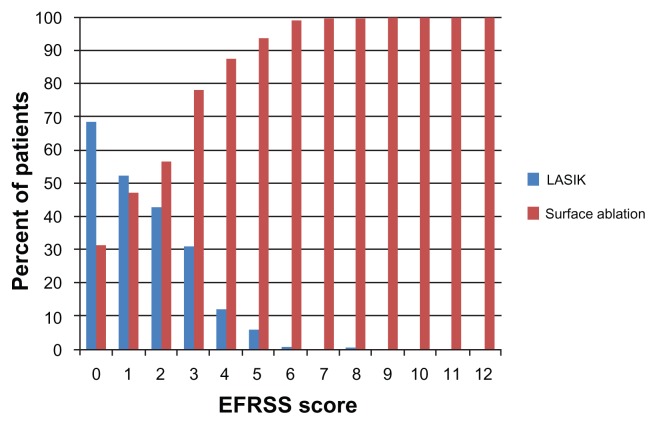
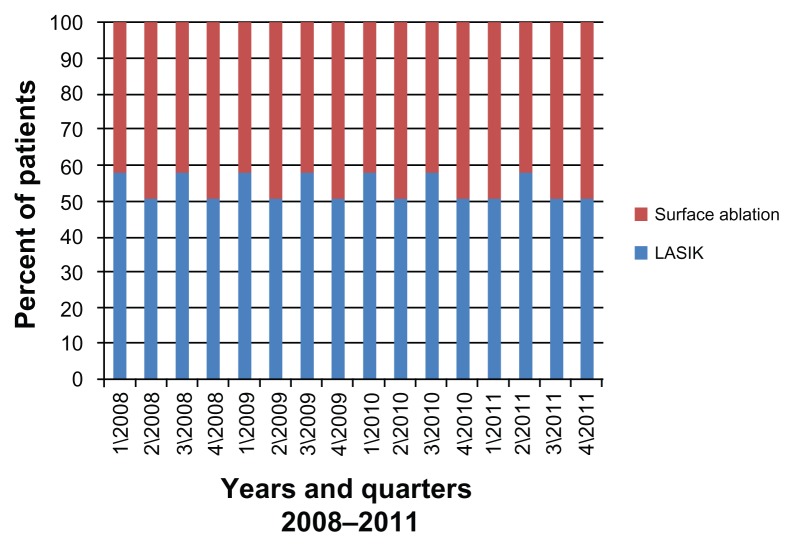
Results: This study included 16,163 eyes, of which 38.4% underwent LASIK and 61.6% underwent surface ablation. The risk score correlated with procedure selection, with LASIK being preferred in eyes with a score of 0 and surface ablation in eyes with a score of 2 or higher. When controlling for age, preoperative manifest refraction, corneal thickness, and all parameters, the relative proportion of surface ablation compared with LASIK was found to have grown significantly during the study period.
Conclusions: Our results indicate that with time, surface ablation tended to be performed more often than LASIK for the correction of myopia in our cohort. Increased awareness of risk factors and preoperative risk assessment tools, such as the ERFSS, have shifted the current practice of refractive surgery from LASIK towards surface ablation despite the former's advantages, especially in cases in which the risk for ectasia is more than minimal (risk score 2 and higher).
Keywords: LASIK; PRK; ectasia; myopia correction; surface ablation.
Figures
References
-
- Munnerlyn CR, Koons SJ, Marshall J. Photorefractive keratectomy: a technique for laser refractive surgery. J Cataract Refract Surg. 1988;14(1):46–52. - PubMed
-
- Azar DT, Ang RT, Lee JB, et al. Laser subepithelial keratomileusis: electron microscopy and visual outcomes of flap photorefractive keratectomy. Curr Opin Ophthalmol. 2001;12(4):323–328. - PubMed
-
- Camellin M. Laser epithelial keratomileusis for myopia. J Refract Surg. 2003;19(6):666–670. - PubMed
-
- Trattler WB, Barnes SD. Current trends in advanced surface ablation. Curr Opin Ophthalmol. 2008;19(4):330–334. - PubMed
-
- Steinert RF, Shamik B. Surgical correction of moderate myopia: which method should you choose? II. PRK and LASIK are the treatments of choice. Surv Ophthalmol. 1998;43(2):157–179. - PubMed
LinkOut - more resources
Full Text Sources
Other Literature Sources
