Bacterial adhesion and colonization differences between zirconia and titanium implant abutments: an in vivo human study
- PMID: 23346465
- PMCID: PMC3543937
- DOI: 10.5051/jpis.2012.42.6.217
Bacterial adhesion and colonization differences between zirconia and titanium implant abutments: an in vivo human study
Retraction in
-
Retraction: Bacterial adhesion and colonization differences between zirconia and titanium implant abutments: an in vivo human study.J Periodontal Implant Sci. 2019 Feb 7;49(1):58. doi: 10.5051/jpis.2019.49.1.58. eCollection 2019 Feb. J Periodontal Implant Sci. 2019. PMID: 30847257 Free PMC article.
Abstract
Purpose: Several parameters have been described for determining the success or failure of dental implants. The surface properties of transgingival implant components have had a great impact on the long-term success of dental implants. The purpose of this study was to compare the tendency of two periodontal pathogens to adhere to and colonize zirconia abutments and titanium alloys both in hard surfaces and soft tissues.
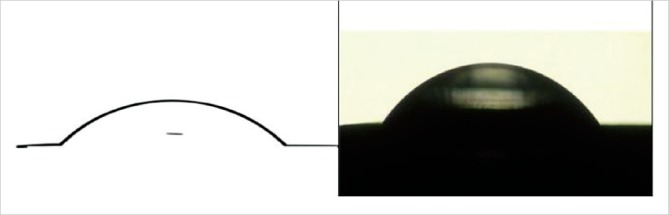
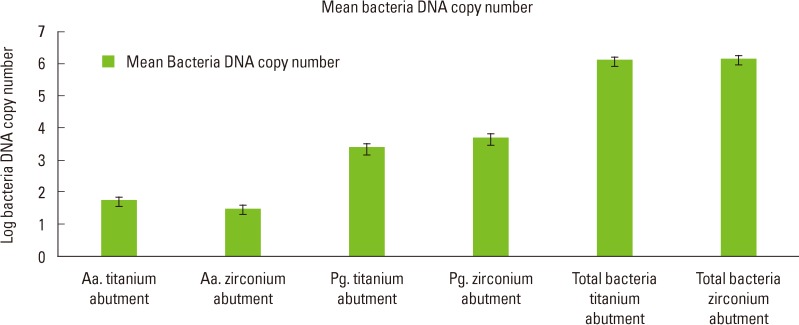
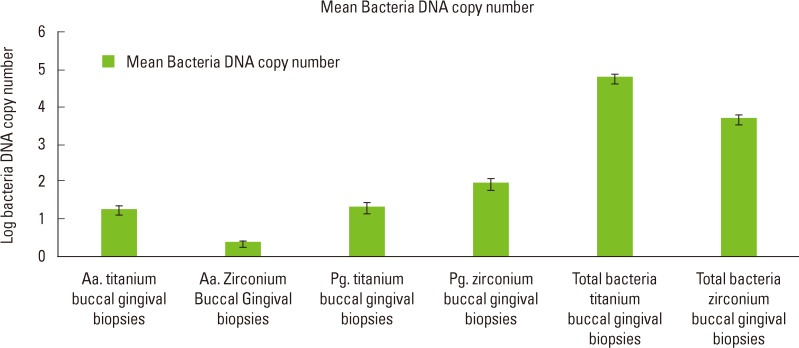
Methods: Twelve patients participated in this study. Three months after implant placement, the abutments were connected. Five weeks following the abutment connections, the abutments were removed, probing depth measurements were recorded, and gingival biopsies were performed. The abutments and gingival biopsies taken from the buccal gingiva were analyzed using real-time polymerase chain reaction to compare the DNA copy numbers of Aggregatibacter actinomycetemcomitans, Porphyromonas gingivalis, and total bacteria. The surface free energy of the abutments was calculated using the sessile water drop method before replacement. Data analyses used the Mann Whitney U-test, and P-values below 0.05 find statistical significance.
Results: The present study showed no statistically significant differences between the DNA copy numbers of A. actinomycetemcomitans, P. gingivalis, and total bacteria for both the titanium and zirconia abutments and the biopsies taken from their buccal gingiva. The differences between the free surface energy of the abutments had no influence on the microbiological findings.
Conclusions: Zirconia surfaces have comparable properties to titanium alloy surfaces and may be suitable and safe materials for the long-term success of dental implants.
Keywords: Bacterial adhesion; Dental abutments.
Conflict of interest statement
No potential conflict of interest relevant to this article was reported.
Figures

References
-
- Branemark PI, Hansson BO, Adell R, Breine U, Lindstrom J, Hallen O, et al. Osseointegrated implants in the treatment of the edentulous jaw. Experience from a 10-year period. Scand J Plast Reconstr Surg Suppl. 1977;16:1–132. - PubMed
-
- Buser D, Mericske-Stern R, Bernard JP, Behneke A, Behneke N, Hirt HP, et al. Long-term evaluation of non-submerged ITI implants. Part 1: 8-year life table analysis of a prospective multi-center study with 2359 implants. Clin Oral Implants Res. 1997;8:161–172. - PubMed
-
- Buser D, Weber HP, Lang NP. Tissue integration of non-submerged implants. 1-year results of a prospective study with 100 ITI hollow-cylinder and hollow-screw implants. Clin Oral Implants Res. 1990;1:33–40. - PubMed
-
- Heijdenrijk K, Raghoebar GM, Meijer HJ, Stegenga B, van der Reijden WA. Feasibility and influence of the microgap of two implants placed in a non-submerged procedure: a five-year follow-up clinical trial. J Periodontol. 2006;77:1051–1060. - PubMed
-
- Oh TJ, Yoon J, Misch CE, Wang HL. The causes of early implant bone loss: myth or science? J Periodontol. 2002;73:322–333. - PubMed
Publication types
LinkOut - more resources
Full Text Sources