


Predictors and impact of non-adherence in adults with attention-deficit/hyperactivity disorder receiving OROS methylphenidate: results from a randomized, placebo-controlled trial
- PMID: 23347693
- PMCID: PMC3577504
- DOI: 10.1186/1471-244X-13-36
Predictors and impact of non-adherence in adults with attention-deficit/hyperactivity disorder receiving OROS methylphenidate: results from a randomized, placebo-controlled trial
Abstract
Background: Medication non-adherence has an important impact on treatment efficacy and healthcare burden across a range of conditions and therapeutic areas. The aim of this analysis was to determine predictors of non-adherence and impact of non-adherence on treatment response in adults with attention-deficit/hyperactivity disorder (ADHD).
Methods: Post-hoc analysis of a 13-week randomized, double-blind placebo-controlled study of OROS methylphenidate (MPH) 54 and 72 mg/day. Primary efficacy variable was the Conners' Adult ADHD Rating Scale - Screening Version (CAARS:O-SV). Daily adherence was calculated as average daily adherence (100 × capsules taken/2), with overall adherence calculated as the average daily adherence. Predictors of adherence were assessed using mixed-effects logistic regression. Descriptive statistics were generated for change in CAARS:O-SV score for adherent (> 95% adherence) and non-adherent subjects. Predictors of change were analyzed using a mixed model.
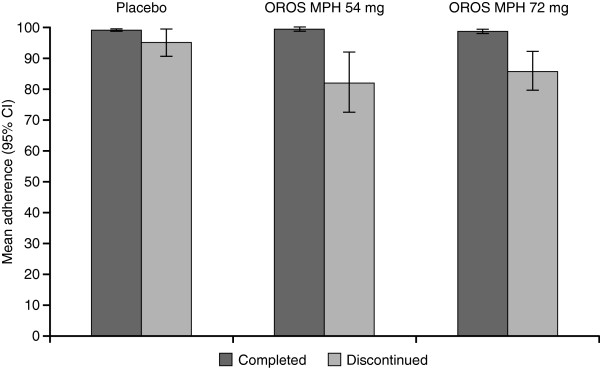
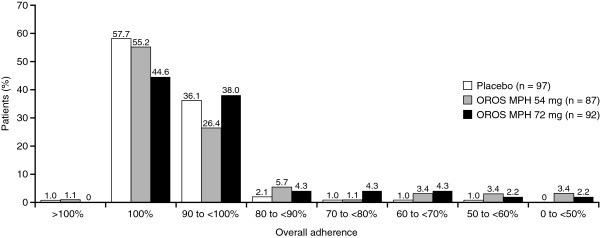
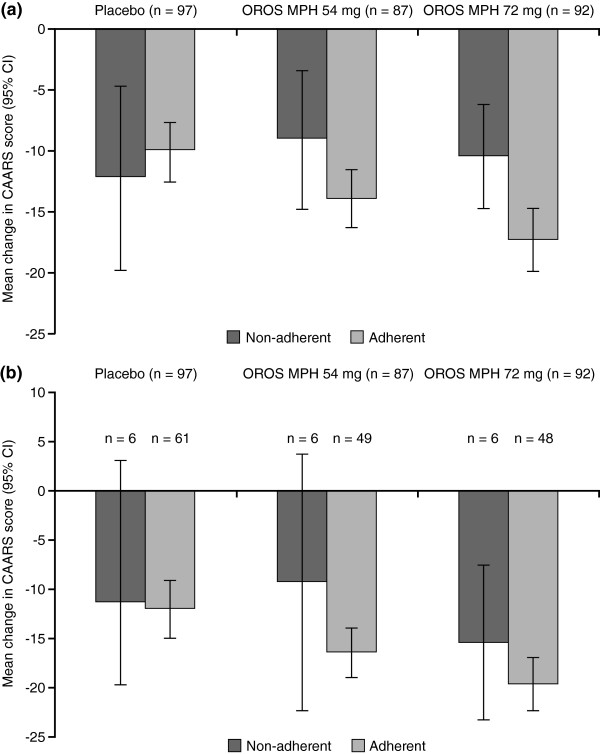
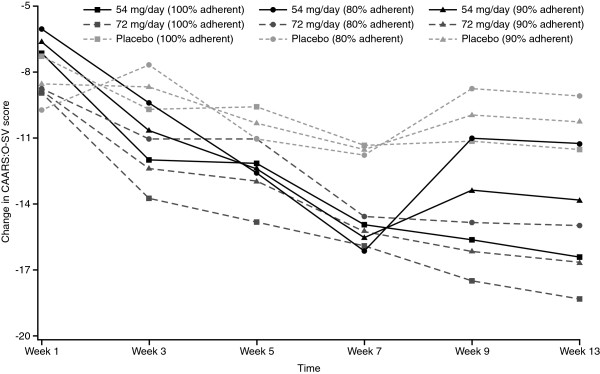
Results: Subjects were allocated to OROS MPH (54 mg, n = 87; 72 mg, n = 92) or placebo (n = 97). Mean adherence was 92.6% and 93.3% (OROS MPH 54 and 72 mg/day, respectively), versus 97.5% (placebo). Adherence was higher and less variable in completers. Factors significantly associated with non-adherence included female sex, shorter time since ADHD diagnosis, higher education level (completion of university) and score on the Drug Use Screening Inventory psychiatric disorders subscale. Improvements from baseline in CAARS:O-SV score were numerically greater in subjects defined as adherent than in those who were non-adherent. Significant predictors of CAARS:O-SV change in patients who completed the study included percentage adherence up to the point of assessment (p < 0.0001), baseline score (p < 0.0001) and family history of ADHD (p = 0.0003).
Conclusion: The results of this analysis suggest that newly diagnosed patients, those with a high score on the DUSI-R psychiatric disorder scale, women, and subjects with high educational degrees may be at increased risk of non-adherence. Clinicians and policymakers should therefore pay special attention to these individuals, as non-adherence is a significant predictor of reduced response to treatment.
Trial registration: EudraCT #: 2007-002111-82.
Figures
References
-
- Haynes RB, Ackloo E, Sahota N, McDonald HP, Yao X. Interventions for enhancing medication adherence. Cochrane Database Syst Rev. 2008;2:CD000011. - PubMed
-
- Saini SD, Schoenfeld P, Kaulback K, Dubinsky MC. Effect of medication dosing frequency on adherence in chronic diseases. Am J Manag Care. 2009;15:e22–e33. - PubMed
Publication types
MeSH terms
Substances
LinkOut - more resources
Full Text Sources
Other Literature Sources
Medical
